ARTS / CULTURE & LEISURE
On the Great Wall, cats become unlikely stewards of centuries-old stones
Paws upon ancient stones
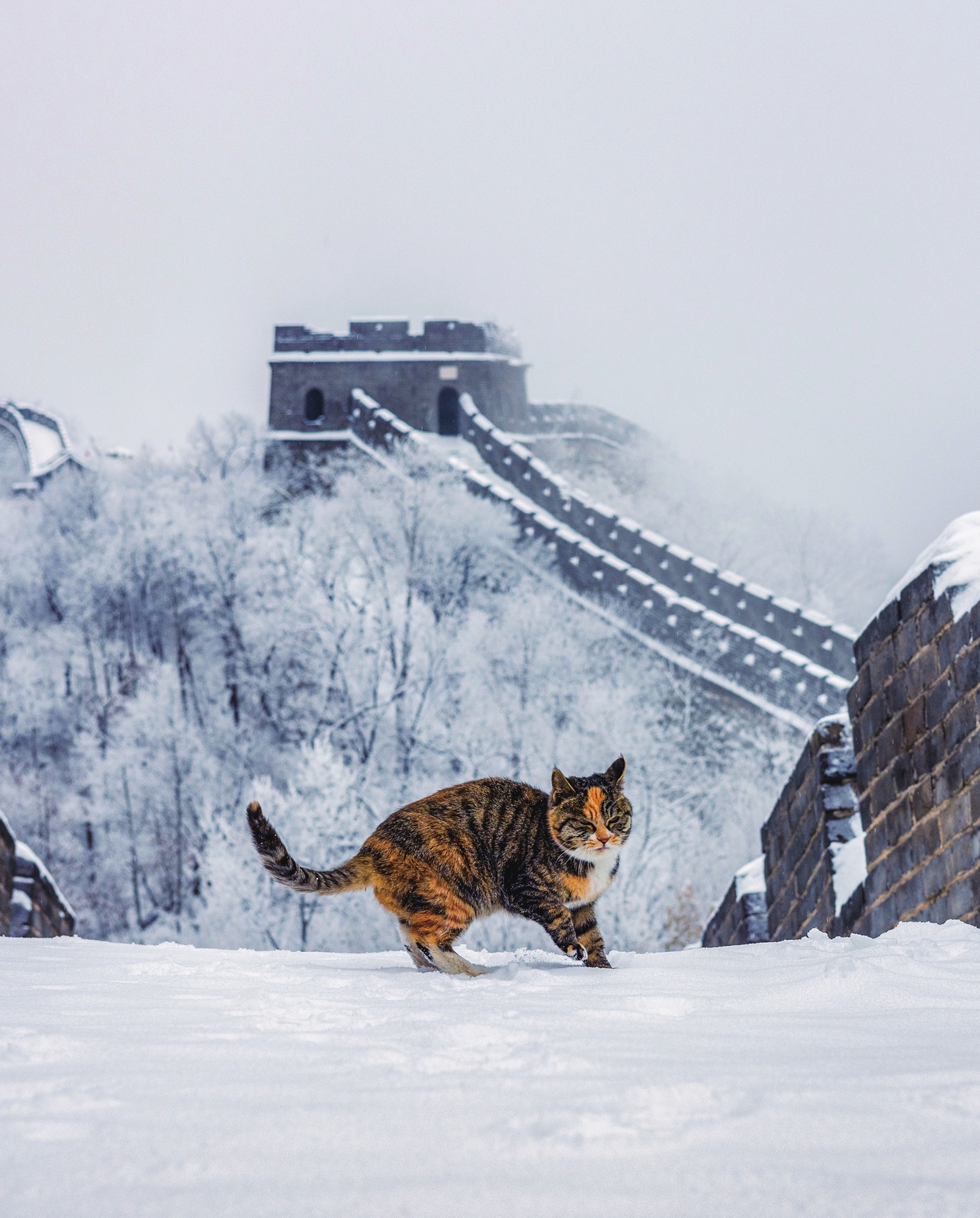
A cat at the Mutianyu section of the Great Wall in Beijing Photos: Courtesy of Guo Min
A post on Xiaohongshu (also known as RedNote app), China's lifestyle platform, showing an animal protection group rescuing two cats living on the Great Wall, drew public attention. The images reignited discussions around a long-observed presence on the Wall: Cats that have made the ancient structure their home.For years, visitors have shared videos of cats weaving through stone battlements or basking on watchtowers, especially along the Mutianyu section of the Great Wall near Beijing. On both Chinese and overseas platforms, the so-called "Great Wall cats" have become unexpected internet celebrities - symbols of warmth amid weathered stone, and of life persisting in a place shaped by history.
Cats have not always been part of the Great Wall's landscape. According to Guo Min, deputy general manager of Beijing Mutianyu Great Wall Tourism Service Co., the cats' presence at Mutianyu developed gradually over several decades.
The Great Wall's monumental history, set against the agility and presence of the cats, has given the Mutianyu section a more human and approachable image while drawing greater public attention to the welfare of stray animals, Guo told the Global Times.
Site managers also said the wall can serve as a window to the world, conveying a vision of "respect for life and harmony between humans and nature."
The Mutianyu section of the Great Wall was built in 1368, and extends east to Gubeikou and west to Juyong Pass. It has been a strategic military location guarding the capital region, featuring famous landmarks such as Zhengguantai, Dajiaolou, and "Eagle Flying Upside Down," famously known for the dangerous hills.
Cats take hold
In the 1990s, as the Mutianyu section of the Great Wall reopened to the public and tourism infrastructure expanded, a small number of stray cats began appearing near restaurants and shops at the base of the wall. Food waste and human activity provided opportunities for them to survive.
Between roughly 2005 and 2015, as the Mutianyu section became an internationally recognized destination, visitor numbers surged. With stable food sources and relatively few natural predators, a small but steady cat population formed along the wall and nearby facilities, Guo told the Global Times.
After 2015, social media amplified their visibility. Photos and videos of cats perching atop ancient stonework spread widely, transforming them into a recognizable symbol of the site.
Today, the Mutianyu section is home to an estimated 20 cats, a number Guo said has remained relatively stable.
Cats are not exclusive to the Mutianyu section. Other sections of the Great Wall, particularly those near villages or tourist routes, also see feline activity. What makes the Mutianyu section different is a convergence of several conducive conditions.
The environment offers shelter: dense vegetation, layered stonework and less exposure to extreme human interference provide hiding and resting places. The visitor profile also matters. The Mutianyu section attracts a high proportion of international travelers and experience-oriented domestic tourists, many of whom are animal-friendly and active on social media, helping boost the Great Wall cats' visibility.
What is also important is the site's layout. Concentrated visitor routes, rest areas and commercial zones create predictable points of human-animal interaction, making the cats more visible - and more discussed.
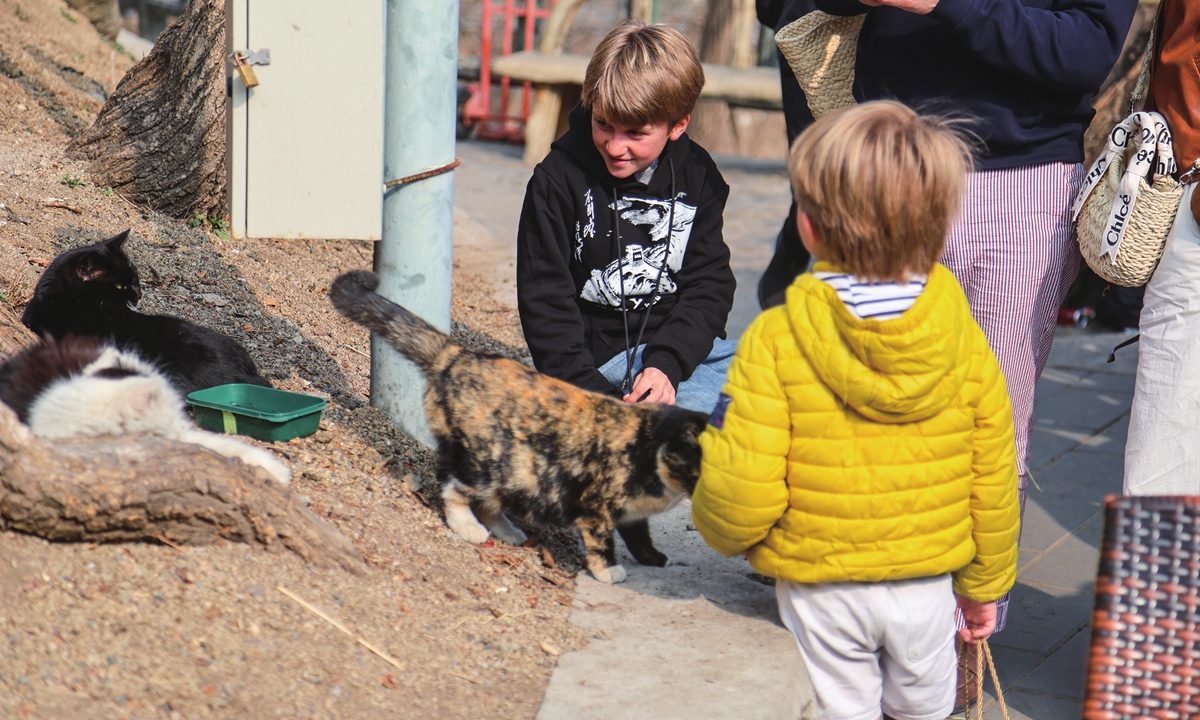
Tourists interact with a cat at the Mutianyu section of the Great Wall scenic area on March 10, 2025.
Responsible co-existenceManaging cats in a UNESCO-listed heritage site is a delicate task. At the Mutianyu section, staff provide basic support while trying to minimize impact on the wall itself.
The site established a "Great Wall Cats' Home" and provides the cats with food and drinking water. Minor injuries are treated on site, while serious cases are referred to veterinarians and animal welfare groups. Some cats have undergone sterilization through partnerships with volunteer organizations, or animal hospitals.
In addition, veterinary organizations that regularly assist stray cats provide some with sterilization and medical care, while many volunteers, guides and visitors help with feeding. Fixed feeding stations have been set up away from the historic structures to balance the cats' needs with heritage protection.
Still, Guo told the Global Times, the management team can only do their best to care for the stray cats, and some may inevitably be overlooked.
Social media posts reveal that visitors often interact with or feed the cats when they come across them on the Great Wall. The site encourages guided, responsible interactions, to maintain a small, natural cat population through scientific management and partnerships, balancing heritage protection, visitor safety, animal welfare and public sentiment.
"Hopefully visitors can transform their affection into responsible protection - avoiding casual feeding, refraining from disturbing or chasing the cats, supporting sterilization programs, and, if interested in adoption, going through official channels," Guo said. "This is the most responsible way to care for both the Great Wall and its feline residents."
For managers, the cats on the Great Wall are more than a charming distraction. They symbolize the preservation of cultural values and offer a deeper understanding of history.
In Guo's view, the attention surrounding the Great Wall cats highlights a broader cultural moment. He said paying attention to animal welfare at historic sites "is not just an act of kindness. It represents the preservation of cultural values and a deeper understanding of history, while also supporting sustainable development and adding a human touch in the present." Allowing history and living creatures to coexist adds warmth and richness to the Great Wall's cultural story. It also demonstrates the site's humanistic approach, enhancing visitors' experiences and emotional connection, remarked Guo.
RELATED ARTICLES