WHO reports details of two Nipah cases in eastern India, no further infections found

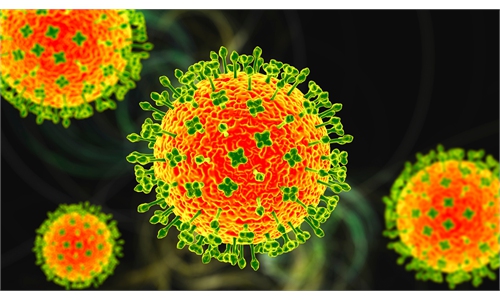
File photo of the Nipah virus disease. Photo: VCG
The World Health Organization (WHO) said on Friday that India has notified the agency of two laboratory-confirmed Nipah virus cases in the eastern state of West Bengal, adding that no other infections have been identified to date.
Primary reports said there could be five cases, but the tests confirmed only two, according to Indian government.
According to the statement released by the WHO, on 26 January 2026, the National IHR Focal Point for India notified WHO of two laboratory-confirmed cases of Nipah virus (NiV) infection in West Bengal State. Both are healthcare workers at the same private hospital in Barasat (North 24 Parganas district). NiV infection was confirmed at the National Institute of Virology in Pune on 13 January. One case remains on mechanical ventilation as of 21 January, and the other case experienced severe neurological illness but has since improved.
The statement said that authorities have identified and tested over 190 contacts, all of whom tested negative for NiV, with support from a mobile BSL-3 laboratory deployed by the National Institute of Virology, Pune. No further cases have been detected to date. This event represents the third NiV infection outbreak reported in West Bengal (previous outbreaks were reported in Siliguri in 2001 and Nadia in 2007). Enhanced surveillance and infection prevention and control (IPC) measures are in place while investigations into the source of exposure are ongoing.
NiV infection is a serious but rare zoonotic disease transmitted to humans through infected animals (such as bats), or food contaminated with the saliva, urine, and excreta of infected animals. It can also be transmitted directly from person to person through close contact with an infected person. There are currently no licensed medicines or vaccines for NiV infection; however, early supportive care can improve survival. WHO assesses the risk posed by Nipah to be moderate at the sub-national level, and low at the national, regional, and global levels, the statement added.
As the latest infections in India prompted global attention and concern over this virus little known to public, the WHO, in an exclusive email to Global Times, assessed the risk of further Nipah spread from the Indian cases is low and that there is no evidence so far of increased human-to-human transmission.
The incubation period of Nipah infection is typically 3 to 14 days, though in rare cases it can be up to 45 days. Human infections range from no symptoms to severe respiratory illness and fatal encephalitis. Early symptoms include fever, headache, muscle pain, vomiting and sore throat, which can progress to neurological signs, seizures, coma and death in severe cases, per WHO.
RELATED ARTICLES