ARTS / CULTURE & LEISURE
6 new archaeological finds in Hubei enrich Chinese civilization with ‘Yangtze chapter’
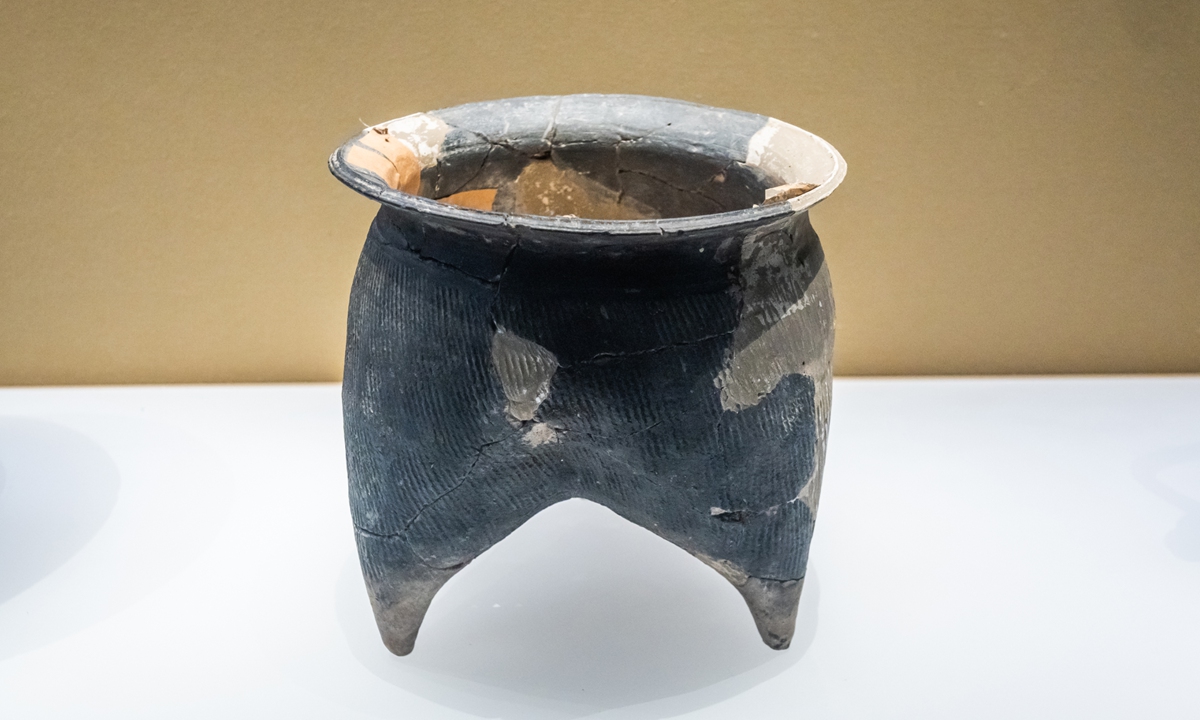
Relic unearthed from the Maojiazui site Photo: VCG
Six major archaeological discoveries made in 2025 in Central China's Hubei Province were unveiled on Tuesday. The findings contribute an indispensable "Yangtze chapter" to China's vast and profound civilization, according to the Hubei Provincial Institute of Cultural Relics and Archaeology.The Chishan site and Maojiazui site in Huanggang, the Mopanshan Chu State site in Yichang, the Beitai platform complex at the Guangzong Temple of the Chu State-Jinan Ancient City in Jingzhou, the Jinniu tomb site in Jingmen and the Xia (c.2070BC-c.1600BC), Shang (c.1600BC-1046BC) and Zhou Dynasty (1046BC-771BC) sites along the rivers in Wuhan are the six new discoveries unveiled on Tuesday, Song Bo, an official with the Hubei provincial bureau of cultural relics, told the Global Times on Tuesday.
The discoveries are the focus of research into the origins of the Yangtze River civilization. Together, they link a 5,000-year chain of civilization in the middle reaches of the Yangtze River, jointly demonstrating how Jingchu culture grew and flourished through sustained cross-regional exchange and integration, and ultimately contribute an indispensable "Yangtze chapter" to China's vast and profound civilization, said Fang Qin, director of Hubei Provincial Institute of Cultural Relics and Archaeology.
Excavations at the Chishan site have uncovered high-status tombs dating back approximately 5,300 years. Experts say the site represents a key region linking prehistoric cultural exchanges and interactions between the middle and lower reaches of the Yangtze River around 5,300 years ago, providing new empirical evidence for research into the increasing complexity of prehistoric societies, regional interaction, the origins of the Yangtze River civilization and the origins of Chinese civilization, according to the bureau.
The Maojiazui site has yielded a rich and diverse array of well-preserved organic remains, including lacquerware, wooden objects, and bamboo artifacts - finds that are rare at contemporaneous sites in southern China.
These discoveries enrich the understanding of Shang and Zhou dynasties in eastern Hubei and provide crucial material for reconstructing its social landscape from multiple perspectives. The site has also produced artifacts such as pure copper ingots and ceramic casting molds, indicating the presence of copper-casting handicrafts and the capability for independent bronze production. This offers important evidence for research into the exploitation of copper resources in the middle reaches of the Yangtze River, as well as the production and circulation of bronze artifacts in southern China.
Key features such as city walls and copper-casting workshops have been uncovered in the Mopanshan Chu State site, confirming for the first time that the site is a Chu State city dating to the Spring and Autumn Period (770BC-476BC).
A large, well-preserved palace complex dating to the Warring States period (475BC-221BC) was revealed within the Chu State-Jinan Ancient City in Jingzhou.
Through stratigraphic excavation of rammed-earth structures and soil micromorphological analyses, researchers have confirmed that the ancient Chu people possessed a relatively complete system of construction engineering techniques. Their distinctive, locally adapted building methods - characterized by "transforming wetlands and sourcing materials from water" - fill a major gap in research into architectural technology in southern China during the pre-Qin period.
The Jinniu tomb is the first early Western Han (206BC-AD25) feudal king mausoleum complex ever discovered in Hubei. With its intact layout and clearly defined structure, it represents one of the most significant Han Dynasty (206BC-AD220) archaeological discoveries in the province in recent years.
In addition, groups of lacquered wooden chariot-and-horse figurines and painted pottery figures unearthed at the site provide physical evidence for examining the arrangement of chariot formations and reconstructing the funerary rituals of Western Han feudal kings.
RELATED ARTICLES