ARTS / ART
China’s 6 archaeological achievements for 2025 unveiled, spanning from Paleolithic Age to Tang Dynasty
Sites span from Paleolithic Age to Tang Dynasty
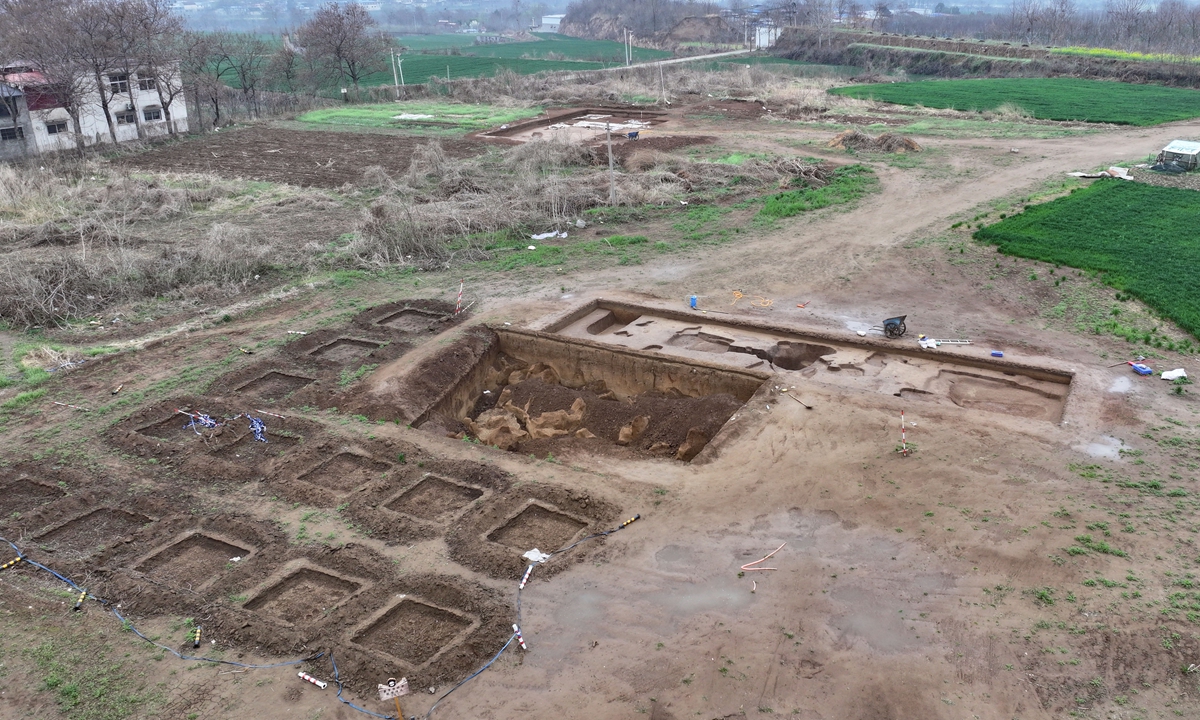
A photo of the Peiligang site in Central China's Henan Province Photo: VCG
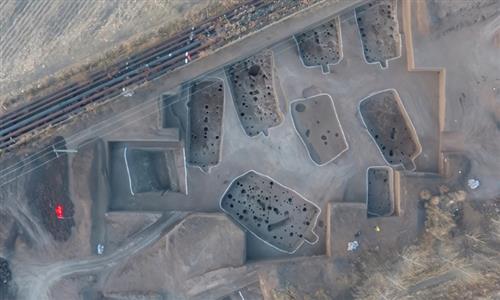
Featuring ancient ruins spanning from the Paleolithic Age to the Tang Dynasty (618-907), six sites were revealed by the Chinese Academy of Social Sciences on Wednesday as notable archaeological achievements in China for 2025.These archaeological sites follow a continuous historical line, yet each possesses its own characteristics. The Xinmiaozhuang Paleolithic site in Yangyuan county, North China's Hebei Province, is one of those on the list.
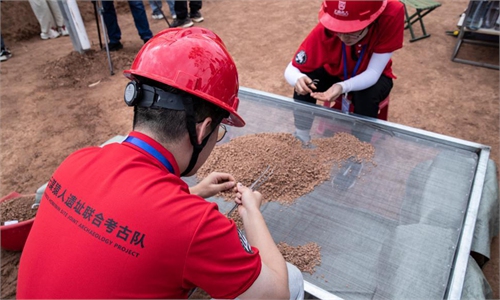
During the archaeological fieldwork cycle from 2022 to 2025, the most significant discoveries made by researchers consisted of ancient human remains and traces of fire usage. Notably, in 2024, ash deposits and burned bones were uncovered at spot No.2 of the site.
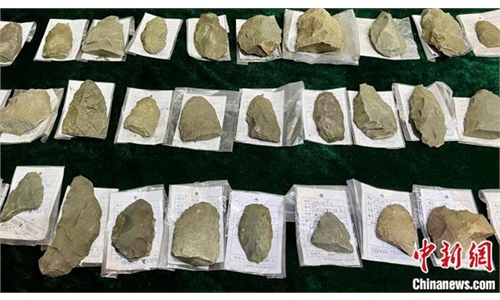
Over 4,000 stone artifacts and animal bones were also excavated. The stone artifacts including hammer-struck cores, flakes, and various tools were found all belonging to a typical flake-tool technology.
"Mastering the flake-tool technology was far more complex than simply slicing stones. It first required ancient humans to carefully select stone materials, followed by precise processing to detach small flakes with sharp edges," archaeologist Liao Ping told the Global Times. "The portability of these flakes during hunting and migration further reflects how ancient people used technological innovation to maximize survival efficiency."
Meanwhile, at the site's No.5 spot, more definitive evidence of ancient human lithic processing was unearthed. This area yielded not only over 70,000 stone artifacts, but also revealed multiple traces of heat-treated stone materials at their bases. The raw material of these artifacts is volcanic breccia. Based on these findings, archaeologists concluded that the site likely served as a primary stone tool workshop. Early artifacts, such as shell and ostrich eggshell bead strings, demonstrate the processing techniques used in creating bead-based ornaments.
"The discovery of this site reveals ancient humans' innovative use of fire. At the same time, it offers real evidence for further exploring the origin and evolution of modern humans in North China," said Wang Fagang, lead archaeologist of the project.
Located in Central China's Henan Province, the Peiligang Neolithic Ruins has also been added to the recent "Achievements List." The Peiligang culture represented by this site dates back 8,000 years and is considered one of the origins of Chinese agricultural civilization.
In 2025, archaeologists discovered a multi-room structure and pottery sculptures featuring human faces with fangs at the site. These sculptures mainly depict human and animal heads, with the heads shaped like the Chinese character "jie" (介). They "may represent prototypes of later deity figures used for rituals," explained Liu Qi, a researcher working on the project.
The Zhengjiagou ruin in Hebei Province was selected due to the significant discovery of a "jade pig dragon" also known as pig-shaped Chinese dragon, which is believed to be the earliest known prototype of the Chinese dragon. The Zhengjiagou site represents the Hongshan culture that dates around 6,500 years and is a symbol of China's more than 5,000 years of continuous history.
The Zhengjiagou site represents China's Hongshan culture that dates around 6,500 years and is a symbol of China's more than 5,000 years of continuous history.
Prior to the discovery of Hebei's Zhengjiagou site, Sun Jinsong, a Hongshan culture expert, told the Global Times that most of the Hongshan culture remains were found in the southeastern part of what is now the Inner Mongolia Autonomous Region, the southwestern part of Liaoning Province. The discovery at the Hebei site has "extended the chronological range of the Hongshan culture," providing new clues "for tracing its spread and population migration," noted Sun.
Located in East China's Shandong Province, the Langyatai site provides evidence for historical records of China's first emperor Qin Shi Huang's construction of the Langyatai Terrace. The site has been included in the list for embodying the engineering capabilities of the Qin and Han (206BC-AD220) periods.
Far from Shandong, the tomb site of Husta and the east Badamu cemeteries in Northwest China's Xinjiang Uygur Autonomous Region were also incorporated in the list.
The tomb site of Husta, primarily dating back to around 1600 BC, has yielded a tin-bronze alloy knife, one of the earliest bronze artifacts found in China. Meanwhile, the east Badamu cemeteries saw the discovery of an anonymous epitaph paying tribute to a high-ranking Tang Dynasty (618-907) official along with other relics like clay figurines, pots, and more in 2022.
Chen Qiwen, a researcher to the project with the Academia Turfanica said that these finds "proved that the inheritance and use of calligraphy in the area followed the cultural characteristics of the central plain areas of China," according to Xinhua News.
In 2025, archaeologists uncovered a Tang Dynasty tomb at this site, featuring painted murals of twelve winged auspicious beasts. This discovery illustrates the historical integration and coexistence of various ethnic groups during the Tang Dynasty.
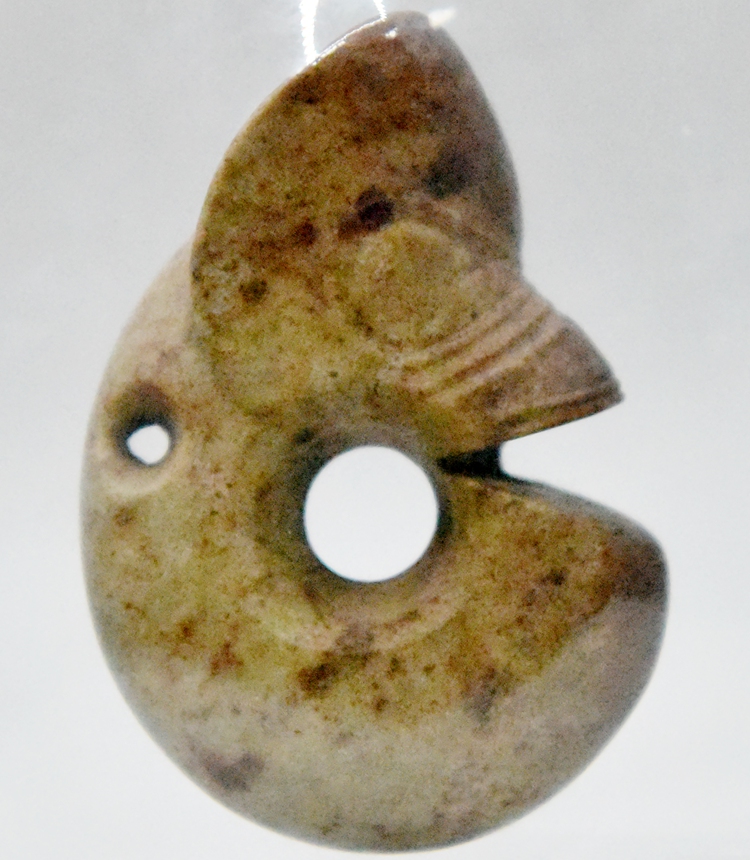
The relic of "jade pig dragon" also known as pig-shaped "loong" that was unearthed from the the Zhengjiagou ruin in Hebei Province Photo: VCG
RELATED ARTICLES