ARTS / MUSIC
Time to 'Go East': Chinese AI band breaks Western narrative hegemony through music
Time to 'Go East'
By and Li Xundian Published: Feb 05, 2026 10:58 PM

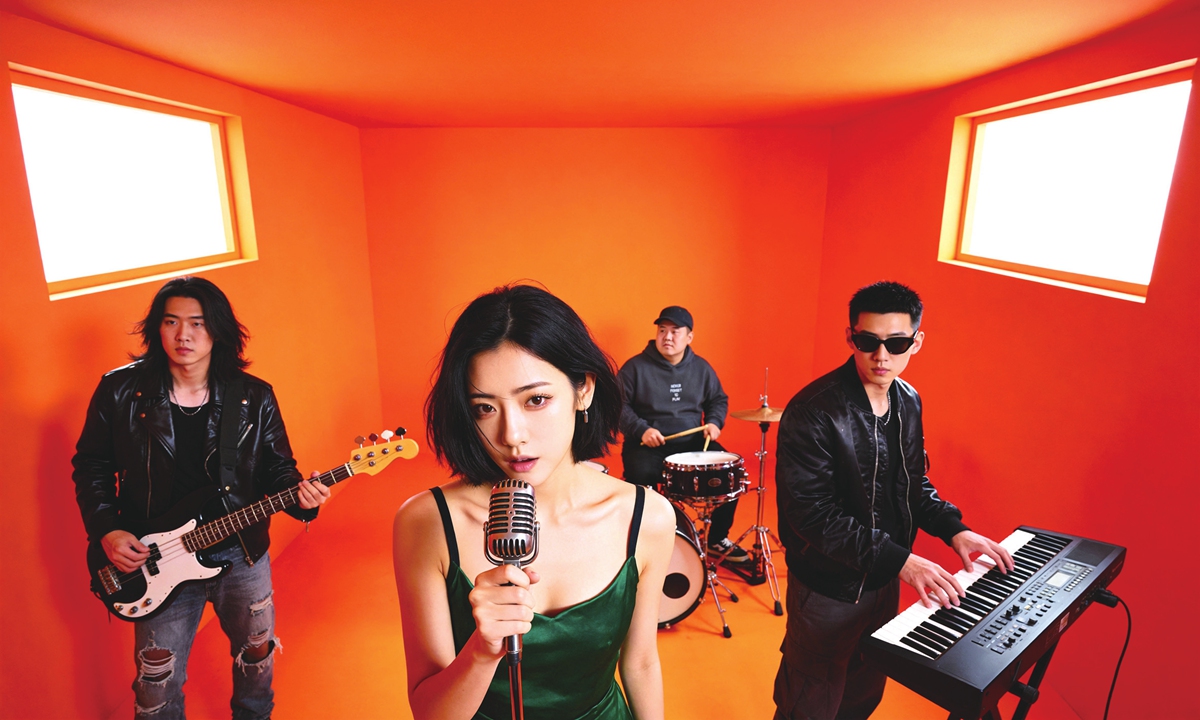
Chinese AI band Innokids Photos: Courtesy of Ma Chao
"Together, peace is in our hands; Together, there is no ALICE line… Go East, life is peaceful here; Go East, no more drugs or fear…" Scroll through any social media platform these days, and chances are you'll stumble upon this catchy tune from the song "Go East," a reimagined cover by Chinese artificial intelligence (AI) band Innokids that has taken the internet by storm.
From domestic apps to overseas platforms such as YouTube, the song has sparked a frenzy of discussions, winning widespread acclaim from many netizens worldwide. Some Chinese listeners are hailing it as "the best song of the year," while some foreign commenters gush over the song, saying that it offers a refreshingly different view of China far from the distorted images they're used to seeing.
This viral hit is from an AI band composed of four virtual humans whose creators use music as a universal language to challenge Western narrative hegemony and tell the real story of China. Innokids, a unique virtual band, has risen to prominence with its rapid creation cycle, diverse thematic choices, and unapologetic stance, blending musical artistry with AI innovation to break down barriers in cross-cultural communication.
"Our inspiration comes from the present, both current political issues and daily topics that resonate with ordinary people," Ma Chao, founder of Innokids, a digital creative professional and an amateur follower of international relations, told the Global Times in an exclusive interview.

Screenshots from the music video for "Go East" by Innokids
Reclaim the narrative
From the "ALICE Threshold" controversy plaguing Western societies to calls for justice on the international stage, Ma said the band draws material from the issues that matter most, with a core goal of shattering prejudices through their music.
The idea for "Go East" emerged from Ma's reflection on Western narrative dominance, and it is adopted from "Go West" originally by the US disco group Village People, but was later popularized by the UK band Pet Shop Boys, whose version, which was created after the end of the Cold War, is seen by some as an ideological anthem celebrating the so-called "triumph" of Western values. "Pet Shop Boys attached political connotations to this song," Ma said.
Three decades later, Ma pointed out, Western societies are mired in deep-seated social crises, from eroding social safety nets to widening inequality, issues that stand in stark contrast to China's unwavering commitment to safeguarding people's livelihood.
"We say 'fight magic with magic,'" Ma said, noting that for years the Western melody has been tied to a narrative that frames their model as the only path to success.
However, now, it is the time to rework it as "Go East" to show the world there's another social system, one that prioritizes the collective, and lifts up the many, not the few.
Ma recalled that the reactions to "Go East" has been a revelation, with thousands of comments pouring in from four distinct global groups: Chinese netizens rallying behind the band's unfiltered voice on foreign platforms, Chinese expats and students studying overseas expressing pride in their motherland's progress, Chinese descendants overseas reconnecting with their cultural roots at the sight of a modern, powerful China, and international viewers who found in the song's music video a rare, unfiltered glimpse of China that stands in sharp contrast to Western media's distorted portrays.
For many global fans, the footage in the music video of China's diverse landscapes, vibrant night markets, and heartwarming moments, like Chinese People's Liberation Army soldiers saluting a young child and rescue teams aiding disaster victims, struck a chord, with comments praising China's "humanity," "safety," and "incredible development."
Some netizens have pointed out that beyond being just a viral hit, "Go East" has become a symbol of a shifting global discourse: After decades of Western narratives dominating the cultural sphere, Chinese creators are now "speaking up," sharing the reality without the lens of external bias.
Besides "Go East," Innokids has also created a lot of songs to clearly convey their stance on some international issues, including Japanese Prime Minister Sanae Takaichi's erroneous remarks concerning the Taiwan question, and the Israeli-Palestinian conflict. "Music has always been a powerful medium to express our attitudes," said Ma.
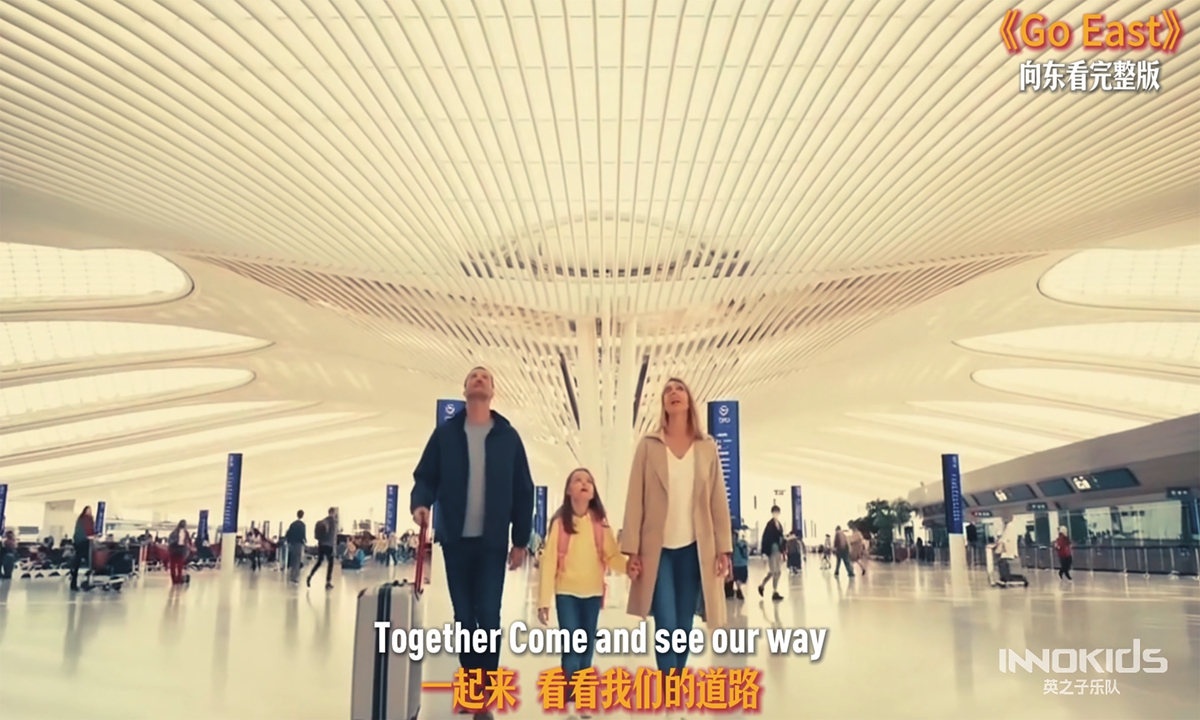
Screenshots from the music video for "Go East" by Innokids
Human-centric AI
What sets Innokids apart is its innovative use of AI, which is far from blind automation. Ma explained that before AI music models matured in 2025, traditional music production required a large team, weeks of work, and substantial costs, involving songwriting, composition, recording, and post-production. But now, AI streamlines this process, allowing a creator to generate high-quality music drafts in minutes with just a few clicks.
"AI is a tool, not a creator," Ma emphasizes. The band adheres to a "human-centric AI" approach. Ma and his team lead the brainstorming, topic selection, and lyrical design, which are the "soul of the works," before AI generates the musical framework. Human producers then refine the AI's output, correcting pronunciation, mixing tracks, and polishing vocals to infuse the digital music with a human-like warmth and authenticity.
Ma and his team have even created a realistic virtual lead singer with a distinct personality, blurring the line between digital and actual humans to foster an emotional connection with audiences.
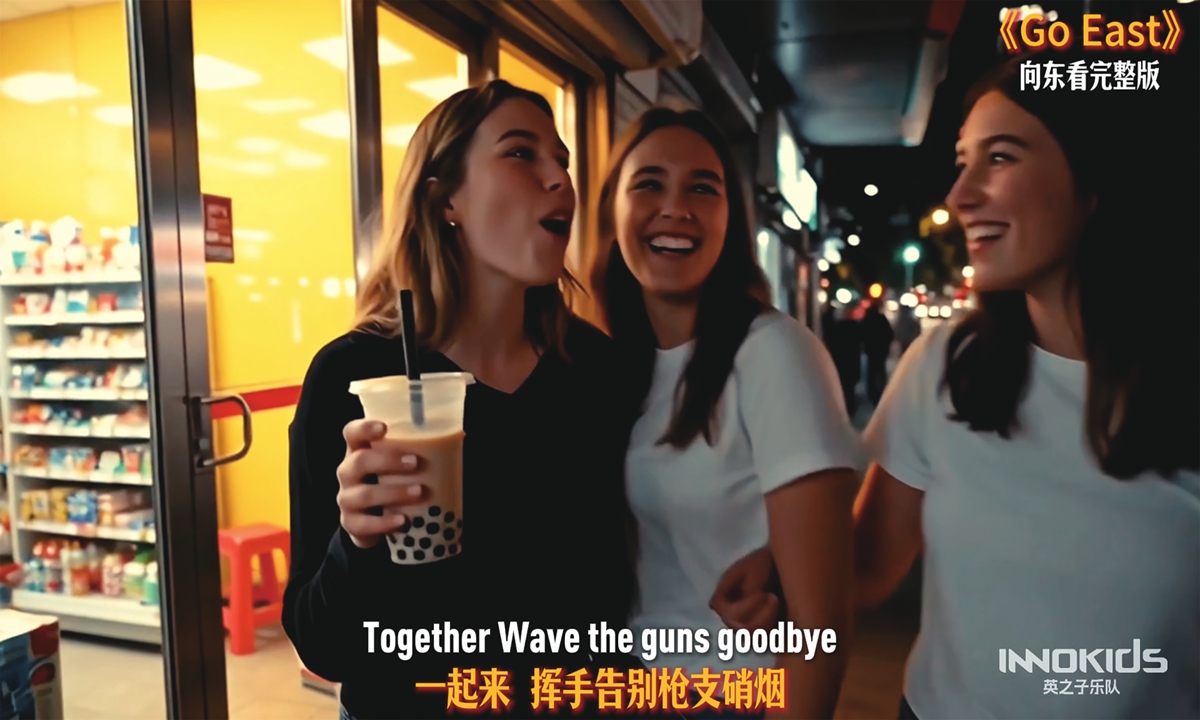
Screenshots from the music video for "Go East" by Innokids Photos: Courtesy of Ma Chao
This synergy of human creativity and AI power also shapes the team's approach to covering global classic hits, acquiring official copyrights to rework tracks by legends such as Michael Jackson.
For some covers, such as "Heal the World," Innokids retains the original lyrics but weaves in Chinese cultural elements and visual narratives of China's global humanitarian efforts, demonstrating China's global contributions through this popular song.
For others, like "Go East," they rewrite the lyrics to flip the original's narrative, using a melody Western audiences know and love to tell a Chinese story.
It is a strategy rooted in Ma's belief in effective cross-cultural communication. "We may draw from history and blend in Chinese or Eastern elements, using songs familiar to Western audiences to tell our own stories," Ma said.
RELATED ARTICLES