ARTS / CULTURE & LEISURE
Exhibition of Wu Weishan’s sculptures of historical figures inaugurated in Beijing, showcasing his signature ‘freehand’ style
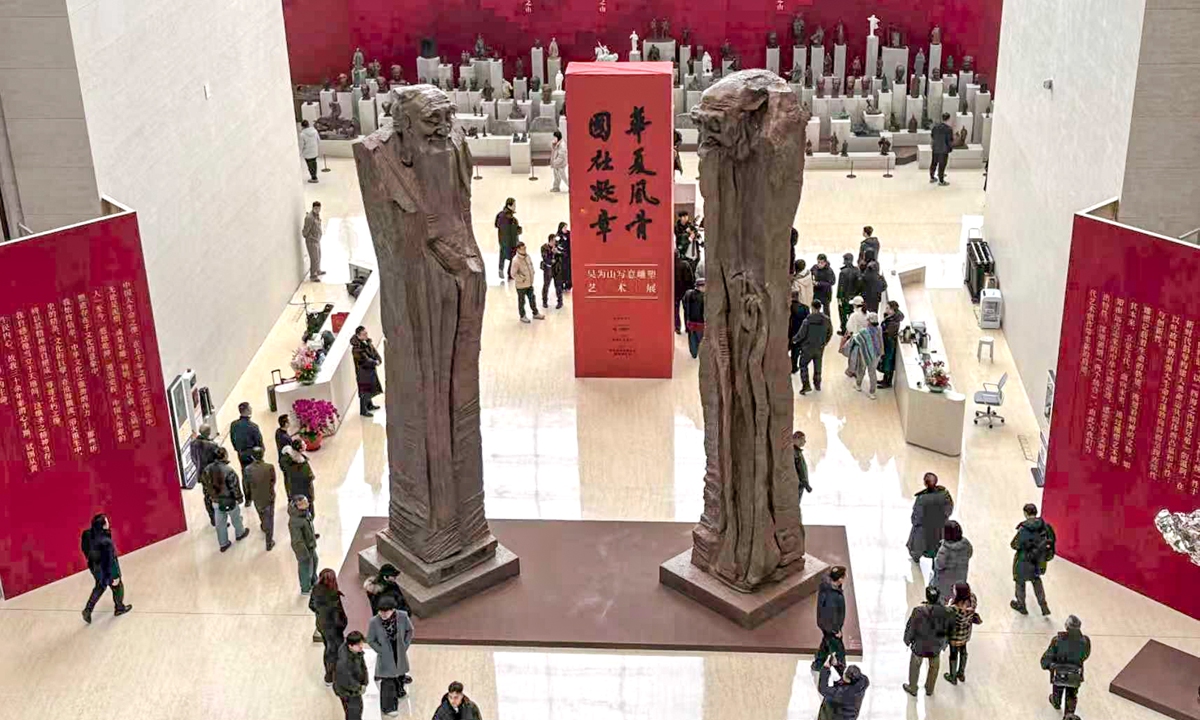
The sculptures of Chinese philosophers Confucius and Lao Tzu by Wu Weishan are on display at the exhibition in Beijing on February 6, 2026. Photo: Wu Jie/GT
Internationally acclaimed sculptor Wu Weishan launched his latest sculpture exhibition on Friday in Beijing, bringing together sculptures of historical figures and offering a systematic overview of the modern freehand sculptural system he pioneered.
The exhibition features Wu's selected works of more than 200 sculptures of historical figures spanning the fields of humanities, history and science. According to the exhibition's organizers, it promotes the spirit of Chinese aesthetics and distills the essential qualities of figures drawn from Chinese civilization.
At the opening ceremony, Wu said he organized the exhibition with boundless gratitude and deep emotion.
The great Chinese nation has produced many heroes worthy of remembrance; they are the coordinates guiding the nation's progress. "These figures often appear in my dreams," Wu said. Wu is also vice chairman of the Central Committee of the China Democratic League and vice chairman of the China Artists Association.
"This great era has given us both strength and warmth, and it has also endowed me with an untiring drive to create. I wish to express my patriotism through clay and bronze. This exhibition presents my work in stages. No individual can be separated from their time or from history. I am but a small drop of water in this great era, still in need of constant learning, and I hope to continue creating works that are loved by the people in the future," Wu noted.
Made in bronze or clay, the historical figures on display include ancient Chinese philosophers Confucius and Lao Tzu, Tang Dynasty (618-907) poet Li Bai, modern literary giant Lu Xun and renowned artist Qi Baishi.
Renowned Chinese sculptor Sheng Yang said at the opening ceremony that Wu integrates the spiritual essence of his subjects with his own reverence for and understanding of them in his works. As a result, his sculptures not only embody the character of the figures portrayed but also carry his personal sensibilities and emotions.
Wu's works are like a great river - at times rushing, at times surging with waves -brimming with vitality as they flow onward in a mighty course toward the distance, Sheng said.
Calligrapher Zhu Junguo told the Global Times at the scene that he came to study the exhibition and draw inspiration for his own work.
Wu's sculptures are deeply moving and profoundly powerful. To move others through art, one must first be moved. Whether in calligraphy or sculpture, he reveals the beauty and strength of lines, Zhu said.
Wu has long used sculpture as a medium to promote in-depth dialogue between Chinese and Western -civilizations, such as his works An Encounter - The Dialogue between Confucius and Socrates and The Dialogue between Leonardo da Vinci and Qi Baishi, which were also exhibited at the event.
Renowned writer Wang Meng said at the opening ceremony that he felt deeply moved by Wu's sculptures.
"What you see is not merely a sculpture, but civilization, spiritual character, the spirit of the times and a Chinese path to modernization," Wang said.
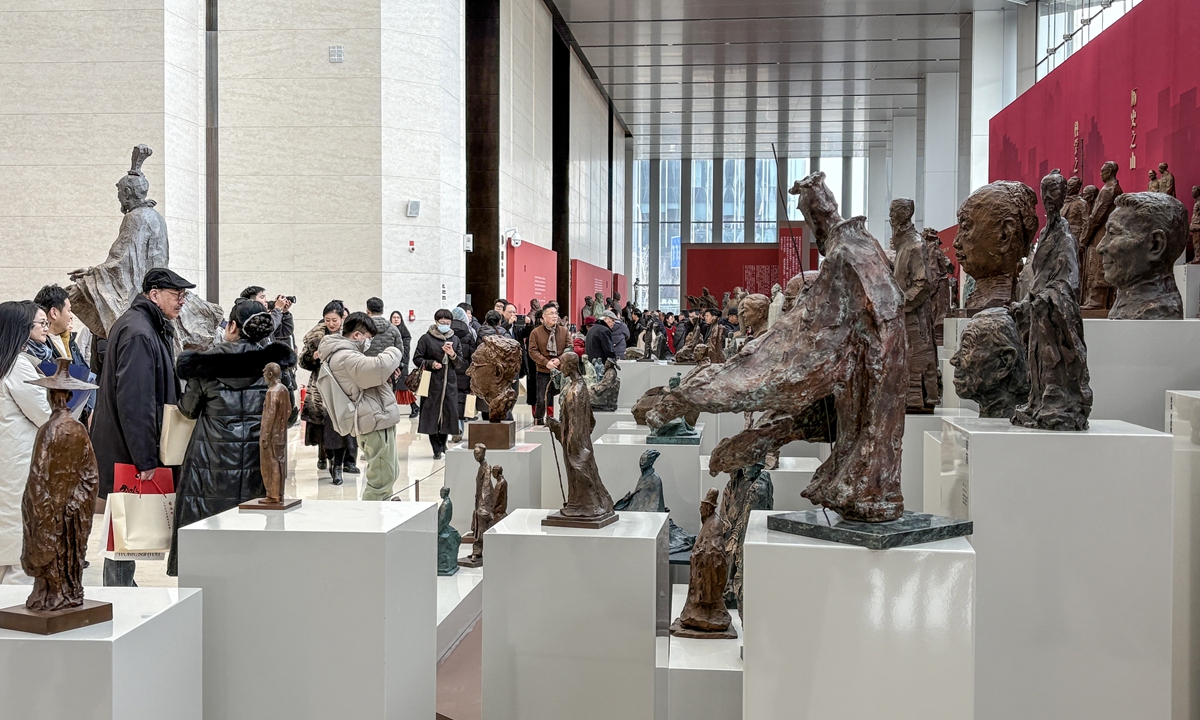
Visitors take photos of Wu Weishan's sculptures at the exhibition. Photo: Wu Jie/GT
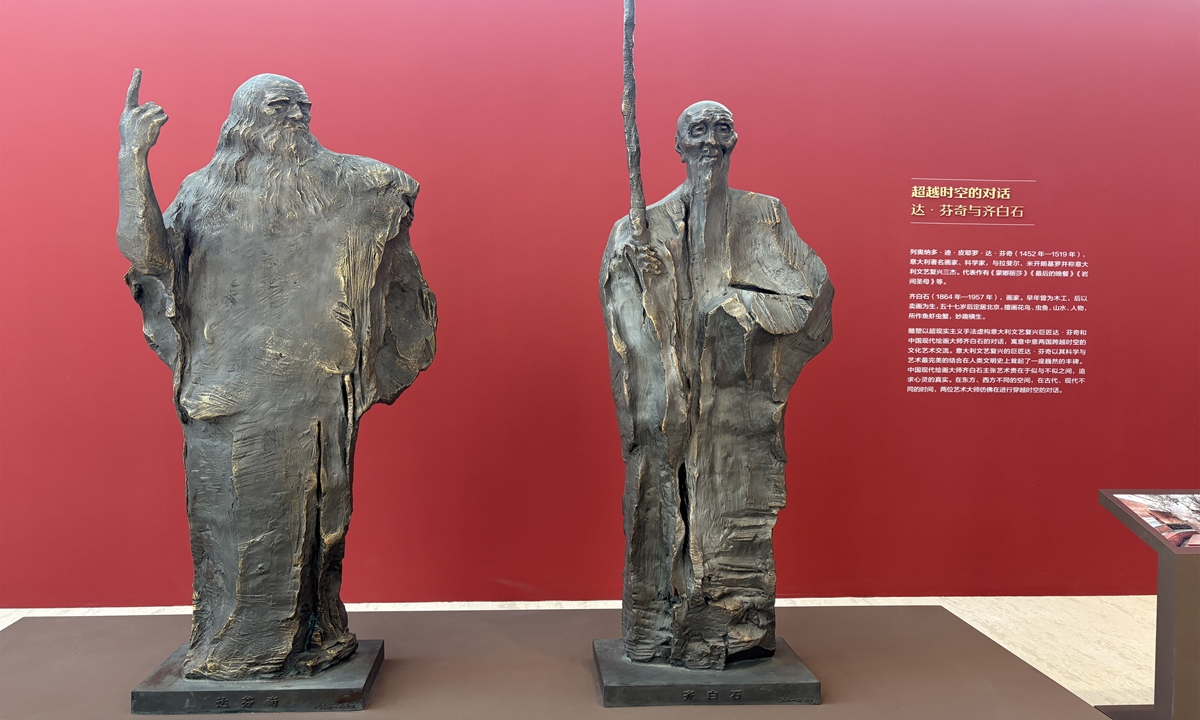
The Dialogue between Leonardo da Vinci and Qi Baishi by Wu Weishan. Photo: Wu Jie/GT
RELATED ARTICLES