BRASIL 247 / MORE
Brazil coffee output set to reach new record in 2026, Conab says
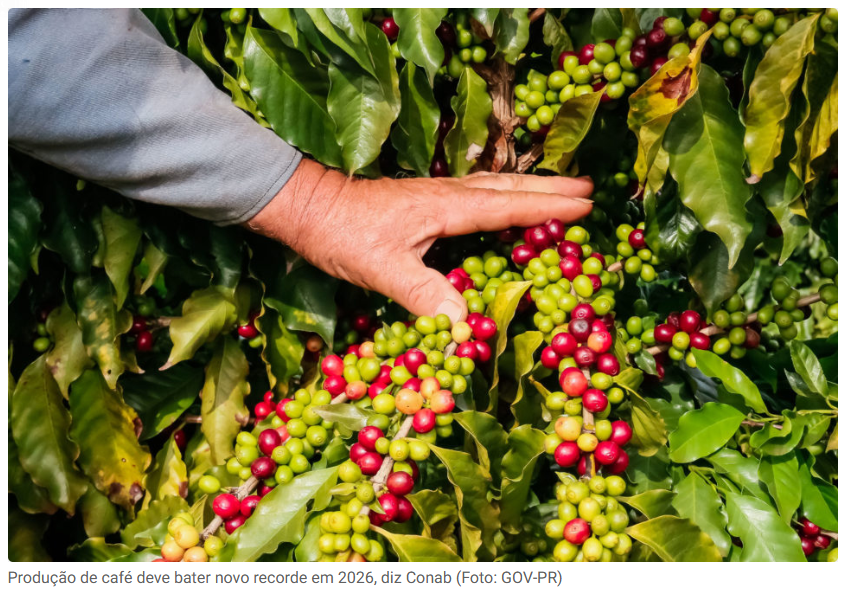
Photo: screengrab from the official website of Brasil 247
By Brasil 247 - Brazil's coffee production is expected to reach a new historical high in 2026, according to the first official forecast released by the National Supply Company (Conab). The estimate points to a harvest of 66.2 million 60-kilogram bags, an increase of 17.1 percent compared to the 2025 crop, which would mark the largest volume ever recorded in the country's official historical series.
The data were published on Thursday in Conab's First Coffee Crop Survey for 2026. According to the agency, the projected growth reflects a combination of favorable climatic conditions and structural factors that supported crop development throughout the cycle.
The survey indicates that Brazil is entering a year of positive bienniality, with the area under production expected to expand by 4.1 percent, reaching 1.9 million hectares. In addition, improved weather conditions and increased adoption of technology and good agricultural practices contributed to a significant rise in average productivity, estimated at 34.2 bags per hectare, up 12.4 percent from the previous season.
If confirmed, the 2026 output will surpass the previous record set in 2020, when national production totaled 63.1 million bags. Conab notes that the performance reflects not only short-term conditions but also consistent advances in Brazil's coffee production system.
Arabica coffee, which is more sensitive to biennial cycles, is expected to reach 44.1 million bags, representing growth of 23.3 percent compared with the previous harvest. The increase is attributed to expanded productive area, more balanced weather conditions, and the physiological effects typical of a positive cycle. For conilon coffee, production is projected at 22.1 million bags, an increase of 6.4 percent year on year, with the possibility of a new historical record for the variety.
Regional data reinforce the overall growth trend. In Minas Gerais, Brazil's main coffee-producing state and the largest producer of arabica, output is estimated at 32.4 million bags, supported by improved rainfall distribution, particularly in the months leading up to flowering. São Paulo is expected to harvest 5.5 million bags, driven by positive bienniality and recovery of areas affected in the previous cycle.
In Bahia, total coffee production is forecast to rise 4 percent to 4.6 million bags, including 1.2 million bags of arabica and 3.4 million bags of conilon. Espírito Santo, the country's largest conilon producer, is expected to harvest 19 million bags, an increase of 9 percent compared to 2025, with 14.9 million bags corresponding to conilon coffee, a result attributed to favorable rainfall in the northern part of the state.
Rondônia, where coffee cultivation is exclusively conilon, is projected to reach 2.7 million bags, an increase of 18.3 percent over the previous harvest. Conab attributes the performance to the renewal of genetic material in plantations, with the adoption of more productive clonal plants, combined with favorable climatic conditions since the beginning of the cycle.
On the external market, despite a 17.1 percent decline in export volumes in 2025 to 41.9 million bags, Brazil recorded a historic revenue of US$16.1 billion from coffee exports. According to data from the Ministry of Development, Industry, Trade and Services, the result reflects higher prices, with the average export price rising 57.2 percent compared with 2024.
For 2026, prices are expected to remain at elevated levels despite forecasts of a record Brazilian harvest and a strong crop in Vietnam. The US Department of Agriculture estimates that global coffee consumption will continue to grow and reach a new record of 173.9 million bags, driven mainly by demand in Asian markets such as China, Indonesia, and Vietnam.
In this context, global stocks remain under pressure. The USDA estimates that world inventories at the start of the 2025/26 season will be the lowest in 25 years, at 21.3 million bags, a decline of 7.8 percent compared with the previous cycle. By the end of the season, stocks are projected to fall further to 20.1 million bags, a factor expected to sustain pressure on international coffee prices.
(Reported by Brasil 247 on Feb 5, 2026)
