SPORT / MISCELLANY
Short track team’s presence underlines inheritance, ambition
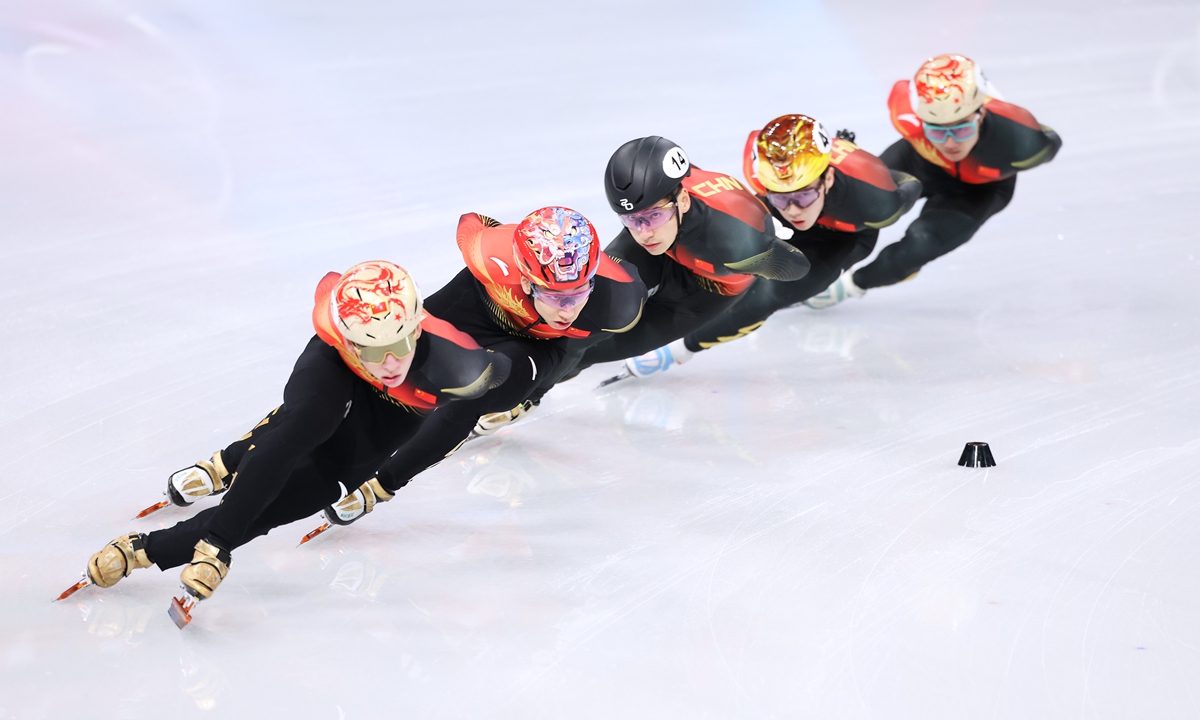
Chinese short track speed skaters conduct their first training session in Milan, Italy. Photo: VCG
China's short track speed skating team will start their campaign at Milan Cortina 2026 on Tuesday in the mixed team relay at the Forum di Milano in Italy. The squad embarks on a quest not just for medals, but to uphold a tradition of excellence that has transformed China from a winter sports novice into a global powerhouse.Their journey, marked by the passing of the torch from veterans to rising stars, embodies the essence of inheritance in Chinese athletics. Since its Olympic debut as a full medal event in 1992 at Albertville in France, the discipline has delivered the hopes of China's Winter Olympic success.
To date, the team has amassed 12 gold, 16 silver and 9 bronze medals, making it the country's most decorated winter pursuit. This tally places China second only to South Korea in the all-time standings, with 37 total medals edging out Canada's identical count thanks to those dozen golds.
The breakthrough for China's short track came in 2002 at Salt Lake City, the US, where Yang Yang shattered barriers by claiming China's first-ever Winter Olympic gold in the women's 500m, followed swiftly by another in the 1,000m.
From Yang's early triumphs, the short track team has been pinned for China's medal hopes at the Winter Olympics. Icons like Wang Meng, who secured four golds across the 2006 Turin and 2010 Vancouver Games in the 500m, 1,000m and relays, set a benchmark for dominance.
Zhou Yang added three more golds in the 1500m and relays between 2010 and 2014, while Wu Dajing's blistering world-record performance in the men's 500m at Pyeongchang 2018 cemented his status as a national hero.
At Beijing 2022, the home Games yielded two golds, including the inaugural mixed team relay, underscoring the team's adaptability. This inheritance, both literal and metaphorical, is what elevates China's short track program beyond athleticism. It's a system where veterans like Fan Kexin, now in her fourth Olympics at age 32, don't just compete but also shape the future of the team.
Fan, a silver medalist in the 1,000m at Sochi 2014 and gold winner in the mixed relay at Beijing 2022, has transitioned into a guiding force. Her experiences have forged a resilience she has passed on.
The current roster exemplifies this blend. China fields a full complement of 10 athletes, five men and five women who qualified through strong showings during the 2025-26 ISU Short Track World Tour.
Among the women, Fan leads alongside promising youngsters like Gong Li and Zhang Chutong, the latter named a flag bearer for the opening ceremony alongside speed skater Ning Zhongyan. Zhang, at 22, already boasts a bronze from the women's 3,000m relay at Beijing 2022, and her poise under pressure hints at a bright future.
On the men's side, naturalized stars Lin Xiaojun and Liu Shaoang bring international pedigrees. Lin, formerly representing South Korea, won gold in the 1,500m and bronze in the 500m at Pyeongchang 2018 before switching his nationality to China following a suspension in South Korea. Now 29, he's expressed profound gratitude to China for reviving his career.
Liu, a Hungarian-born Olympic champion with two gold medals from Pyeongchang 2018 and Beijing 2022, was naturalized in 2023 after being drawn by his Chinese heritage. At 27, he aims to make history as the first male short tracker to win three straight Olympic golds. Complementing them is Sun Long, a rising talent who shone in recent World Tour stops. Wu Dajing, the retired 2018 Olympic champion who embodies this shift, is offering insights from the sidelines after hanging up his skates in January.
Looking ahead, the team's prospects are hopeful. The mixed relay, in which China triumphed in 2022, kicks off the action, followed by individual events like the men's 500m, in which Lin and Liu could contend fiercely. Challenges abound, the competition is fiercer than ever, with powerhouses like South Korea and Canada pushing boundaries.
Yet, the squad's preparation, including intense sessions at their Beijing base and early arrival in Milan on February 1, positions them well. As Milan Cortina unfolds, this inheritance could propel China to new heights, inspiring a generation and solidifying its winter sports legacy. Whether they win medals or face setbacks, the team's unyielding drive ensures the flame burns bright for years to come.
The author is a reporter with the Global Times. life@globaltimes.com.cn
RELATED ARTICLES