SPORT / MISCELLANY
Unsung breakthroughs signal broader rise of China’s winter sports
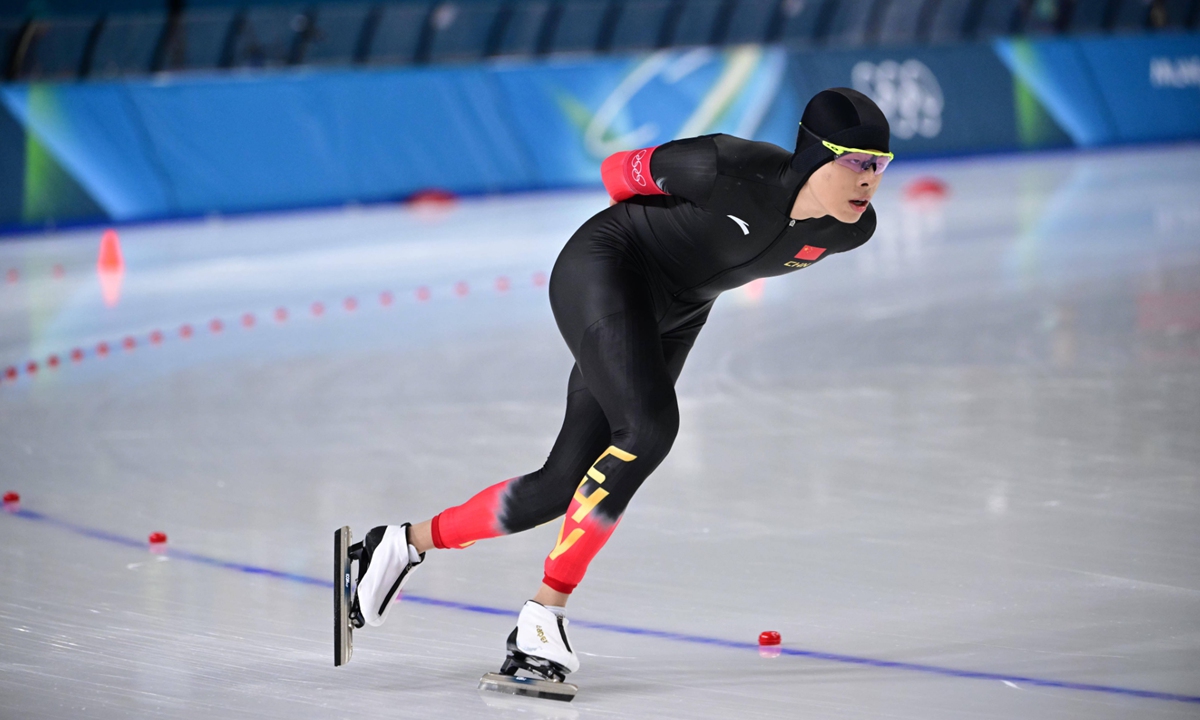
Liu Hanbin Photo: VCG
The Milan-Cortina 2026 Winter Olympics is in full swing. For many winter sports fans, several Chinese athletes have already demonstrated remarkable progress in events where the country has historically struggled. These advancements underscore a holistic elevation in China's winter sports program, proving that the success of the Beijing 2022 Winter Olympics was no mere home-field fluke but the foundation of a sustained push toward global competitiveness.Take the men's 5,000m speed skating final on Sunday. Nineteen-year-old Liu Hanbin clocked a time of 6:24.25 to finish 17th out of 20 competitors. This result may not have yielded a medal, but it marked a historic milestone for China. Liu became the first Chinese skater to contest the event since the Turin 2006 Games, and his performance set a new benchmark for the nation in long-distance speed skating. Traditionally, China's speed skating prowess has been confined to shorter sprints, where explosive power aligns more closely with the country's training emphasis. Liu's achievement, however, reflects a deliberate expansion into endurance events.
Just months prior, in a 2025 World Cup race in the US, Liu shattered the national record with a 6:11.10, which doubled as a world junior record. His Olympic outing, dedicated to his late grandfather with a post-race gesture skyward, symbolizes not just personal resilience but the broader maturation of China's skating infrastructure. This isn't about overnight miracles; it's the fruit of increased investment in coaching, facilities, and international exposure following Beijing 2022.
Shifting to the slopes, the women's snowboard big air final on Monday offered audiences another glimpse of China's burgeoning depth. Debutant Zhang Xiaonan, also 19, navigated the high-stakes event with poise, advancing to the finals and ultimately placing fifth with a total score of 144.50.
Her performance matched China's best-ever result in the discipline, previously achieved by more seasoned athletes. Zhang's runs included a solid first attempt, scoring 74.25 and a clutch third run featuring a double cork 1260, a trick she landed in competition for the first time, earning 70.25.
As a first-time Olympian, she embodied the fresh wave of Chinese snowboarders pushing boundaries in freestyle events. This progress extends from targeted youth programs that have funneled resources into big air and slopestyle, areas where China once lagged far behind North American and European nations.
Even in alpine-inspired disciplines like the snowboard parallel giant slalom, held on Sunday, China's participation tells a tale of expansion. The women's team - made up of Gong Naiying, Bai Xinhui and Dong Yuyue - competed fully but did not advance past the qualification rounds, with Gong placing 21st, Dong 25th and Bai 28th in a field of over 40 riders.
On the men's side, Ban Xuefu and Bi Ye also took part in qualifications without progressing to the finals. These results might seem modest, but the achievement matters: China has historically fielded few competitors in parallel giant slalom, a technical event demanding precision on steep, gated courses more akin to alpine skiing than the freestyle flair China excels in.
The mere presence of a full contingent, completing runs without major incidents, represents a quantum leap. It signals the diversification of China's winter sports portfolio, moving beyond core strengths in short track speed skating and skiing aerials to embrace the full spectrum of Olympic disciplines. With 126 athletes competing across 15 disciplines, this Milan squad is China's largest ever for an overseas Winter Olympics, reflecting a strategic pivot toward comprehensive participation.
These moments in Milan are emblematic of a larger transformation. The Beijing 2022 delivered China's best-ever haul with nine golds, four silvers and two bronzes, surpassing the 11 medals from Vancouver 2010, the previous overseas high. Yet skeptics dismissed it as inflated by home advantage. Now, in this "away test," the focus is on surpassing that Vancouver total without the host boost.
So far the count is low, but the breadth of involvement paints a different picture. The investments have fostered a pipeline of athletes like Liu and Zhang, who are closing gaps in events once deemed unattainable. As the Olympics continues, with more young athletes leading the charge, the nation's trajectory points upward, promising even greater heights in future cycles. The medals will come, but the foundation being built is priceless.
The author is a reporter with the Global Times. life@globaltimes.com.cn
RELATED ARTICLES