ARTS / CULTURE & LEISURE
Spring Festival rising to become ‘worldwide celebration’: Egyptian sinologist
Editor's Note:
Chinese New Year, or the Spring Festival, is one of the most important traditional festivals in Chinese culture. It is about family reunions and welcoming the New Year with joy. In December 2024, the successful inscription of the Spring Festival on the UNESCO intangible cultural heritage list shows that it is not only a Chinese celebration but also a cultural treasure shared by all of humanity. This year, the Spring Festival falls on February 17. Ahead of the festival, the Global Times invited two renowned sinologists to write commentaries to share their own experiences in celebrating the Spring Festival, while also elaborating on their observations on why the Chinese New Year is increasingly becoming a festival celebrated across the world.
The Spring Festival embodies both material and intangible cultural values. On the material level, it is reflected in the consumer goods, festive foods, and decorations; and on the intangible level, its core meaning lies in "reunion." No matter where they are, Chinese people travel great distances to return to their hometowns and sit together with their families for the reunion dinner. This emotion of "coming home and reuniting" represents the deepest significance of the Spring Festival - it connects individuals to their roots, families, and homeland, reflecting the Chinese people's strong appreciation for kinship, belonging, and unity.
One of the most important activities during the Spring Festival is "New Year greetings," or bainian. It is one of the core traditions of the holiday. When paying New Year visits, people exchange good wishes and blessings - wishing the elderly good health and longevity, children healthy growth, and relatives and friends peace and happiness. These greetings are far more than a formality; they reflect the deep emotional bonds between people. From family relationships to workplace ties, from connections between leaders and colleagues, and even extending to relations between countries, this tradition carries great significance. Having lived in China for so long, I have personally witnessed these activities and felt the essence of the Spring Festival's intangible cultural heritage - how human relationships are maintained and expressed within society.
I have personally also celebrated the Spring Festival in Egypt. During the Spring Festival, many Chinese people in Egypt put up Spring Festival couplets, hang lanterns, and make dumplings. When I take part in these activities together with Egyptian friends, they are especially fond of them - finding them both beautiful and meaningful, full of Chinese wisdom and hopes for a better life. Phrases written on the couplets, such as "harmony in the family brings prosperity to all" and "may good fortune shine upon you," allow everyone to feel a shared emotion - a longing for family reunion, peace, and happiness, which are values understood and cherished by people all over the world. Likewise, many foreigners, by observing how Chinese people celebrate the New Year - gathering for reunion dinners, exchanging New Year greetings, and expressing unity - have been deeply attracted to the Spring Festival and have come to feel its strong appeal and profound meaning.
In December 2024, the Spring Festival was inscribed on the Representative List of the Intangible Cultural Heritage of Humanity by UNESCO. The international communication of Chinese culture and the expansion of its global influence have also helped promote the Spring Festival as a "worldwide celebration."
Over the more than 40 years since China's reform and opening-up, global understanding of China has steadily deepened. The influence of Chinese culture has continued to grow as it actively "goes global." Initiatives such as holding book fairs and cultural exhibitions abroad, donating Chinese-language books, and establishing Confucius Institutes have enabled more people to engage deeply with Chinese culture. At the same time, Chinese goods, foods, and products have entered global markets, allowing people around the world to gradually learn about China's history and culture through everyday experience.
In fields such as agriculture, science and technology, and governance, China has presented a new and dynamic image to the world.
Also, through the China-proposed Belt and Road Initiative, China has not only showcased its achievements in modernization and its development path, but has also proactively introduced its outstanding historical and cultural heritage to people around the globe, helping them gain a more authentic, comprehensive, and multidimensional understanding of China. It is against this broader backdrop that the Spring Festival, as the most representative symbol of Chinese culture, has gone global and become a festival shared by people around the world.
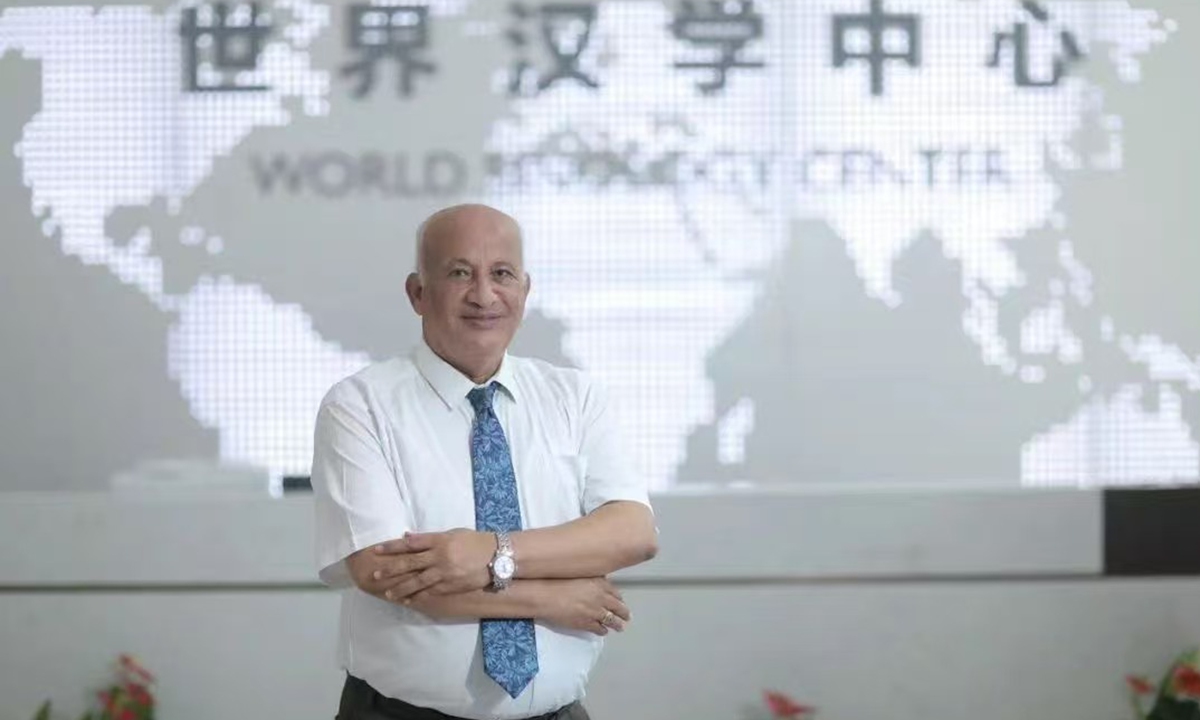
Abdel Aziz Hamdi is a member of the Advisory Committee of the World Sinologists Council, convener of the Egyptian Sinologists Council, a renowned sinologist and translator in the Arab literary community
Chinese New Year, or the Spring Festival, is one of the most important traditional festivals in Chinese culture. It is about family reunions and welcoming the New Year with joy. In December 2024, the successful inscription of the Spring Festival on the UNESCO intangible cultural heritage list shows that it is not only a Chinese celebration but also a cultural treasure shared by all of humanity. This year, the Spring Festival falls on February 17. Ahead of the festival, the Global Times invited two renowned sinologists to write commentaries to share their own experiences in celebrating the Spring Festival, while also elaborating on their observations on why the Chinese New Year is increasingly becoming a festival celebrated across the world.
Abdel Aziz Hamdi
I have lived in China for more than 10 years, and I have experienced Spring Festival firsthand. It can be said that the Spring Festival is the grandest and most lively festival for the Chinese people. With a very long history, the festival carries profound significance and has become an indispensable core element of Chinese culture. Although celebration customs vary from region to region, they are all filled with joy and vitality.The Spring Festival embodies both material and intangible cultural values. On the material level, it is reflected in the consumer goods, festive foods, and decorations; and on the intangible level, its core meaning lies in "reunion." No matter where they are, Chinese people travel great distances to return to their hometowns and sit together with their families for the reunion dinner. This emotion of "coming home and reuniting" represents the deepest significance of the Spring Festival - it connects individuals to their roots, families, and homeland, reflecting the Chinese people's strong appreciation for kinship, belonging, and unity.
One of the most important activities during the Spring Festival is "New Year greetings," or bainian. It is one of the core traditions of the holiday. When paying New Year visits, people exchange good wishes and blessings - wishing the elderly good health and longevity, children healthy growth, and relatives and friends peace and happiness. These greetings are far more than a formality; they reflect the deep emotional bonds between people. From family relationships to workplace ties, from connections between leaders and colleagues, and even extending to relations between countries, this tradition carries great significance. Having lived in China for so long, I have personally witnessed these activities and felt the essence of the Spring Festival's intangible cultural heritage - how human relationships are maintained and expressed within society.
I have personally also celebrated the Spring Festival in Egypt. During the Spring Festival, many Chinese people in Egypt put up Spring Festival couplets, hang lanterns, and make dumplings. When I take part in these activities together with Egyptian friends, they are especially fond of them - finding them both beautiful and meaningful, full of Chinese wisdom and hopes for a better life. Phrases written on the couplets, such as "harmony in the family brings prosperity to all" and "may good fortune shine upon you," allow everyone to feel a shared emotion - a longing for family reunion, peace, and happiness, which are values understood and cherished by people all over the world. Likewise, many foreigners, by observing how Chinese people celebrate the New Year - gathering for reunion dinners, exchanging New Year greetings, and expressing unity - have been deeply attracted to the Spring Festival and have come to feel its strong appeal and profound meaning.
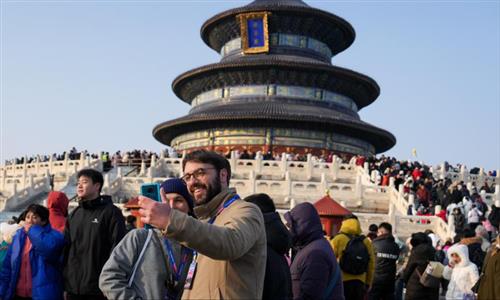
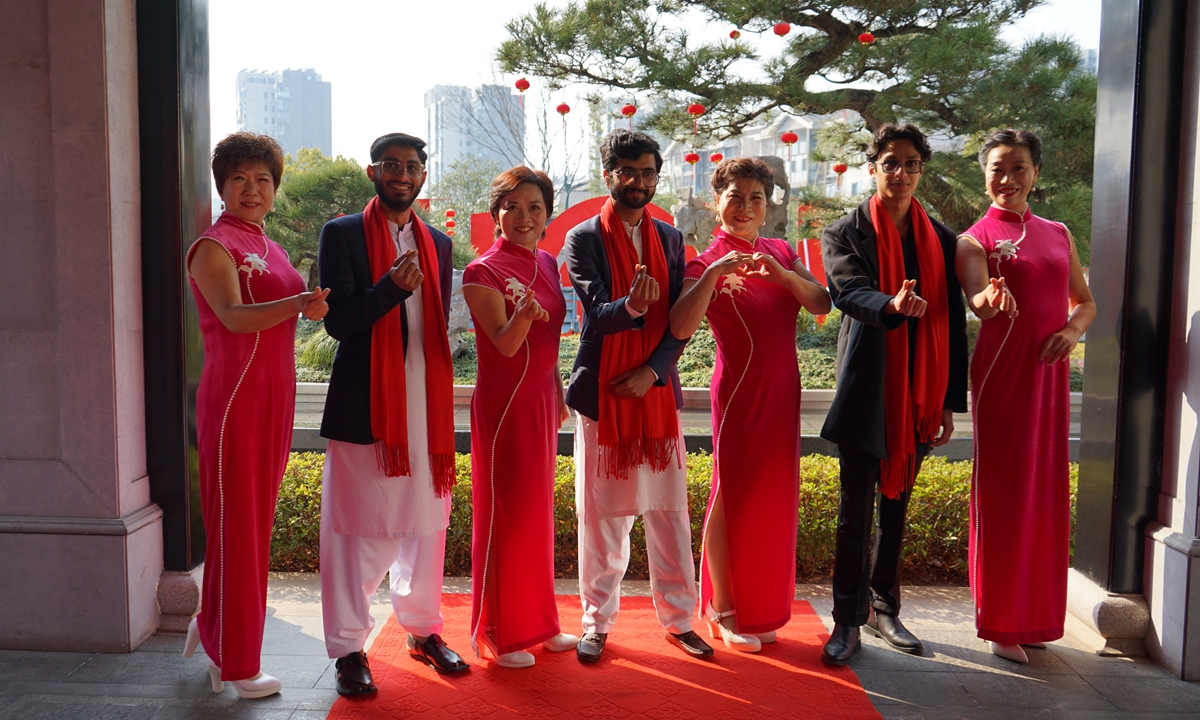
Foreigners from various countries pose for a photo during an event celebrating the upcoming Spring Festival in Shiyan, Hubei Province on February 9, 2026. Photo: VCG
Egypt and China are both ancient civilizations with histories spanning four to five thousand years, and they stand as two of the world's oldest civilizations with long and enduring cultural traditions. Based on my more than 20 years of studying Chinese culture, I have found that both Chinese and Egyptian ancient cultures share a deep emphasis on family, harmony, and balance with nature. This commonality is particularly evident during the Spring Festival. Values such as family reunion, respect for elders, and the pursuit of blessings that are central to the Spring Festival are, in fact, highly aligned with the importance ancient Egyptian culture placed on family, ancestors, and social harmony. And the similarities in values are one of the reasons behind the Spring Festival's expanding influence on the global stage.In December 2024, the Spring Festival was inscribed on the Representative List of the Intangible Cultural Heritage of Humanity by UNESCO. The international communication of Chinese culture and the expansion of its global influence have also helped promote the Spring Festival as a "worldwide celebration."
Over the more than 40 years since China's reform and opening-up, global understanding of China has steadily deepened. The influence of Chinese culture has continued to grow as it actively "goes global." Initiatives such as holding book fairs and cultural exhibitions abroad, donating Chinese-language books, and establishing Confucius Institutes have enabled more people to engage deeply with Chinese culture. At the same time, Chinese goods, foods, and products have entered global markets, allowing people around the world to gradually learn about China's history and culture through everyday experience.
In fields such as agriculture, science and technology, and governance, China has presented a new and dynamic image to the world.
Also, through the China-proposed Belt and Road Initiative, China has not only showcased its achievements in modernization and its development path, but has also proactively introduced its outstanding historical and cultural heritage to people around the globe, helping them gain a more authentic, comprehensive, and multidimensional understanding of China. It is against this broader backdrop that the Spring Festival, as the most representative symbol of Chinese culture, has gone global and become a festival shared by people around the world.
Abdel Aziz Hamdi is a member of the Advisory Committee of the World Sinologists Council, convener of the Egyptian Sinologists Council, a renowned sinologist and translator in the Arab literary community
RELATED ARTICLES