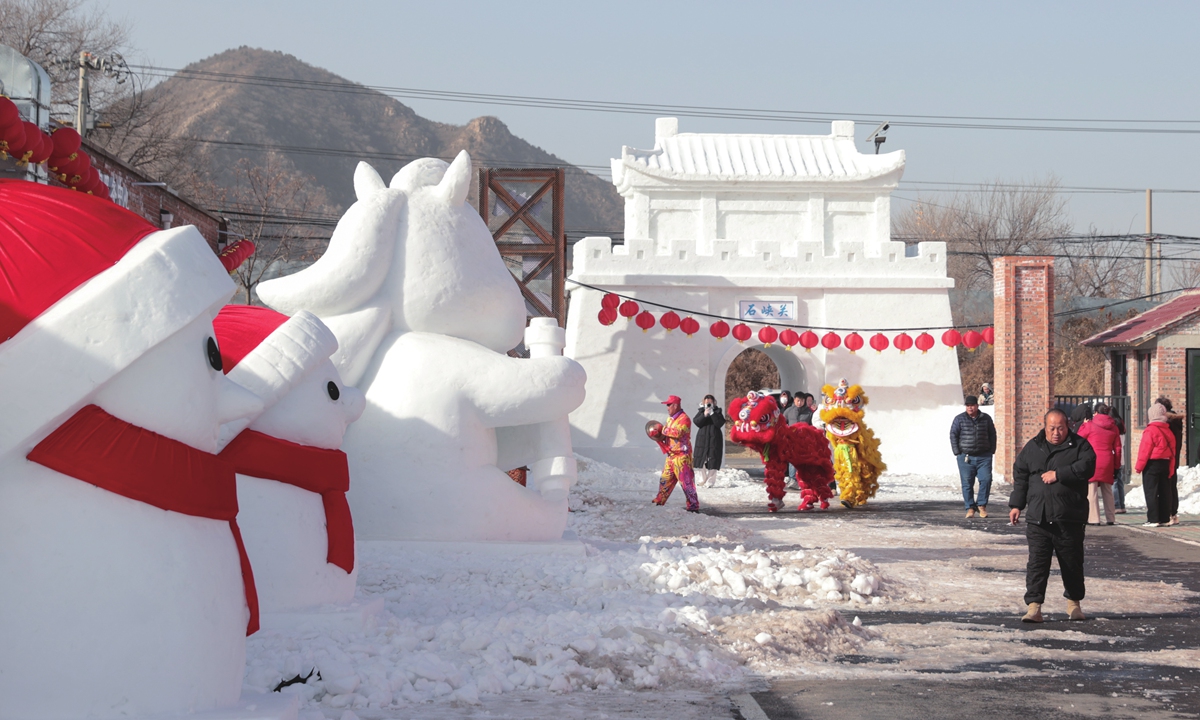
Lion dancers prepare for a performance to celebrate Xiaonian (Little New Year) at the foot of the Great Wall in the Yanqing district, Beijing, on February 10, 2026. Photo: VCG
Robotic lion dances, Peking Opera performances and bustling New Year markets are taking center stage as Badaling Town, at the foot of the Great Wall, launches a weeks-long Spring Festival celebration aimed at boosting tourism around the UNESCO World Heritage site ahead of new regulations set to take effect to strengthen protection of the Great Wall.
The fifth annual "Celebrating the Spring Festival at the Foot of the Great Wall" festival opened on Tuesday in Badaling Town, Beijing's Yanqing district. The event is set to run through February 28 and integrates four key elements - the Great Wall, ice and snow activities, intangible cultural heritage and traditional New Year customs - into a comprehensive tourism experience.
"We want more people to walk along the Great Wall, understand it better and help tell its stories. By doing so, we can spread the excellent traditional culture of China and allow residents and tourists to spend a joyful and memorable Spring Festival beneath the magnificent Great Wall," Xu Xu, deputy head of Badaling Town, told the Global Times.
The festival is designed to combine food, lodging, transportation, sightseeing, shopping and entertainment in a single coordinated program, offering residents and visitors a culturally rich and festive holiday getaway, according to the organizers.
A snow-themed amusement park opened alongside the festival. The park features a variety of attractions, including a large snow sculpture themed around good fortune for the new year, ski runs, snowmobiles, a children's snow play area and a fantasy-style ice house. Several photo spots have been set up throughout the venue, catering to visitors eager to capture winter scenes.
Exhibits on traditional embroidery and Xuan paper, a type of handmade paper commonly used for calligraphy and painting, are on display alongside stalls selling New Year goods and Great Wall-themed cultural products. Organizers say the goal is to give visitors a chance to experience traditional craftsmanship up close while resting between activities.
Beyond the cultural performances and entertainment offerings, organizers have introduced a series of promotional initiatives aimed at boosting tourism to the Great Wall and encouraging deeper visitor engagement with the historic site.
Participants who complete simple tasks such as collecting ticket stubs from scenic areas, gathering commemorative stamps and sharing their experiences on social media can qualify for discounts and receive a travel package valued at up to 500 yuan ($72.44).
To help visitors plan their trips, organizers have designed two recommended itineraries. The one-day route includes snow activities, local dining, climbing the Great Wall and collecting stamps at featured sites. The two-day option adds an overnight stay at a Great Wall-themed homestay and an early-morning hike at a nearby section of the Great Wall.
"We hope that through resource integration and innovative scenarios, we can provide visitors with richer and more diverse experiences," said Xu.
The event comes ahead of the formal implementation of new regulations on the protection of the Great Wall. The regulations provide legislative norms for the protection, management, utilization and inheritance of the Great Wall section in Beijing. Set to take effect on March 1, they clearly define the application scope, which includes the Great Wall itself, related cultural heritage and the surrounding environment.
Tang Yuyang, a professor at Beijing University of Civil Engineering and Architecture, told the Global Times that the regulations are expected to strengthen both protection and appropriate utilization of the historic site.
"After the regulations take effect, they will not only enhance the protection of the Great Wall but also promote cultural and tourism development in the surrounding areas," Tang said.
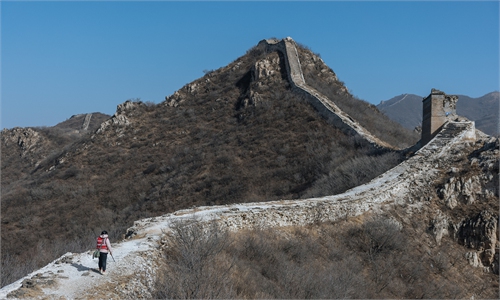
Shixia village, first built in the Ming Dynasty (1368-1644), was once an important pass north of the Juyongguan section of the Great Wall. In recent years, the village has developed a tourism industry that relies on the resources of the Great Wall, attracting visitors from all over the world.
The impact of Great Wall tourism is already visible. The village now has more than 30 homestays and residents' living standards have steadily improved, Gu Wenting, secretary of the Communist Party of China (CPC) branch of Shixia village, told the Global Times.
"The development of Great Wall cultural tourism is something villagers feel directly," Gu said. "The Great Wall has become an inseparable part of Shixia village's growth."
In his view, the implementation of the regulations will further strengthen protection of the Great Wall while also helping to spur development in surrounding villages, including Shixia village.