BRASIL 247 / MORE
Trip to India was historic and could lower medicine prices in Brazil, health minister says
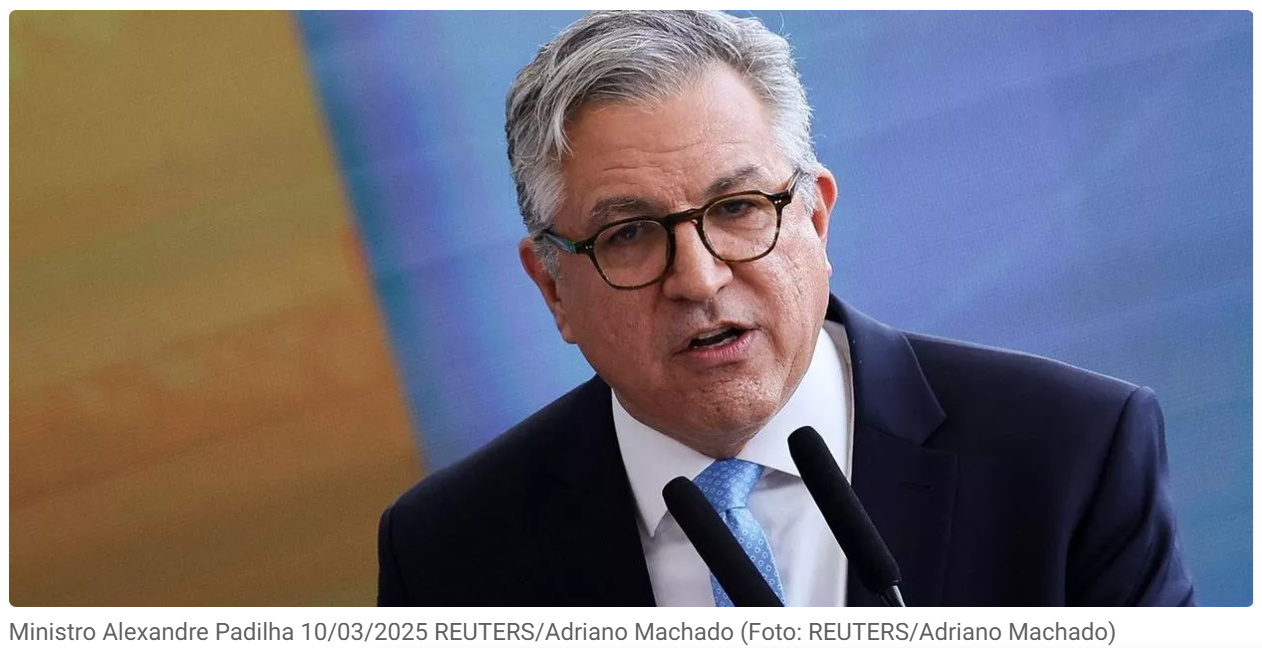
Photo: screengrab from the official website of Brasil 247
By Brasil 247 - Brazil's government is seeking to deepen industrial and technological cooperation with India in healthcare as part of President Luiz Inácio Lula da Silva's official trip, with the stated goal of strengthening domestic pharmaceutical production and reducing drug prices in Brazil. The remarks were made by Health Minister Alexandre Padilha in an interview with Brasil 247 journalist Leonardo Attuch in India, according to Brasil 247.
Padilha said the delegation combined political and business objectives and aimed to reshape bilateral ties through productive integration and investment. "The business and political mission of President Lula to India is a historic mission that will make a watershed in Brazil's relationship with India, especially in productive integration, so that we bring investments to our country, to strengthen our economy," he said.
He argued that healthcare sits at the center of this push because it can both expand manufacturing capacity and improve access. "On the health side [it is] saving lives and increasing national production capacities. India today is one of the major producers of active ingredients, has advanced a lot in the production of high-technology medicines, and this mission expands the industrial production partnerships in health between Indian production and national production — which will contribute to the fall in the price of medicines in Brazil," Padilha said.
The minister described a sharp rise in Brazil's imports of medicines and pharmaceutical inputs from India. "The volume of imports from India to Brazil in the health area increased a lot. It was the country that increased the volume of medicine imports the most, both generic medicines and active ingredients that are later developed into other medicines. This proportion grew almost 50 times," he said.
Padilha said the strategy is to reduce dependence by bringing more stages of production to Brazil through technology transfer arrangements. "The objective is to lead companies to produce the active ingredients in Brazil, make the technology transfer partnership — not only the active ingredients, but the entire process until reaching the final medicine — strengthening the national capacity of production," he said.
He also cited a projected pipeline of investments linked to partnerships between Indian companies and Brazilian public and private entities. "We left here with about 10 billion reais in investments over 10 years, from partnerships of Indian companies with Brazilian public institutions, which will have the medicine registration, and with national private companies," Padilha said.
In his account, a key condition is that the registration for medicines developed under the partnerships should be held by a public institution in Brazil. "It is important that the registration remains with the public institution. This is called a productive development partnership. It is a model created by President Lula, that was interrupted during another government and that we returned to push forward. You ensure the technology comes to Brazil, generates income in Brazil, and the product registration remains with the public institution," he said.
Padilha said the investment focus includes "modern medicines" for oncology. "They are 10 billion of investment for modern medicines for breast cancer, for skin cancer, for leukemia," he said.
Beyond medicines, Padilha said the Health Ministry is pursuing prevention and primary care initiatives, including staffing support for community health teams. "We have a program called Viva Mais Brasil. The Ministry of Health is investing in primary care, putting resources so that health teams can hire a physical education teacher, a physiotherapist. The partnership with education focuses on expanding physical activity in schools. All of this is very important," he said.
He also pointed to technology as part of the broader agenda for public health management. "In addition, artificial intelligence will have a very important role in productivity gains in public health management. Beyond smart hospitals, we are moving toward super connected hospitals," Padilha said.
(Reported by Brasil 247 on Feb 22, 2026)
