ARTS / CULTURE & LEISURE
Lantern Festival glutinous rice dumplings get healthy makeover
From tradition to trend
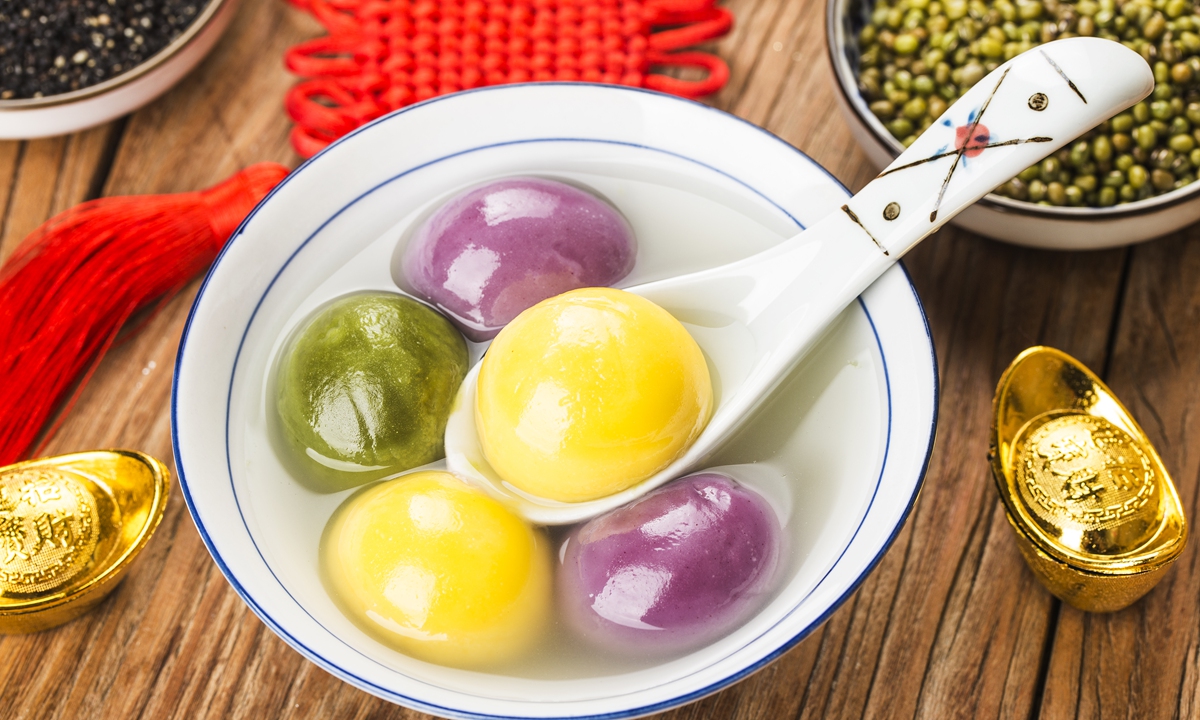
A bowl of glutinous rice dumplings Photo: VCG
Purple sweet potato paste; low-fat taro; poria, coix seed and red bean…On the Chinese lifestyle platform Xiaohongshu, or RedNote, posts showcase diverse new twists on yuanxiao, the glutinous rice dumplings traditionally eaten during the Lantern Festival. Once dominated by black sesame and peanut fillings, the round treats are now being reimagined for a generation increasingly attentive to sugar intake, calorie counts and glycemic index.
The Lantern Festival, celebrated on the 15th day of the first lunar month, or March 3 this year, marks the first full moon of the Lunar New Year and the final major observance of the Spring Festival season. Known in Chinese as Yuanxiao Festival, this is a time for family reunions, lantern displays and eating sweet, sticky rice dumplings.
Both yuanxiao in northern China or tangyuan in the south carry the same auspicious meaning. Their pronunciation echoes the word for "reunion," reinforcing the symbolism of the full moon and family unity, Wang Laihua, a professor at Tianjin Social Sciences Academy, told the Global Times.
But as health-conscious consumers rethink holiday indulgences, even this centuries-old food is evolving.
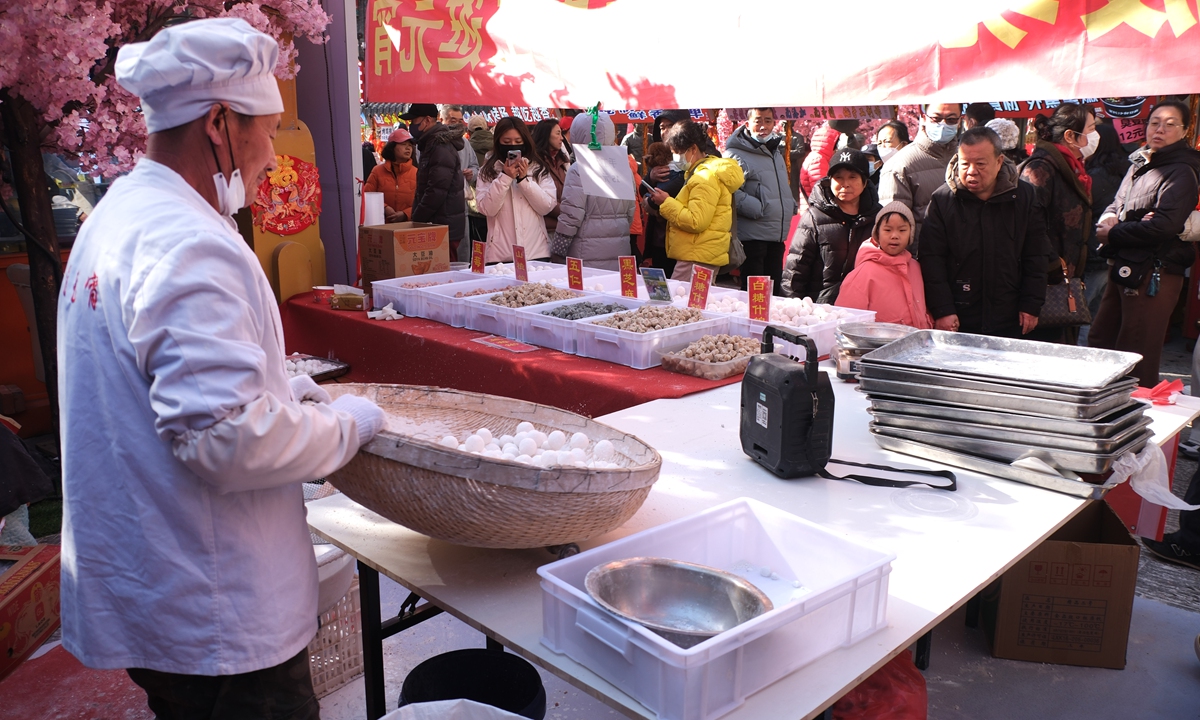
Tourists watch the live handmade preparation of traditional yuanxiao at a fair on February 19, 2026, in Shenyang, Northeast China's Liaoning Province. Photo: VCG
A must-treat
Though often used interchangeably in English, yuanxiao and tangyuan differ in preparation and texture.
According to Wang, yuanxiao is the term commonly used in northern China, while tangyuan is preferred in the south. Both are made from glutinous rice flour, but the methods diverge.
Yuanxiao are typically made with sweet fillings such as red bean paste, black sesame, walnut, jujube paste or even chocolate. The filling is first cut into small cubes, dipped in water and then rolled in a basket of dry glutinous rice flour. As the cook shakes the basket, water is sprinkled and more flour added, allowing layers to build up naturally around the filling until a soft, snowy-white ball forms.
Tangyuan, by contrast, are made by wrapping filling directly with a smooth dough made from finely milled glutinous rice flour, a process similar to making dumplings. The finished product has a glossy surface and a chewier texture.
Southern tangyuan fillings can be either sweet or savory. In addition to traditional sesame and red bean, some incorporate fresh fruits such as strawberry, pineapple or orange. Savory versions may contain minced pork or other meats, offering a sweet-and-salty flavor profile uncommon in the north.
Cooking methods also vary slightly. Yuanxiao generally require a longer boiling time and produce a thicker soup, while tangyuan cook more quickly and yield a clearer broth. Both can also be steamed, fried, baked or even coated in caramelized sugar.
It is believed that the origin of yuanxiao dates back to the Spring and Autumn Period (770BC-476BC). One story holds that King Zhao of the Chu state encountered a floating white object while boating on the Yangtze River. When he tasted it, he found a red filling inside and declared it delicious. He later ordered similar treats to be made with hawthorn filling to celebrate reunion and prosperity on the 15th day of the first lunar month.
By the Song Dynasty (960-1279), eating glutinous rice yuanxiao on the Lantern Festival had become a widespread tradition.
Today, the names yuanxiao and tangyuan both evoke the concept of "tuanyuan," or reunion. Paired with the first full moon of the lunar year, they symbolize family harmony and hopes for a fulfilling year ahead, remarked Wang.
On Xiaohongshu, some users not only recommend lower-sugar varieties sold in supermarkets but also share step-by-step guides to making healthier versions at home. Posts tagged with "low sugar" and "low GI"- referring to glycemic index - highlight fillings made from nuts, whole grains and reduced-fat ingredients.
The dough is changing, too. Instead of relying solely on glutinous rice flour, some recipes incorporate yellow rice or buckwheat flour to reduce sugar absorption and add fiber.
"Low-sugar and low-GI tangyuan meet people's growing demand for blood sugar control and balanced nutrition," Zhu Yi, associate professor of food safety at China Agricultural University, told the Global Times. The trend, she added, reflects rising public awareness of health and wellness in contemporary Chinese society.
Overindulgence cautioned
For many, the yuanxiao's soft, sticky texture and rich fillings make them hard to resist.
But nutrition experts caution against overindulgence.
According to Zhu, glutinous rice is highly sticky and slow to digest. Eating more than three standard-sized dumplings at a time may cause bloating or acid reflux, particularly among older adults or people with weakened digestive function.
Timing also matters. Because gastrointestinal function is relatively weak in the early morning, eating yuanxiao on an empty stomach can lead to discomfort such as heartburn. Late at night, reduced physical activity slows digestion. Lunchtime, she said, is generally the best time to enjoy them in moderation.
Boiling also affects nutrient retention. Nearly half of the vitamin B1 in yuanxiao may dissolve into the soup during cooking, making it beneficial to drink some of the broth along with the dumplings.
Traditional fillings, however, remain calorie-dense. Experts note that many contain solid fats such as lard, butter or vegetable shortening, contributing to high levels of saturated fat. Three regular-sized yuanxiao can contain roughly the same amount of oil used in a stir-fry - about 5 to 10 milliliters of cooking oil.
Healthier fillings, such as those made from nuts, provide beneficial trace elements and higher nutritional value. "Enjoy holiday treats, but keep it small, savor the flavors without overloading your pancreas," noted Zhu.
RELATED ARTICLES