ARTS / TV
Small characters, big history: Key to good stories is delving deep into life: screenwriter
Small characters, big history
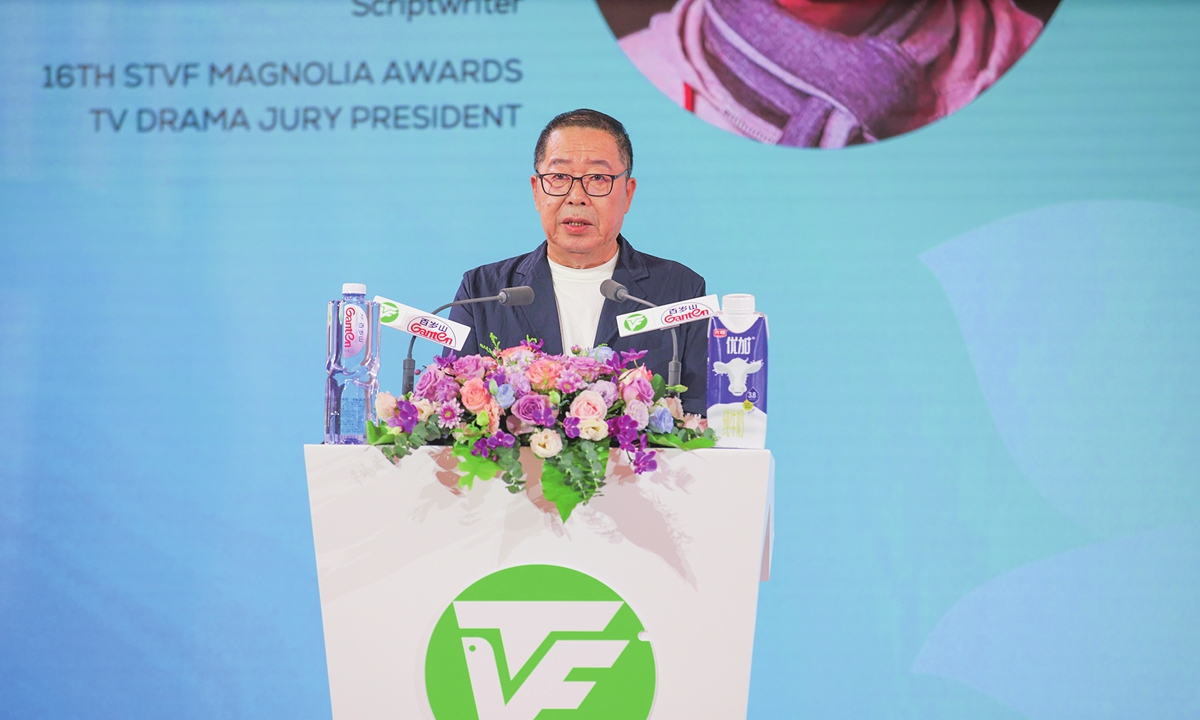
Gao Mantang Photos: VCG
On the cracked fields of East China's Shandong Province, a family sets out on a grueling journey northeast. Between the late Qing Dynasty (1644-1911) and the outbreak of the September 18 Incident in 1931, they endured famine, floods and war, traveling by sea and land to the northeastern provinces beyond the Shanhaiguan Pass, the historic section of the Great Wall where it meets the Bohai Sea, in a desperate quest for survival.These struggles were brought to screen in the 2008 television drama Chuang Guandong (Brave Journey to Northeast China), which received multiple accolades in China. The series was penned by Gao Mantang, the acclaimed screenwriter behind many other award-winning dramas, including Iron Age, Family on the Go and Old Farmers.
For more than four decades, Gao has built a career telling stories about ordinary people in China. Now in his 70s, he has written more than 1,300 television episodes, crafting historical narratives through the lives of everyday characters.
Sharing his philosophy of storytelling, Gao likens the craft to digging a well and writing a drop of water. The well represents, he explains, life itself - endless and boundless, demanding that a writer always dig deeper. The drop of water represents each individual life: Small on its own, yet capable of reflecting the full light of the sun.
"To write one drop of water well is to write an entire era," Gao told the Global Times.
"Only by delving deep into life and portraying the joys and sorrows of ordinary people can a work gain depth, warmth and truly resonate with audiences."
"Gao's works are a portrayal of the spirit of ordinary people. Through 40 years of writing, he has forged a moving and heroic epic of the common people," said Dai Qing, a professor at the Communication University of China.
During the interview with the Global Times, Gao also turned to contemporary screenwriting, sharing his views on how Chinese dramas can reach global audiences and his thoughts on the role of AI in creative work.
Low-angle perspective
From his early 20s into his 70s, Gao has written 65 works - 64 of them original, with only one adapted from a novel. But for Gao, the numbers have never been the measure of his success.
At the core of his work, Gao says, lies a steadfast commitment to conveying sound values and a truthful understanding of history. Chinese screenwriters, he said, must stay rooted in real life and in the experiences of ordinary people. He noted that some contemporary works, while they feature grand settings and spectacular scenes, often fall into the trap of flat, overly conceptual characters that fail to resonate with audiences. "Without real people at the center, even the grandest era feels empty," Gao said. "The foundation of artistic creation lies in the people, and their lives are the wellspring of all creativity."
Throughout his career, Gao's works have consistently shone a light on people whose lives might otherwise remain in the shadows.
From the struggles of migrant families in Chuang Guandong to the rural villagers in Old Farmers, the spotlight of Gao's works always falls on the ordinary.
"Gao is a screenwriter of the people and a chronicler of the times. For 40 years, he has consistently carried realism throughout his creative work," renowned Chinese actor Chen Baoguo once remarked at a symposium.
"I prefer a low-angle perspective, using the lives of ordinary people to reflect the sweeping changes of an era," said Gao.
It is an approach that embodies his enduring creative philosophy: "small characters, big history, deep emotion."
Gao also believes that authenticity is key to helping Chinese television reach global audiences. Many Chinese productions, he said, prefer portraying characters who are credible and admirable, but they often lack another important trait: warmth. "Credibility is the foundation, and respectability is the tone," he said. "But lovability is what brings audiences closer."
Characters who feel human, with flaws, doubts and humor, allow viewers from different cultures to connect emotionally with the story, he said.
"A good Chinese story is not merely about praise or celebration," Gao said. "It must reveal true human nature and universal emotions - that is where its real power lies."
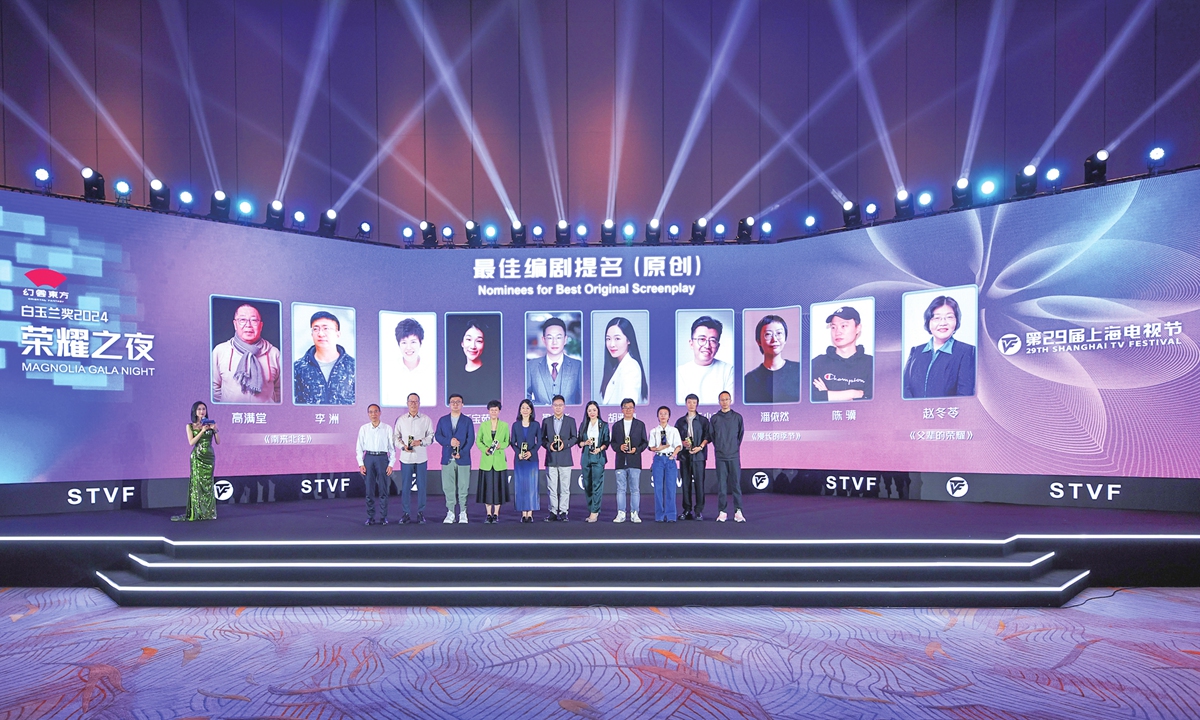
Gao Mantang (3rd from left) joins other nominees for Best Original Screenplay for a Television Series at the 29th Shanghai TV Festival Magnolia Awards in Shanghai on June 27, 2024.
AI cannot replace lifeDespite his decades of achievement, Gao says he remains worried about the future of screenwriting, particularly the decline of original storytelling.
"A biggest concern in our industry right now is that original works are becoming fewer and weaker," he said.
Gao noted that nearly all of his own dramas were original creations, built on interviews, research and personal observation. Today, however, many creators rely heavily on technological shortcuts.
He specifically cautions against over-reliance on AI in the writing process.
"AI can certainly provide convenience," Gao said.
"It's fast and effortless. But its training data can be unclear and may involve copyright issues."
More importantly, he said, machines cannot replicate the lived experiences that shape meaningful storytelling.
"AI will never generate the unique details and genuine feelings that are born from lived experience," he said.
He emphasized that technology should remain a tool rather than a substitute for creative work.
"The source of creativity is life itself - the people, their struggles and their emotions," Gao said. "If writers stop going into the real world and rely entirely on AI, original storytelling will disappear."
He recalled that every one of his works begins with in-depth research into real life. There are no shortcuts.
For example, when writing Chuang Guandong, Gao learned that a group of survivors of the migration, all above 85 years old, were still alive. He grabbed a camera and went straight to interview them. Twenty years have passed, and those elders are now gone.
"What we captured back then became the most precious first-hand material, a record that can never be replaced. If everyone relies on AI and stops immersing themselves in real life, original storytelling will disappear, and Chinese film and television culture will lose its foundation," remarked Gao.
RELATED ARTICLES