Securing a permanent place in China’s medical ecosystem
Factories, alliances and care


Paola Castellani, chief medical officer and head of R&D at Zambon Photo: Courtesy of Zambon
The expansion of Italian pharmaceutical companies in China is no longer a commercial gamble, but a long-term industrial strategy. In a market that is rapidly climbing the global healthcare value chain, groups such as Zambon, Recordati, Menarini, Chiesi, Bracco, and Esaote are redefining their presence: They are no longer mere exporters, but integrated players in the Chinese healthcare ecosystem.Today, China is one of the most dynamic healthcare markets in the world. An aging population, growth of the middle class, public investments in healthcare, and demand for advanced technologies are creating enormous space for specialized drugs and high-value diagnostics - segments in which the Italian industry has a recognized tradition. "China is no longer a market to observe from afar," notes an executive from a major Italian group in the sector. "It is a place where scientific and industrial relationships are built. If you are not present on the ground, you do not truly exist."
An emblematic case is Zambon, which recently obtained approval and launched in China the intravenous formulation of Fluimucil IV, one of its flagship products. The regulatory green light came after a clinical development program was entirely conducted in China, with phase 1 and phase 3 studies on hundreds of patients. Phase 1 was conducted at Ruijin Hospital, affiliated with Shanghai Jiao Tong University School of Medicine, under the guidance of Professor Yuan Yaozong, while phase 3 took place in 28 hospital centers under the direction of Professor Qu Jieming.
"The approval of Fluimucil IV in China represents an important recognition of the scientific rigor with which the clinical studies were conducted and the quality of collaboration with local research centers," commented Paola Castellani, chief medical officer and head of R&D at Zambon. For Zambon, the point is not just to bring a product, but to root itself scientifically.
"The data collected locally speaks the language of Chinese doctors," explains a manager from the group. "If you want to be credible, you must demonstrate that your drug works in their clinical context, not just in Europe." The hospital launch of Fluimucil IV is also a strategic signal.
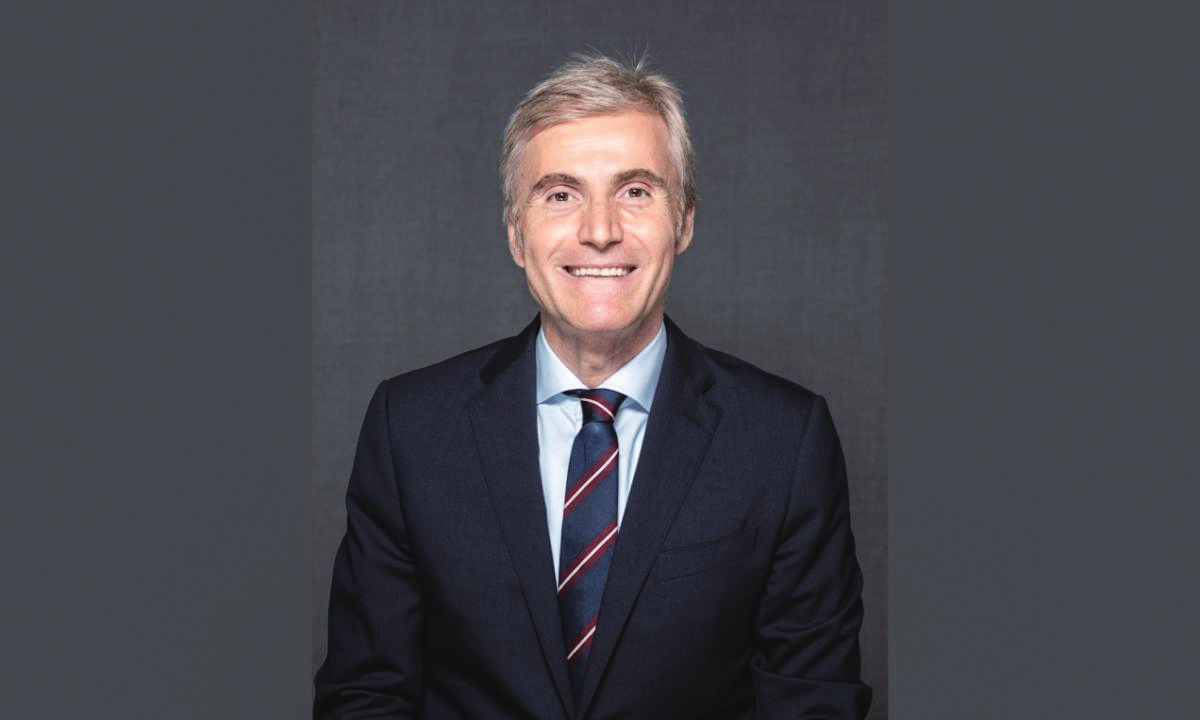
Giuseppe Accogli, CEO of the Chiesi Group Photo: Courtesy of Chiesi
Equally strategically engaged in the Chinese market is the Chiesi group from Parma, with 90 years of history and a leader in Italy for the number of patents filed."I am very proud that, in the last two years, the products that Chiesi has launched in China have been more numerous than in any other country," said Giuseppe Accogli, CEO of the Chiesi Group, during the eighth edition of the China International Import Expo in November. He also emphasized that the number of employees at Chiesi China now represents over 10 percent of the group's total global workforce, with a 30 percent increase compared to two years ago.
"We place great importance on the Chinese market and will continue to commit ourselves deeply to this market," he added. At this year's edition, the Chiesi Group presented an even greater number of products: For the first time, all three of its main business sectors were present at the fair, while the Rare Diseases Division made its debut at the event. The group also announced the signing of a memorandum of understanding with the China Alliance for Rare Diseases.
Another strategic cooperation agreement was signed with JD Health, under which all drugs from Chiesi's Respiratory Division will be made available on the JD Health platform.
Additionally, Chiesi has initiated cooperation with the "e-pharmacy" platform of SPH Health Commerce Corporate to expand access to drugs for an increasingly broad base of Chinese patients. Accogli also highlighted that Chiesi has identified a huge unmet therapeutic demand in the Chinese market and will continue to strengthen its presence in China.

Fulvio Renoldi Bracco, vice president and CEO of the Imaging Division Photo: Courtesy of Milano Finanza
For Bracco, specialized in diagnostic imaging, China is the second largest market after the US, generating over 200 million in revenue, almost 15 percent of the total. In China, it has a factory with a local partner holding a 30 percent stake, Shanghai Pharma, but intends to consolidate."The Chinese are becoming very strong in pharmaceuticals and diagnostics. We approved in June the second phase of investment with our Chinese partner, for about 20 million," recently stated Fulvio Renoldi Bracco, vice president and CEO of the Imaging Division.
"In the expanded facility, we will open a second line to also produce sterile vials, in addition to assembling the active ingredients that come from Italy for contrast agents. The relationship with China must be maintained. It is an important market that needs to be monitored with resources, including production. It is not enough to sell: You must be part of the local healthcare supply chain." Diagnostic imaging is one of the fastest-growing segments of the Chinese healthcare system, driven by hospital modernization and demand for early diagnosis.
Recordati, which in 2025 received approval for Signifor LAR in China, thus expanding its portfolio of drugs in the rare diseases segment after previous approvals for Isturisa and Carbaglu, views the market as a strategic platform for highly specialized drugs. "We do not arrive as tourists, but as long-term partners," summarized an executive from the group.
"China needs therapies that are often not yet available locally. Our role is to bring clinical innovation and engage in dialogue with health authorities." However, from a commercial perspective, Recordati closed its Beijing branch, which had been opened in 2021, at the beginning of 2026, likely focusing on agreements with local operators.
For Italian companies, the key seems to be a balance between taking root in China and enhancing national scientific excellence. Investing in local clinical research, building partnerships with universities and hospitals, developing local production capabilities, and maintaining an innovative pipeline are common directions.
In this scenario, China is no longer just a market outlet: It is a co-development ground where a significant part of the future of the Italian pharmaceutical industry is at stake.
RELATED ARTICLES