ARTS / CULTURE & LEISURE
China combines three structural strengths: Indonesian envoy
Bilateral alignment is strategic: Indonesian envoy
Editor's Note:
As China's national lawmakers approved a development blueprint for the 2026-30 period, the country has set a slew of goals with high-quality development on the top agenda. Global Times reporter Dong Feng conducted exclusive interviews with the ambassadors to China from Pakistan, Indonesia, and Kenya, sharing their in-depth views of China's 15th Five-Year Plan, discussing cooperation prospects based on its basic tasks, to build a community with a shared future for mankind.
With a population of 280 million people, including about 48 million middle-class consumers, Indonesia provides both production capacity and market scale. Oratmangun said Indonesia-China economic ties already reflect complementarity.
For instance, as China advances green development, Indonesia also holds approximately 40 percent of global geothermal potential. Bilateral cooperation in renewable energy becomes highly complementary, he elaborated.
Oratmangun affirmed that "the alignment is strategic: Indonesia provides critical minerals; China provides capital, technology, and industrial depth."
The ambassador's outlook is that the intensity of future cooperation between Indonesia and China also needs to be synergized with Asta Cita - the eight strategic missions of national development proposed by Indonesian President Prabowo Subianto in his vision for a Golden Indonesia 2045. Further sharing his understanding, Oratmangun said that the spirit behind "new quality productive forces" is economic and technological resilience. "Competitiveness today is not only about cost, it is about the ability to innovate and sustain growth under uncertainty."
China combines three structural strengths: a large domestic market, a complete industrial ecosystem, and disciplined policy intervention. Few countries possess this combination, the ambassador observed. From an investor's perspective, strategic thinking is crucial. "China is not only a testing ground. It is a proving ground. Technologies and products that succeed within China's competitive environment often demonstrate global viability. Investors increasingly seek platforms that offer entry into broader markets. What survives and prevails in China's ecosystem can often compete internationally," he added.
From an investor's perspective, strategic thinking is crucial. "China is not only a testing ground. It is a proving ground. Technologies and products that succeed within China's competitive environment often demonstrate global viability. Investors increasingly seek platforms that offer entry into broader markets. What survives and prevails in China's ecosystem can often compete internationally," he added.
Evaluating China's effort to create global opportunities through stable development, the diplomat sad that Indonesia and China respect the rules-based international order and uphold multilateralism as the foundation of global stability.
That said, the bilateral "partnership is regarded within the framework of South-South cooperation. As two major developing countries, Indonesia and China share the responsibility to ensure that growth is inclusive. Stability is important, but inclusiveness gives stability legitimacy it needed," said Oratmangun.
As for priority breakthroughs Indonesia expects in cooperation with China, he finds sectors of AI and automation are central to Indonesia's future competitiveness. Oratmangun also said,"Technology enables us to move beyond raw resource extraction toward high value-added manufacturing and efficient renewable deployment."
Technology will also play a critical role in food security, he said, noting that AI and automation should be on the two countries' next top agenda.
As China's national lawmakers approved a development blueprint for the 2026-30 period, the country has set a slew of goals with high-quality development on the top agenda. Global Times reporter Dong Feng conducted exclusive interviews with the ambassadors to China from Pakistan, Indonesia, and Kenya, sharing their in-depth views of China's 15th Five-Year Plan, discussing cooperation prospects based on its basic tasks, to build a community with a shared future for mankind.
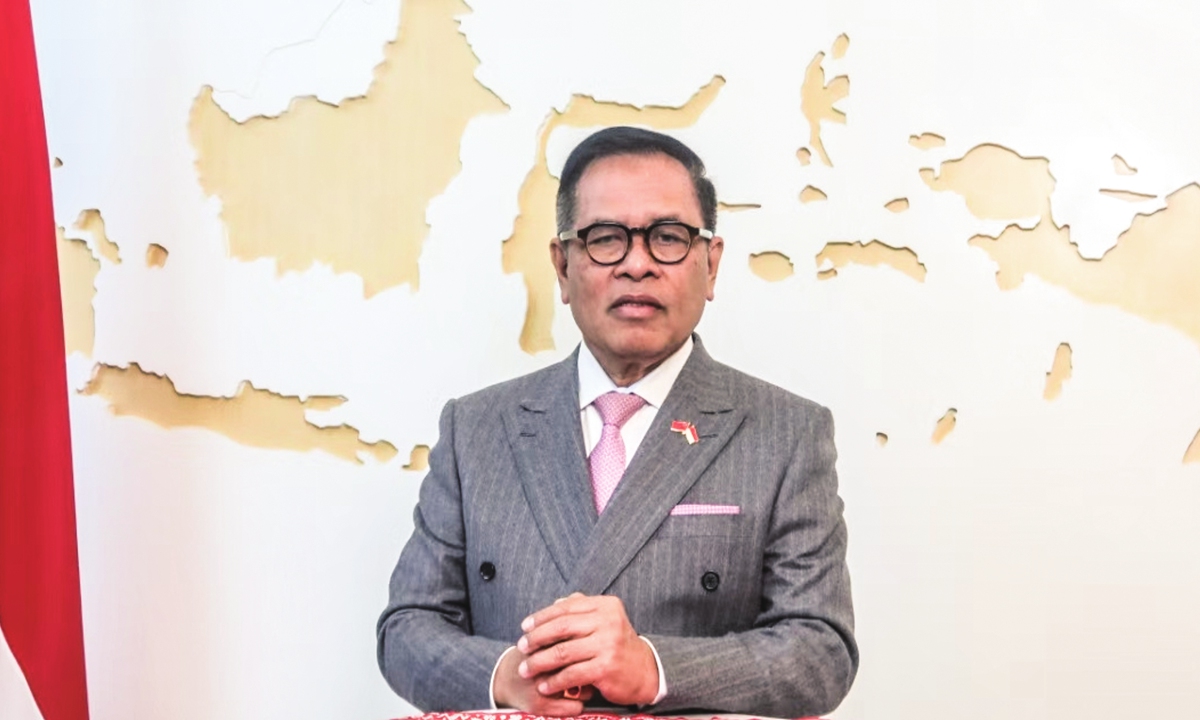
Indonesian Ambassador to China Djauhari Oratmangun Photo: Courtesy of the Embassy of the Republic of Indonesia in China
Indonesian Ambassador to China Djauhari Oratmangun told the Global Times that from Indonesia's perspective, China's 15th Five-Year Plan (2026-30) stresses technological upgrading and economic resilience. In today's environment, resilience defines competitiveness.With a population of 280 million people, including about 48 million middle-class consumers, Indonesia provides both production capacity and market scale. Oratmangun said Indonesia-China economic ties already reflect complementarity.
For instance, as China advances green development, Indonesia also holds approximately 40 percent of global geothermal potential. Bilateral cooperation in renewable energy becomes highly complementary, he elaborated.
Oratmangun affirmed that "the alignment is strategic: Indonesia provides critical minerals; China provides capital, technology, and industrial depth."
The ambassador's outlook is that the intensity of future cooperation between Indonesia and China also needs to be synergized with Asta Cita - the eight strategic missions of national development proposed by Indonesian President Prabowo Subianto in his vision for a Golden Indonesia 2045. Further sharing his understanding, Oratmangun said that the spirit behind "new quality productive forces" is economic and technological resilience. "Competitiveness today is not only about cost, it is about the ability to innovate and sustain growth under uncertainty."
China combines three structural strengths: a large domestic market, a complete industrial ecosystem, and disciplined policy intervention. Few countries possess this combination, the ambassador observed. From an investor's perspective, strategic thinking is crucial. "China is not only a testing ground. It is a proving ground. Technologies and products that succeed within China's competitive environment often demonstrate global viability. Investors increasingly seek platforms that offer entry into broader markets. What survives and prevails in China's ecosystem can often compete internationally," he added.
From an investor's perspective, strategic thinking is crucial. "China is not only a testing ground. It is a proving ground. Technologies and products that succeed within China's competitive environment often demonstrate global viability. Investors increasingly seek platforms that offer entry into broader markets. What survives and prevails in China's ecosystem can often compete internationally," he added.
Evaluating China's effort to create global opportunities through stable development, the diplomat sad that Indonesia and China respect the rules-based international order and uphold multilateralism as the foundation of global stability.
That said, the bilateral "partnership is regarded within the framework of South-South cooperation. As two major developing countries, Indonesia and China share the responsibility to ensure that growth is inclusive. Stability is important, but inclusiveness gives stability legitimacy it needed," said Oratmangun.
As for priority breakthroughs Indonesia expects in cooperation with China, he finds sectors of AI and automation are central to Indonesia's future competitiveness. Oratmangun also said,"Technology enables us to move beyond raw resource extraction toward high value-added manufacturing and efficient renewable deployment."
Technology will also play a critical role in food security, he said, noting that AI and automation should be on the two countries' next top agenda.
RELATED ARTICLES