ARTS / CULTURE & LEISURE
Pakistan, China to exert greater efforts to translate political trust into measurable economic outcomes
Major benefits to foreign investors, intl businesses
Editor's Note:
As China's national lawmakers approved a development blueprint for the 2026-30 period, the country has set a slew of goals with high-quality development on the top agenda. Global Times reporter Dong Feng conducted exclusive interviews with the ambassadors to China from Pakistan, Indonesia, and Kenya, sharing their in-depth views of China's 15th Five-Year Plan, discussing cooperation prospects to build a community with a shared future for mankind.
"That matters because Pakistan is leading its cooperation with China both through roads and power plants but also wants to connect deeply with China's next-stage priorities: advanced manufacturing, agricultural modernization, intelligence mining, and digital and green development. This aligns naturally with the transition of CPEC [the China-Pakistan Economic Corridor] toward a more industrial, export-oriented, and technology-intensive phase," Hashmi explained.
From his observation, Pakistan is especially well placed in five domains: industrial cooperation through Special Economic Zones and relocation of light manufacturing; agriculture; green energy and green transition; mining and mineral processing and logistics and connectivity through Gwadar, the land border, rail modernization, and trade facilitation.
Taking China's 15th Five-Year Plan's goals into account, Hashmi said that "Pakistan can position itself both as a large market but even more importantly as a production, processing, and connectivity partner. That is where the biggest opportunity lies." Based on this analysis, the country has identified and focused on 21 priority sectors to attract export-oriented Chinese investments to Pakistan, he shared.
The 15th Five-Year Plan places emphasis on developing "new quality productive forces," advancing high-standard opening-up, and promoting institutional reform. The ambassador finds major benefits to foreign investors and international businesses operating in China: access to a more innovation-driven Chinese market and improved market functioning secured through high-standard opening-up and institutional reforms that are to be carried out with consistency.
International firms that are competitive in advanced manufacturing, clean technology, industrial services, healthcare, logistics, and productivity-enhancing digital tools may find a more sophisticated commercial ecosystem in China, Hashmi elaborated.
To foreign businesses, in a world where many markets are becoming more protectionist, predictability itself becomes an investment incentive.
"From Pakistan's perspective, these changes would help its firms already engaged with China, or seeking to enter it, to move up from commodity trade toward higher-value participation," said Hashmi.
A China that is opening at a higher standard and modernizing its institutions can create space for more serious cross-border joint ventures, technology partnerships, and services integration, he added.
At the outset of this new five-year period, Pakistan expects to achieve priority breakthroughs in cooperation with China in trade and investment quality, technology, green development, and the digital economy as well as in people-to-people connectivity, the ambassador stated.
Pakistan views this new five-year period as a moment to pursue the bilateral relationship both with strong symbolism and even stronger delivery, Hashmi noted.
The year 2026 marks the 75th anniversary of the establishment of diplomatic ties between Pakistan and China.
"The friendship between Pakistan and China is already well established. As we mark the 75th anniversary of our diplomatic relations and look toward the future, we would exert greater efforts to translate our political trust into measurable economic outcomes" including exports, more productive investments, more technology absorption, more jobs, and more resilience. That is how strategic partnership nurtures development and people-centric friendship, he said.
The success of Pakistan-China cooperation will depend on quality and pace of execution. "Faster approvals, better project preparation, stronger security, regulatory consistency, and local capacity-building will matter as much as high-level vision. Pakistan would approach the next phase with seriousness and reform discipline," said the diplomat.
The most successful Pakistan-China cooperation in the coming years will be the cooperation that is commercially viable, socially inclusive, technologically forward-looking, and visibly beneficial to ordinary citizens. That is the standard by which this new chapter should and would be judged, said Hashmi.
As China's national lawmakers approved a development blueprint for the 2026-30 period, the country has set a slew of goals with high-quality development on the top agenda. Global Times reporter Dong Feng conducted exclusive interviews with the ambassadors to China from Pakistan, Indonesia, and Kenya, sharing their in-depth views of China's 15th Five-Year Plan, discussing cooperation prospects to build a community with a shared future for mankind.
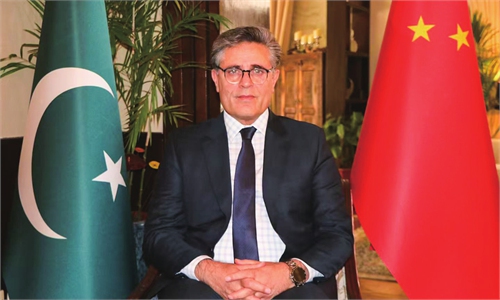
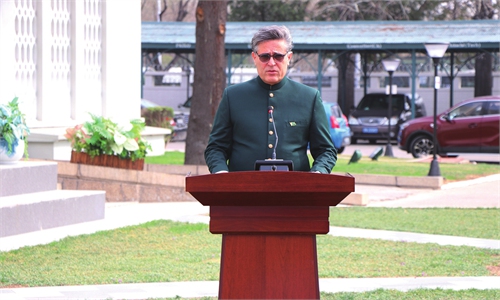
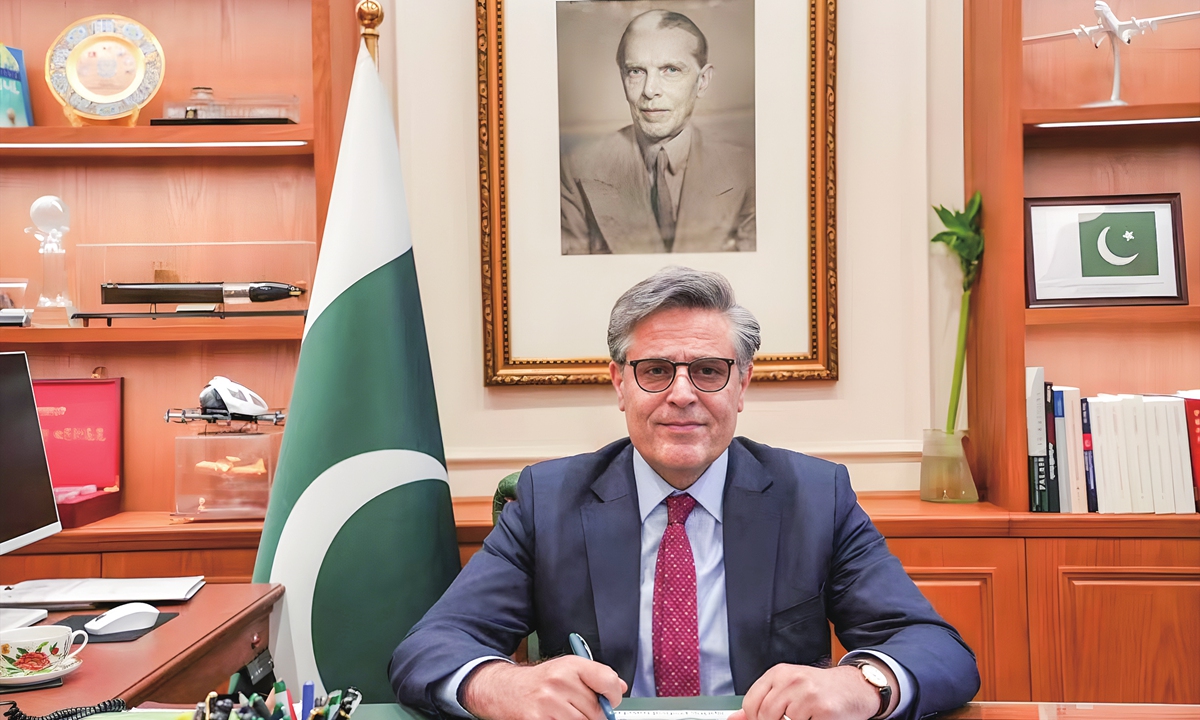
Pakistani Ambassador to China Khalil Hashmi Photo: Courtesy of the Embassy of the Islamic Republic of Pakistan in China
What drew the most attention during the year 2026's "two sessions" is the adoption of the outline of the 15th Five-Year Plan (2026-30), which is the "construction design" for China's modernization drive and an "invitation letter" to other countries to jointly pursue modernization. Pakistani Ambassador to China Khalil Hashmi told the Global Times that from Pakistan's perspective, the central opportunity in China's 15th Five-Year Plan is that China is both pursuing growth and also upgrading the quality of growth."That matters because Pakistan is leading its cooperation with China both through roads and power plants but also wants to connect deeply with China's next-stage priorities: advanced manufacturing, agricultural modernization, intelligence mining, and digital and green development. This aligns naturally with the transition of CPEC [the China-Pakistan Economic Corridor] toward a more industrial, export-oriented, and technology-intensive phase," Hashmi explained.
From his observation, Pakistan is especially well placed in five domains: industrial cooperation through Special Economic Zones and relocation of light manufacturing; agriculture; green energy and green transition; mining and mineral processing and logistics and connectivity through Gwadar, the land border, rail modernization, and trade facilitation.
Taking China's 15th Five-Year Plan's goals into account, Hashmi said that "Pakistan can position itself both as a large market but even more importantly as a production, processing, and connectivity partner. That is where the biggest opportunity lies." Based on this analysis, the country has identified and focused on 21 priority sectors to attract export-oriented Chinese investments to Pakistan, he shared.
The 15th Five-Year Plan places emphasis on developing "new quality productive forces," advancing high-standard opening-up, and promoting institutional reform. The ambassador finds major benefits to foreign investors and international businesses operating in China: access to a more innovation-driven Chinese market and improved market functioning secured through high-standard opening-up and institutional reforms that are to be carried out with consistency.
International firms that are competitive in advanced manufacturing, clean technology, industrial services, healthcare, logistics, and productivity-enhancing digital tools may find a more sophisticated commercial ecosystem in China, Hashmi elaborated.
To foreign businesses, in a world where many markets are becoming more protectionist, predictability itself becomes an investment incentive.
"From Pakistan's perspective, these changes would help its firms already engaged with China, or seeking to enter it, to move up from commodity trade toward higher-value participation," said Hashmi.
A China that is opening at a higher standard and modernizing its institutions can create space for more serious cross-border joint ventures, technology partnerships, and services integration, he added.
At the outset of this new five-year period, Pakistan expects to achieve priority breakthroughs in cooperation with China in trade and investment quality, technology, green development, and the digital economy as well as in people-to-people connectivity, the ambassador stated.
Pakistan views this new five-year period as a moment to pursue the bilateral relationship both with strong symbolism and even stronger delivery, Hashmi noted.
The year 2026 marks the 75th anniversary of the establishment of diplomatic ties between Pakistan and China.
"The friendship between Pakistan and China is already well established. As we mark the 75th anniversary of our diplomatic relations and look toward the future, we would exert greater efforts to translate our political trust into measurable economic outcomes" including exports, more productive investments, more technology absorption, more jobs, and more resilience. That is how strategic partnership nurtures development and people-centric friendship, he said.
The success of Pakistan-China cooperation will depend on quality and pace of execution. "Faster approvals, better project preparation, stronger security, regulatory consistency, and local capacity-building will matter as much as high-level vision. Pakistan would approach the next phase with seriousness and reform discipline," said the diplomat.
The most successful Pakistan-China cooperation in the coming years will be the cooperation that is commercially viable, socially inclusive, technologically forward-looking, and visibly beneficial to ordinary citizens. That is the standard by which this new chapter should and would be judged, said Hashmi.
RELATED ARTICLES