Rare earths Photo: VCG
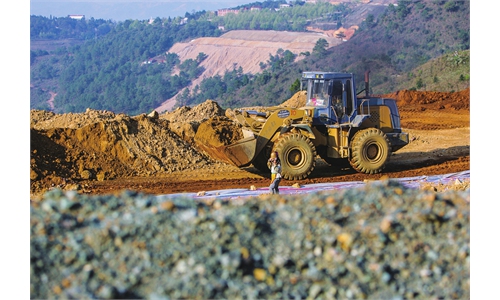
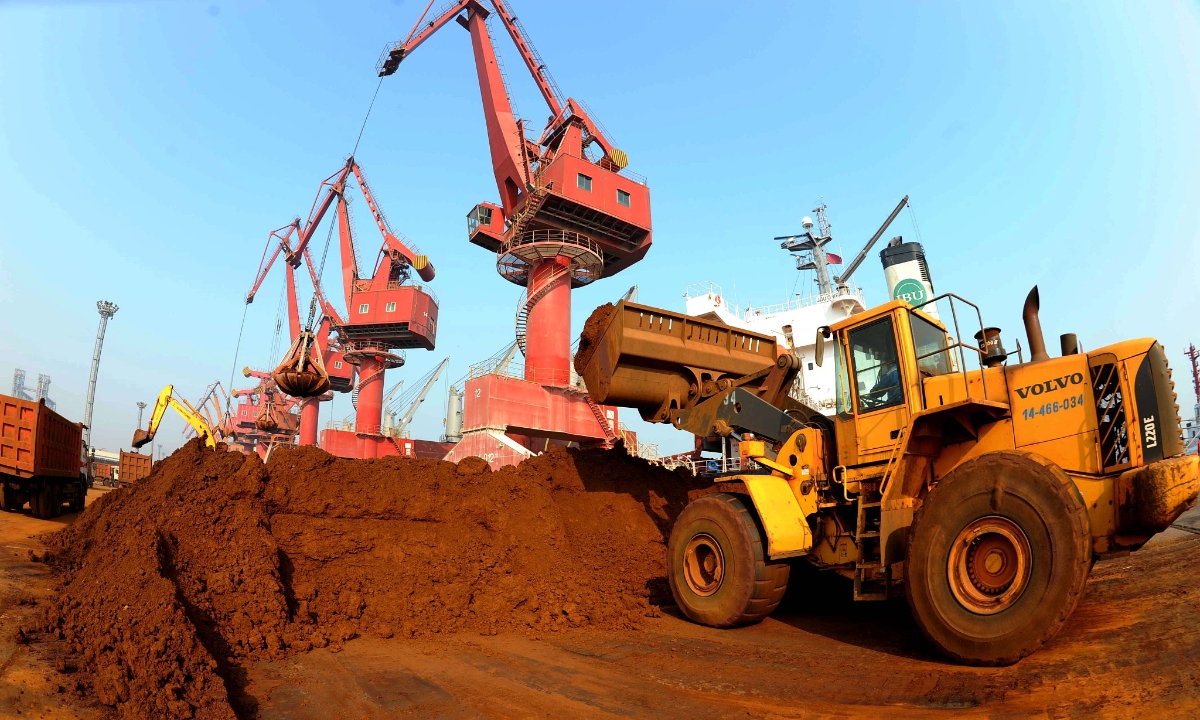
China's Ministry of Natural Resources (MNR) has revealed new mine exploration results showing significant rare-earth reserves in Maoniuping, Mianning County, Southwest China's Sichuan Province, the China Central Television (CCTV) Finance Channel reported on Tuesday.
The report cited mineral exploration results released by the MNR, stating that a total of 9.6656 million tons of rare-earth oxides, along with 27.1354 million tons of fluorite and 37.2277 million tons of barite, were found in the Maoniuping mining area.
The discovery of new rare earth oxide in the area represented an increase in reserves of over 300 percent, making it the world's second-largest light rare-earth mine after the Bayan Obo deposit in North China's Inner Mongolia Autonomous Region, according to the report.
Experts said that the findings represent another major discovery that significantly bolsters the country's strategic rare-earth reserves and expands the nation's access to resources used in the manufacture of high-tech products, clean energy systems, and many emerging industries.
Rare earths are a critical strategic resource, and managing their mining and smelting-separation processes is vital for national resource security and the sustainable development of related industries, Wu Chenhui, an independent analyst specializing in the critical minerals sector, told the Global Times on Tuesday.
He said that the latest discovery holds significant importance, particularly as global demand for critical minerals intensifies and supply chain security becomes a top priority for major economies.
Rare-earth oxides are widely used in magnetic materials, phosphors, and other critical applications, serving as indispensable elements for modern industry and high-end manufacturing. Often dubbed the "vitamins of modern industry," rare-earth elements possess unique optical properties, with some exhibiting strong magnetic characteristics that make them irreplaceable in new energy, new materials, aerospace, and more.
In electric vehicles, drive motors require high-energy rare-earth magnet materials to enhance efficiency and power density. In optical fiber communications, signal amplifiers rely on erbium and other rare-earth minerals to ensure stable transmission.
Fluorite is the primary source of fluorine for refrigerants and nonstick coatings. Barite serves as a weighting agent in oil drilling and as a contrast agent for medical X-rays, while antimony is widely used as a flame retardant in electronics, aircraft, and high-speed trains.
Chinese industry experts noted that the breakthrough at Maoniuping will enhance China's light rare-earth resource security, injecting "resource confidence" into the development of strategic emerging industries, the Science and Technology Daily reported.
The finding adds to a series of exploration successes in recent years, which included the discovery of a large antimony deposit in Dangchang County, Northwest China's Gansu Province. The Bayan Obo deposit, the world's largest rare-earth mine, has proven industrial reserves of 44 million tons of rare earths, accounting for 83.7 percent of the national total, according to media reports.
China is the world's largest producer of rare earths, accounting for more than 80 percent of annual global output, according to the Xinhua News Agency.
Global Times
RELATED ARTICLES