ARTS / CULTURE & LEISURE
Weight of history: China’s millennium-old wooden pagoda under intensive care
Weight of history
By Published: Mar 26, 2026 11:56 PM


Visitors explore a replica of the Wooden Pagoda of Yingxian at the Shanxi pavilion during the 8th China International Import Expo in Shanghai on November 9, 2025. Photos: VCG
In a quiet county in North China's Shanxi Province stands an age-old wooden legend: the 67.31-meter-high Sakyamuni Pagoda of Fogong Temple, widely known as the Wooden Pagoda of Yingxian County. Built in 1056 during the Liao Dynasty (916-1125), the pagoda was constructed using tenon-and-mortise joints, known in Chinese as dougong. It is the tallest and oldest surviving wooden multi-story structure in the world, according to UNESCO.After weathering almost 1,000 years of storms and earthquakes, this structural marvel, held together by 80,000 mortise-and-tenon joints without a single nail, is now in what experts describe as "intensive care."
Recent online rumors claiming the pagoda would soon undergo a "complete disassembly and reconstruction" have sparked widespread public concern.
Wang Yongxian, a veteran heritage expert who was formerly with the pagoda's conservation leadership team, told the Global Times that the authorities have officially denied such plans. "The rumors spread precisely because the public deeply loves the pagoda, worries about its safety, yet has little understanding of the extreme complexity of cultural relic conservation," said Wang.
Known online as "Dougong Grandpa" for his expertise in traditional wooden brackets, Wang has over 2 million followers on short-video platforms, where many of his videos are about China's ancient bracket wisdom.
Critical condition
The pagoda, with its wooden frame supporting a weight of 7,400 tons, is experiencing progressive deformation - a slow-motion crisis that unfolds gradually.
"The pagoda is like an elderly patient with severe osteoporosis and multiple fractures," Wang noted. Restoration efforts follow a cautious road map: "stabilize first, diagnose thoroughly, then treat." Temporary reinforcement of the most tilted second and third floors is not a cure, but rather a "life-saving measure" to buy time for research.
The core dilemma, Wang explained, is not a lack of technology or study, but the monumental stakes of any intervention. Answering the call for a "complete disassembly and reconstruction," often seen as a definitive fix, involves at least three formidable "deadlocks." First, the pagoda is a unique spatial frame system, not a simple stack of beams. Dismantling its more than 20,000 components, many already decayed or distorted, and reassembling them correctly risks irreversible damage to its structural logic and integrity. Second, the process would become a century-scale marathon. Each component would need documentation, numbering, and reinforcement within extremely cramped work spaces. The decades-long disassembly and restoration would pose a colossal logistical and financial challenge.
Third, and fundamentally, such drastic intervention clashes with the Law on the Protection of Cultural Relics, which mandates "minimal intervention" and the preservation of a structure's "original state." The pagoda is a composite treasure: Its architecture integrates ancient statues, over 300 square meters of murals, and 52 inscribed plaques. Disassembly risks damaging these irreplaceable elements. "Excessive replacement of original material could turn this precious relic into a replica, erasing the very historical evidence it embodies," noted Wang.
Safety first
The online debate, Wang noted, reflects a deep philosophical split. One camp advocates "complete disassembly" as a permanent fix. The other, favoring "minimal intervention," argues that such drastic action could kill the very patient it seeks to save.
Authorities denying imminent disassembly does not mean rejecting the idea forever, Wang said. It means that, for now, the priority is study and stabilization. Both approaches are under rigorous scientific review at the national level.
Wang himself is a firm supporter of the "traditional corrective" approach, which he compares to traditional Chinese bone-setting and restorative therapy. This method combines traditional techniques with modern technology to carefully realign the structure with minimal invasion, preserving its original materials, craftsmanship, and form. "It is not about forceful pulling or propping, and certainly not like amputation and prosthetic replacement in Western medicine," he said.
He also addressed a proposal from deputies to China's 14th National People's Congress from Shanxi Province in 2026: building a 1:1 replica at a separate site for research and tourism.
Wang sees value in the proposal for training and technical experimentation but stressed that the urgent focus must remain on the real pagoda's safety. Having survived more than 40 earthquakes, its traditional structure has proven remarkably resilient. The immediate goal, he said, is to deploy modern reinforcement and monitoring to ensure it can withstand future shocks.
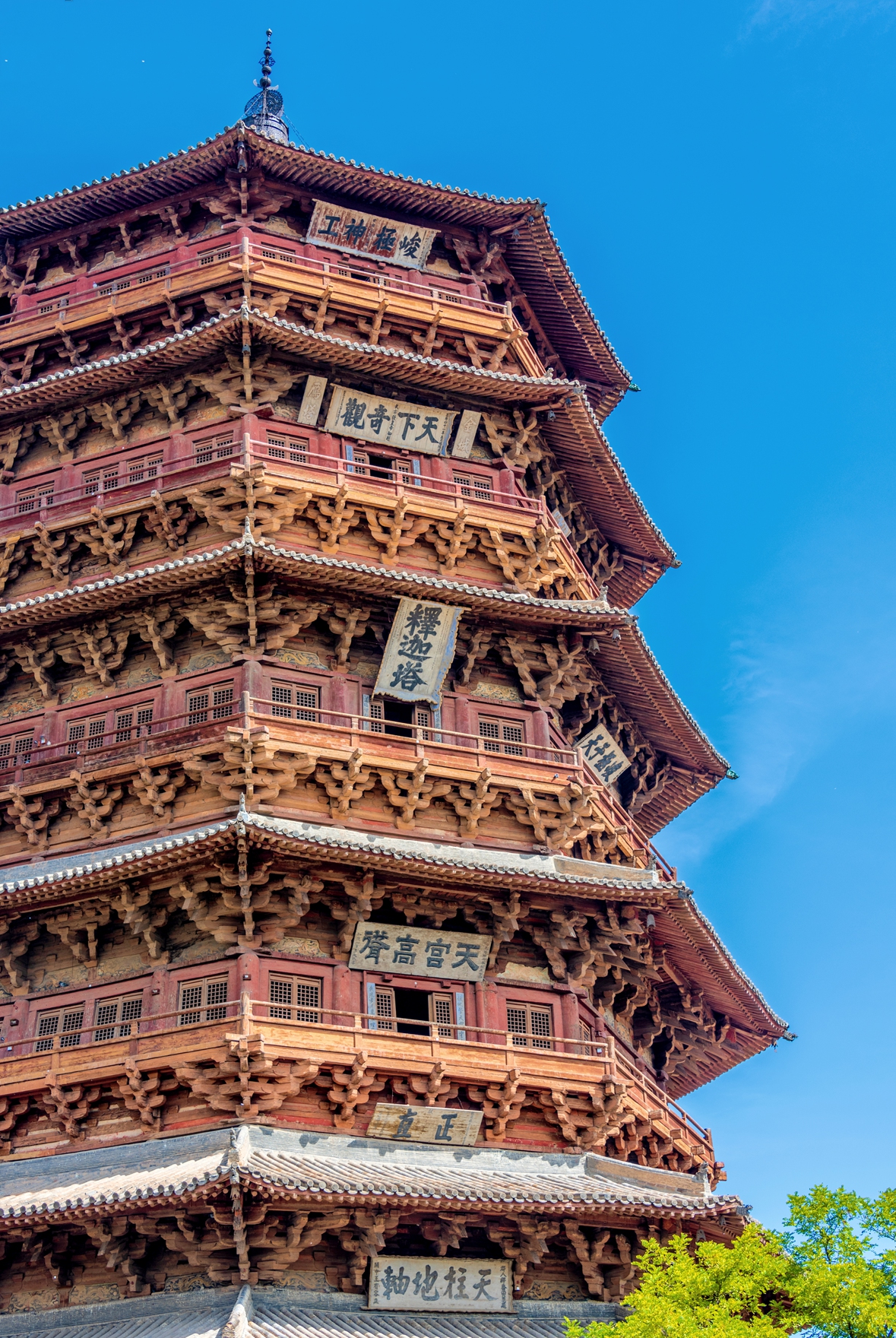
The Wooden Pagoda in Yingxian county, North China's Shanxi Province
Call for collective wisdomThe newly revised Law on the Protection of Cultural Relics encourages public participation, and Wang emphasized that the pagoda's future fate demands collective wisdom.
"The public concern and discussion are not an overreaction, but a precious expression of 'communal vigilant care,'" he said. While specialized research requires a professional, careful environment, management should be more transparent, regularly updating the public.
Wisdom from the entirety of society, from retired craftsmen to heritage enthusiasts, should be actively solicited.
"The public's attention today is the very force that will help it stand tomorrow," Wang concluded. "I hope when people visit the pagoda next time, they don't see just a social media check-in spot, but 'a millennium-old elder.' If you are quiet, you can hear its heartbeat."
RELATED ARTICLES

