ARTS / CULTURE & LEISURE
Diving into the past: Archaeologist’s two-decade journey to salvage underwater Three Gorges gems
Diving into the past
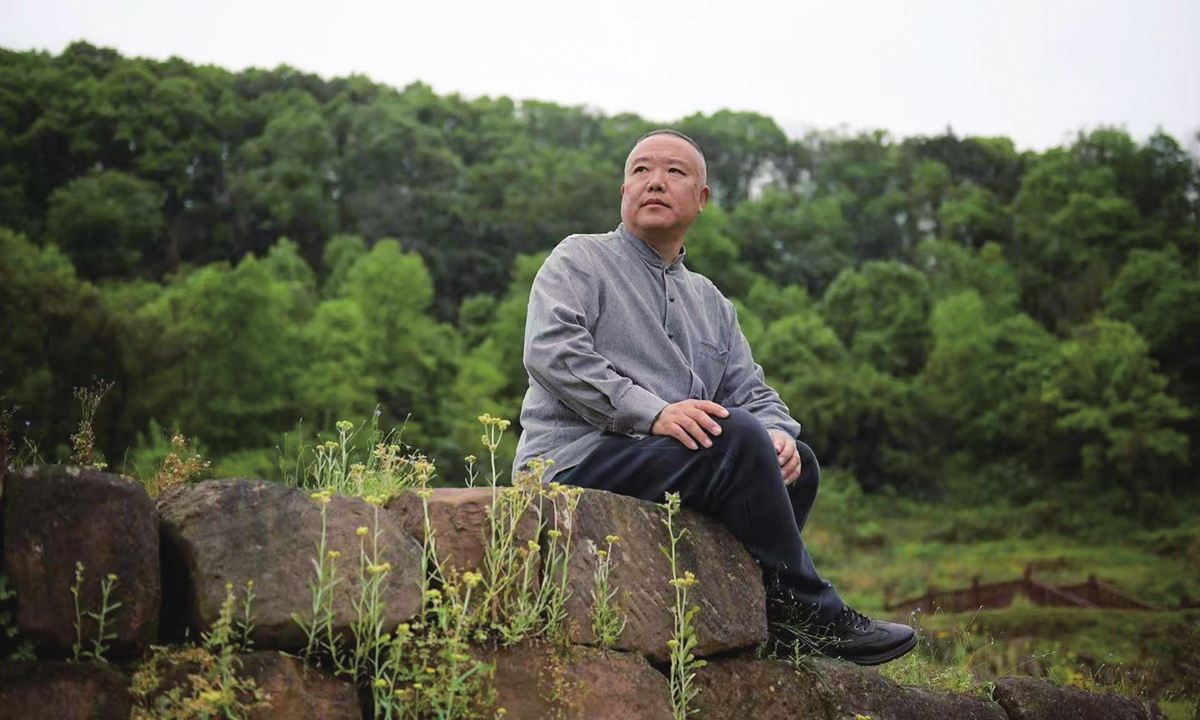
Archaeologist Yuan Dongshan Photos: Courtesy of Yuan Dongshan
Recently published after more than 20 years of work, archaeologist Yuan Dongshan's new book Fengjie Yong'an Town Cemetery unveils the mysteries of the cemetery, recording what he calls a "true history sealed by the river."The Yong'an Town cemetery is located in the ancient town of Fengjie county in Southwest China's Chongqing Municipality. It holds unique value due to the discovery of "M99," the largest and highest-ranking Warring States period (475BC-221BC) burial found in the Chongqing section of the Three Gorges Reservoir region of the Yangtze River.
Yet, much of this heritage, including Fengjie ancient town and a large part of the archaeological site, is now underwater. Situated in the core area of the Three Gorges Project, these relics were submerged beneath the river as the reservoir filled with water.
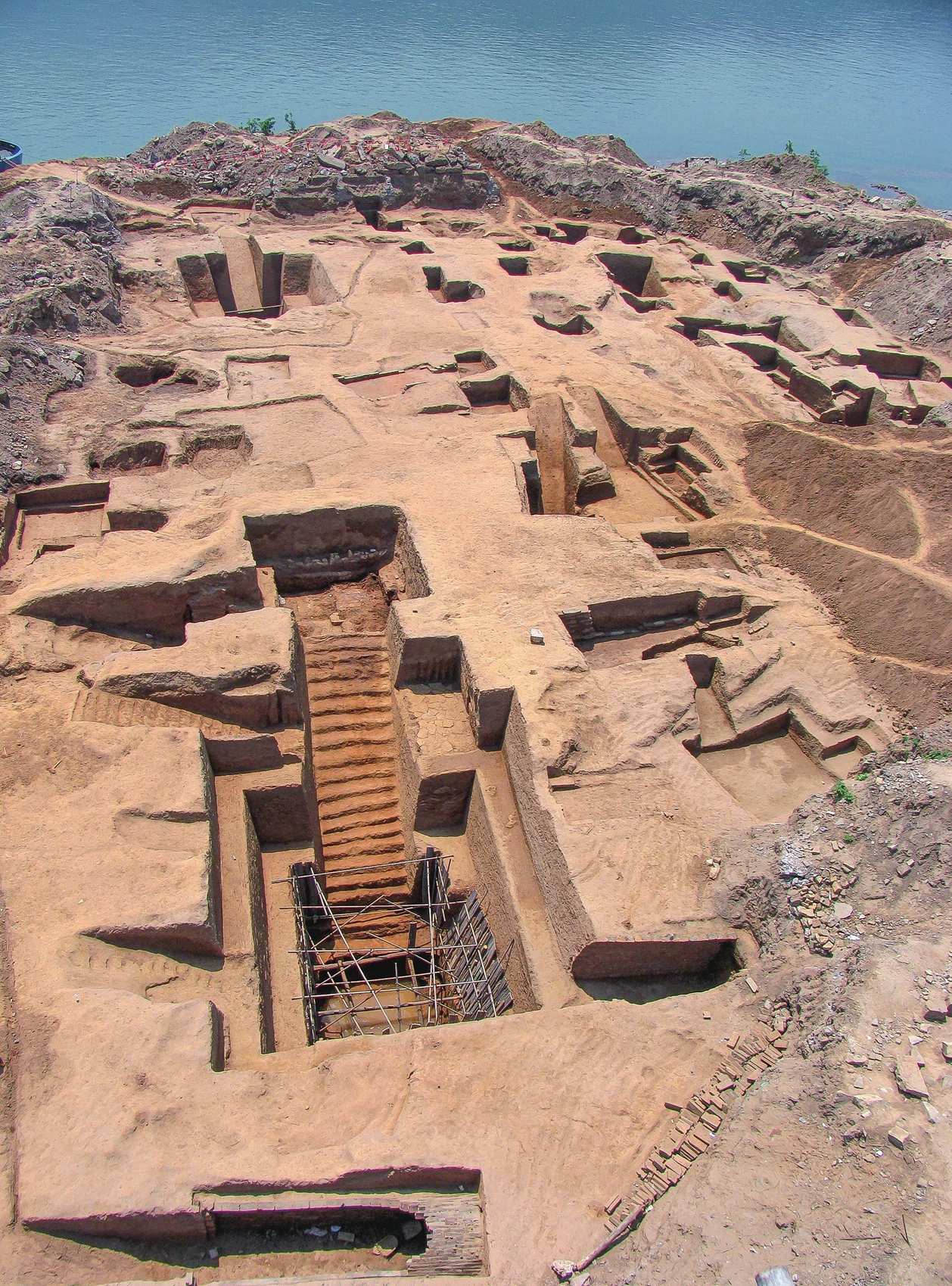
The Yong'an Town cemetery before it was submerged in water
Sealed historyAn experienced archaeologist born in Fengjie, Yuan has a deep insight into the historical heritage of this region. However, it was "by chance" that he truly came to engage with the Yong'an Town cemetery, Yuan told the Global Times.
Back at the turn of the millennium, he was leading archaeological excavations at Fengjie's Baidicheng (lit: White Emperor City) site. In 2002, while working in the area, he heard a loud blast as multiple high-rise buildings in old Fengjie collapsed. "We heard this blast as the trumpet of the Three Gorges Project, yet to me, it was a wake-up call for preserving my hometown's heritage."
As the Three Gorges Project progressed, Yuan and Fengjie's local heritage organs began rescue efforts to preserve the area's historical gems. In 2003, Yuan officially became the lead archaeologist for the Yong'an Town cemetery. The archaeologist's instincts told him the site was historically profound, but even so, he was stunned when the first shovel entered the ground.
"That first dig uncovered layers of deposits stacked beneath the surface, revealing that the local cultural stratum had never stopped - from the Northern Song Dynasty (960-1127) all the way until the Three Gorges Project," said Yuan. He added that this discovery, on one hand, revealed to him "the continuity of the Three Gorges civilization." On the other hand, it told him that the site still held many more "secrets" waiting to be unearthed.
Devoting himself to the site, Yuan and his team carried out several deeper excavations of the cemetery from 2003 onward, until all artifacts down to the water were extracted and preserved. The year 2005 marked a significant milestone. By then, they had unearthed 1,200 burial artifacts from the cemetery, including pottery wares, bronze items, jade objects, and gold and silver wares.
At the same time, "M99," which had been lying dormant in the southeastern corner of the burial complex, also saw the light of day again. Compared to other chambers, M99 was a massive tomb with a vertical depth of 7.02 meters.
Dating back approximately 2,300 years, its layout is shaped like Chinese character jia "甲," which stunned Yuan's team the most, since it reveals the ingenuity of Warring States period construction techniques. Besides the architectural remains, Yuan's team also found nearly 200 bronze artifacts, as well as the remains of the tomb owner and other human remains.
These artifacts are stellar. One such example is a hollowed-out bronze incense cup, the body of which is adorned with intricate openwork carvings. This vessel functioned as an ancient incense diffuser, allowing fragrant smoke to permeate through its delicate pierced designs. Another remarkable bronze find is a vessel lid, crowned with a life-like, three-dimensional sculpted mythical beast, showcasing the exceptional casting artistry of the period.
"These relics witnessed how civilization progressed, and that's the reason why we race against time to preserve them," Yuan remarked.
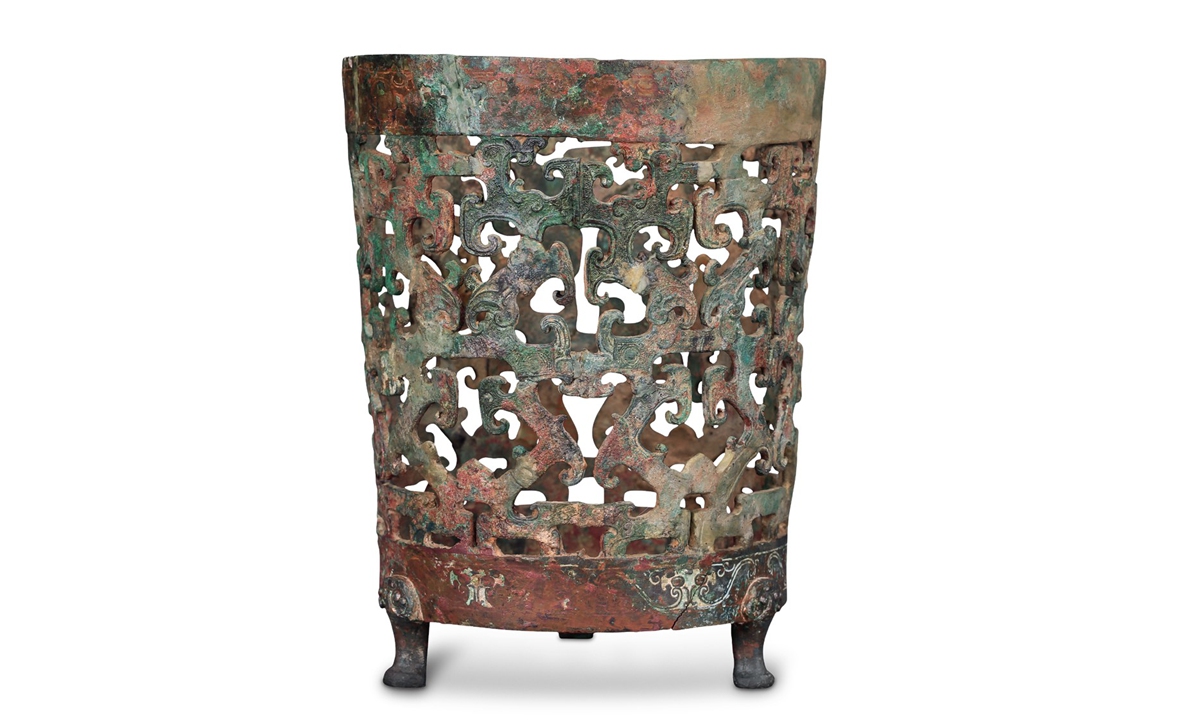
Bronze incense cup unearthed from the Yong'an Town cemetery
Request continuesAn end to the excavation does not mark the end of research at this site. After the cultural relics from Tomb M99 were unearthed in 2005, Yuan and his team devoted far more time to laboratory research. In June 2025, the team officially released their research findings on M99.
While studying the seven personal burial artifacts of the tomb occupant, Yuan made a surprising discovery. For instance, the disk-like jade bi, its shape conforms to the typical ritual jade style of the Chu culture, an ancient regional culture located in what is today the provinces of Hubei and Hunan.
Yet, in the same artifact batch, Yuan found five bronze weapons that show closer connections to the Ba culture, an ancient culture that mainly originated in the area around Chongqing. This detail led him and his team to search for more evidence of cultural integration.
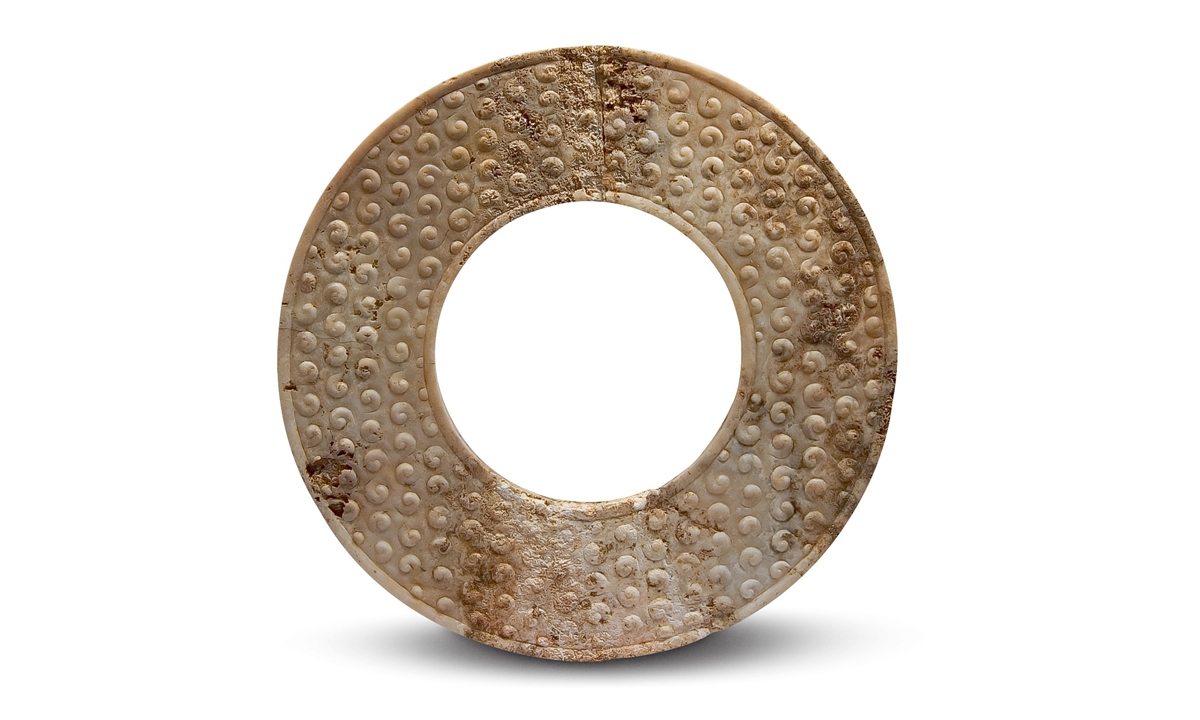
Jade bi unearthed from the Yong'an Town cemetery
Exploring deeper, he then found that the front-right area of M99 held a rare, separate horse pit, M79. The structure of this horse pit didn't follow typical Chu burial customs. Inside the pit, "both Chu-style bronze ritual vessels and Ba-style willow-leaf swords" were unearthed, Yuan told the Global Times.Noting the tomb owner was a "high-ranking Ba noble familiar with Chu culture," Yuan explained that such discoveries "prove the integration of diverse cultures in the Three Gorges region since ancient times."
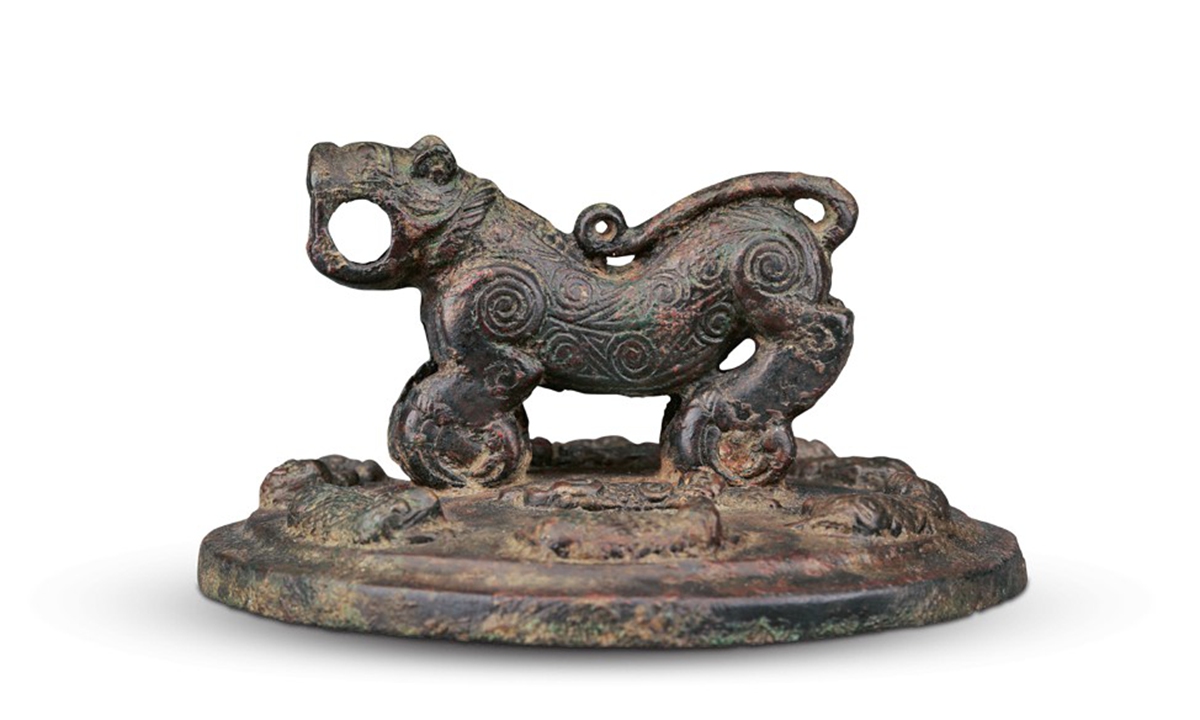
Bronze vessel lid with sculpted mythical beast
Looking back on his two-decade history with the Yong'an Town cemetery, Yuan frankly said that this project "consumed too much of his energy." He himself has transformed from a black-haired young man, with mud always on his feet, into an archaeological expert with graying hair and a venerable reputation.Now he has become the deputy director of the Chongqing Municipal Research Institute of Cultural Relics and Archaeology. Beyond academic activities, the archaeological field remains his passion. "What we unearth is never merely a tomb, but the life trajectories of those who once breathed on this land," Yuan remarked.
RELATED ARTICLES