ARTS / CULTURE & LEISURE
Centuries-old Qintong Boat Festival unites locals during Qingming for memory and reverence
Living spirit
By Published: Apr 01, 2026 11:20 PM

People prepare for boat races during the Qintong Boat Festival in Taizhou, East China's Jiangsu Province. Photo: Courtesy of local authorities in the Jiangyan district, Taizhou, Jiangsu Province
Editor's Note:In 2016, "The Twenty-Four Solar Terms, knowledge in China of time and practices developed through observation of the sun's annual motion," was inscribed on UNESCO's Representative List of the Intangible Cultural Heritage of Humanity.
The ancient Chinese divided the sun's annual circular motion into 24 segments. Each segment was called a specific Solar Term, starting from the Beginning of Spring and ending with Greater Cold.
From the rhythm of labor aligned with nature to the wisdom of seasonal dishes, the 24 Solar Terms have shaped a philosophy of "harmony between humans and nature" and a way of life unique to Chinese culture.
The Global Times presents the series "The Markings of Time," which follows cultural inheritors across China to explore local traditions and humanistic sentiments tied to each solar term. As soon as the calendar turns to April, the Qingming, literally "clear and bright," approaches.
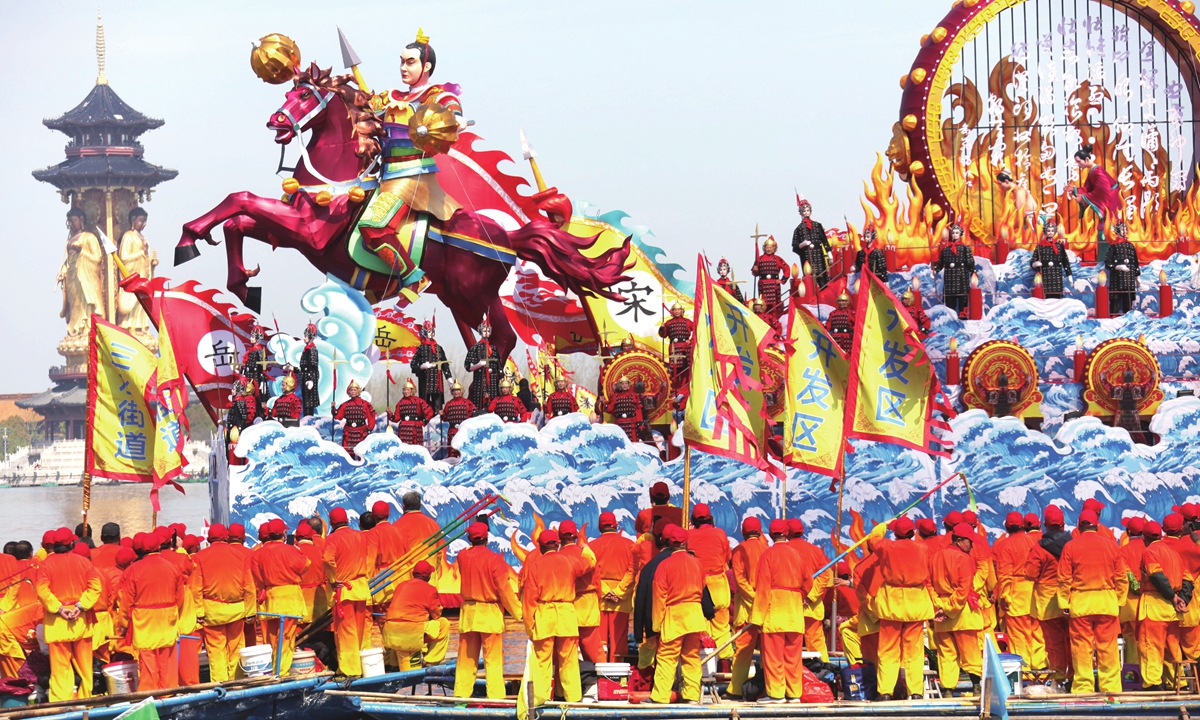
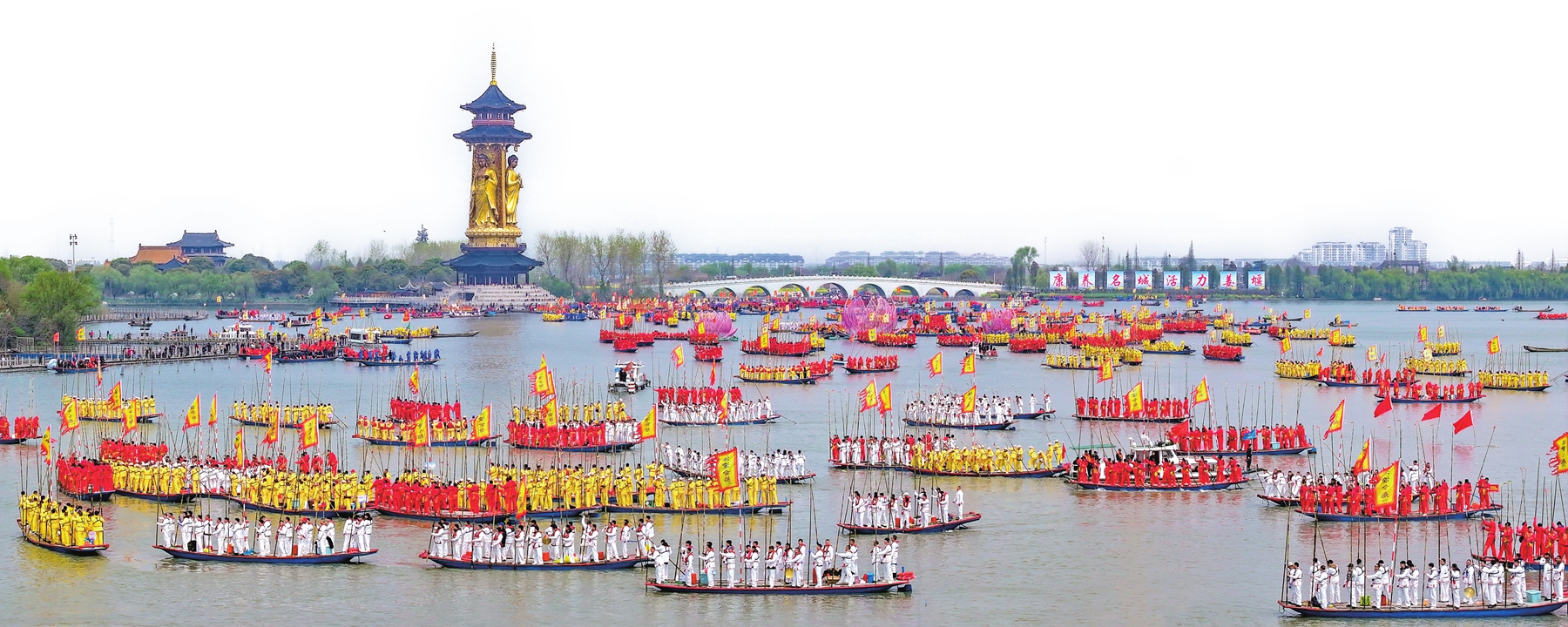
A scene at the Qintong Boat Festival Photo: VCG
The clang of the starting gong shatters the morning calm. Hundreds of boats leap forward like arrows loosed from a bowstring, surging across Qinhu Lake in a spirited contest. Each pole stirs a cascade of waves as crews plunge ahead, riding wind and water, arms moving in perfect unity to the beat of the drum. Along the banks of the lake, the sounds of splashing, chanting and cheers rise and echo.This is the vibrant scene of the annual Qintong Boat Festival. Every Qingming Festival, in Jiangyan district of Taizhou, East China's Jiangsu Province, villagers from all around Qinhu Lake gather for a celebration that has been honored as a national intangible cultural heritage event. For the surrounding towns and villages, the boat races, pleasure cruises and temple fairs are about more than sport - they are a heartfelt way of remembering ancestors and departed loved ones.
During Qingming, a festival deeply rooted in honoring ancestors and expressing remembrance, the longing of families is intimately tied to the rippling waters of Qinhu Lake.
Li Kai, a local teacher from Yuduo town and a young poleman, took part in the Qintong Boat Festival for the third consecutive year. "For this grand event on April 6, my 21 teammates and I started training together more than a month in advance," he told the Global Times. "Building coordination and understanding was vital."
"The Qintong Boat Festival is about community and togetherness. For local people, it's inseparable from the legacy of General Yue Fei. Qingming is not just a time to remember our own ancestors, but also to pay tribute to heroic figures like Yue Fei, keeping alive their spirit of loyalty, bravery and integrity," Li explained. Yue Fei, a famed military commander of the Southern Song Dynasty (1127-1279), is championed in Chinese culture for his legendary battles against northern invaders.
No matter where life takes them, people from the Qinhu region return for Qingming - to race boats, watch the competition and take part in this heritage that has become part of their cultural DNA. "Qintong Boat Festival has merged with Qingming and become imprinted in our blood," said Chen Wei, director of the Jiangyan Museum, according to reports from CCTV News.
Qingming on the water
On the day of the race, Qinhu Lake becomes a roaring stage. Bright banners flutter above the crowds. Lively music and drums fill the air as tens of thousands pack the banks, hoping to see the boats streak by. Viewed from afar, the boats - spread out across the lake - look like a forest of masts and poles. At the signal of the gong and drum, hundreds of boats charge forward, vying for the finish line.
More than 500 boats from nearby towns and villages, along with over 10,000 boatmen and tens of thousands of spectators, gather for this celebration. The fleet includes tribute boats, pole boats, dragon boats and paddle boats.
The pole boat is the heart of the festival. The tradition, spanning centuries, sees 10 men standing on each side of a boat, each wielding a long bamboo pole. Li is one of these polemen.
Timing is everything for these athletes. Their five-meter bamboo poles drive deep into the lake with each push. "To go fast and stay balanced, everyone must follow the rhythm perfectly and move as one to the beat of the gong. Otherwise, the boat might capsize," Li said.
To prepare, Li and his teammates practiced together every weekend at a training site, and kept up strength training at home to build upper-body power.
On the boat, surrounded by the cheers of the crowd and the hope of his team, Li said he felt immense pride and excitement. "My blood feels like it is boiling. My mind is focused on nothing but the pole in my hands and the distant finish line. All I want is to give it everything I have got."
This year, Li's team is aiming for first place. "The Qintong Boat Festival is all about having the courage to forge ahead. That is another priceless legacy this tradition gives us," he told the Global Times.
Inheriting the spirit
For the people of the region, the Qintong Boat Festival is more than a spring highlight - it is woven into daily life. Li noted that the festival has been celebrated for centuries because its spirit transforms the sorrow of memorial rituals into passion for life and a drive for progress.
"Every boat keeps an incense burner at the bow to honor the ancestors, and incense is offered during the temple fair as well. It is a tradition we never forget. The rush of adrenaline and pride when hundreds of boats surge forward - that is the true charm of the festival," Li said.
The polemen's progress is powered by strong bamboo poles. Wang Zhengxiang, a craftsman who has made poles for the festival for almost 40 years, told the Global Times that these poles are like the backbone of the local people. "They not only hold up the boats, but also our roots."
For Wang, fashioning and repairing poles is the prelude to the festival. Every year before Qingming, Wang spends months preparing poles - combining the memory of those who came before and hope for the new spring into every stick of bamboo.
Both Wang and Li mentioned the word "reverence." They respect the traditions of Qingming, the customs of the Qintong Boat Festival, and the very lake that gave them life. What they hope to pass on is not just the skill of boating or making poles, but an unbroken spiritual legacy that has endured the test of a thousand years.
RELATED ARTICLES