BRASIL 247 / MORE
Lula highlights China partnership for major infrastructure investments in Brazil
Brazilian president underscores strategic cooperation with China in large-scale projects such as Salvador-Itaparica bridge
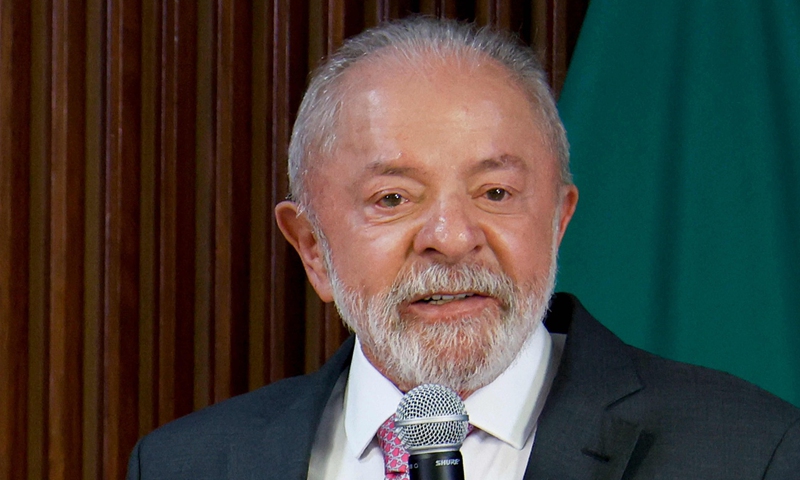
Brazilian President Luiz Inácio Lula da Silva. File photo: CFP
By Brasil 247 - Brazilian President Luiz Inácio Lula da Silva highlighted the importance of China as a key partner in financing and advancing major infrastructure projects in Brazil, particularly in the state of Bahia, during an interview with TV Record Bahia.
Lula emphasized that cooperation with China has played a central role in enabling large-scale investments, including the construction of the Salvador-Itaparica bridge.
The president noted that China currently shows the greatest willingness to invest in Brazil. "At this moment, China is the country that has shown the greatest willingness to work with Brazil," he said, while also stressing that Brazil seeks partnerships with all nations.
The Salvador-Itaparica bridge, one of the largest infrastructure projects in the region, is expected to span nearly 13 kilometers and benefit around 250 municipalities. The project will involve international financing, including Chinese participation.
Lula also highlighted broader infrastructure efforts under Brazil's Growth Acceleration Program (PAC), noting that approximately 80% of planned national investments have already been contracted. He added that projects such as the Salvador Light Rail Transit (VLT) aim to improve mobility while addressing social inequalities.
"Modern transport cannot remain only in city centers without reaching the periphery," Lula said, emphasizing the social dimension of infrastructure development.
The president also pointed to Brazil's strong position in renewable energy as a key factor attracting foreign investment. He noted that the country already has 53% renewable energy in its matrix and 87% in electricity generation, positioning Brazil as a global reference.
According to Lula, this energy capacity is drawing interest from international investors, including those planning to build data centers in the country.
He concluded by reaffirming Brazil's commitment to deepening its strategic relationship with China, particularly in infrastructure, energy and technology, as part of a broader development agenda.
(Reported by Brasil 247 on April 3, 2026)
