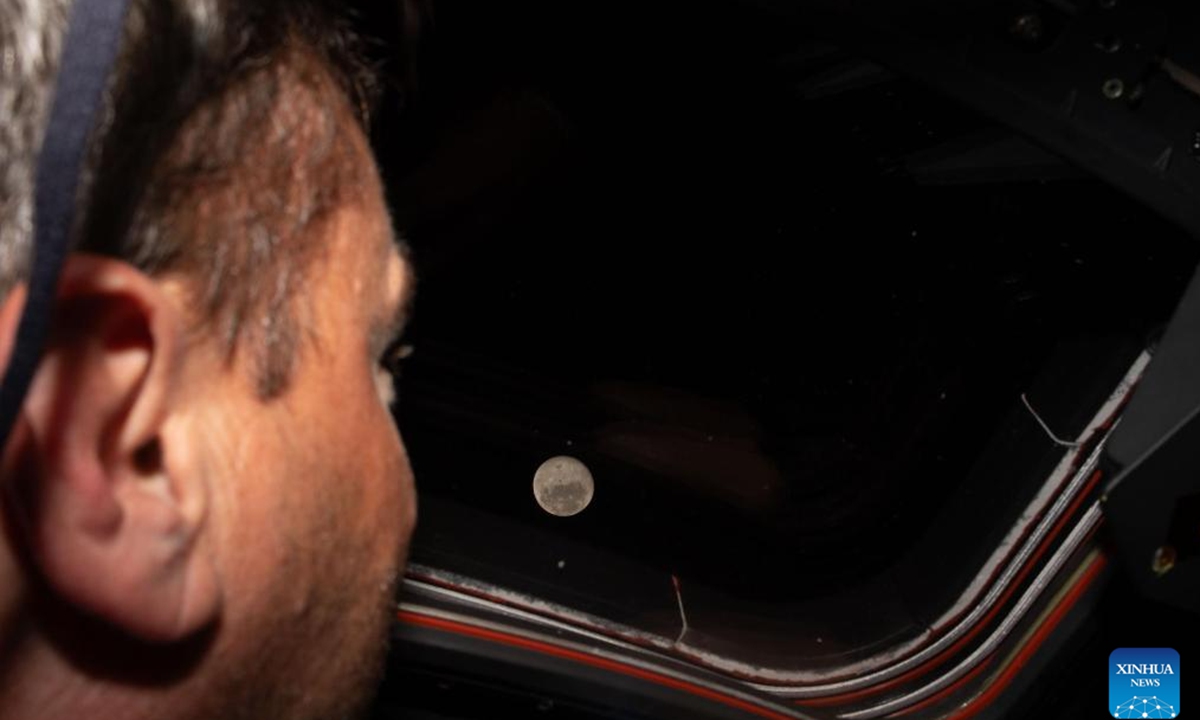
NASA astronaut Reid Wiseman looks out one of the Orion spacecraft's main cabin windows at the Moon, on April 6, 2026. The crew of the Artemis II mission on Monday broke the record for the farthest distance from Earth ever traveled by humans, surpassing the milestone achieved by Apollo 13 in April 1970, according to NASA. (NASA/Handout via Xinhua)
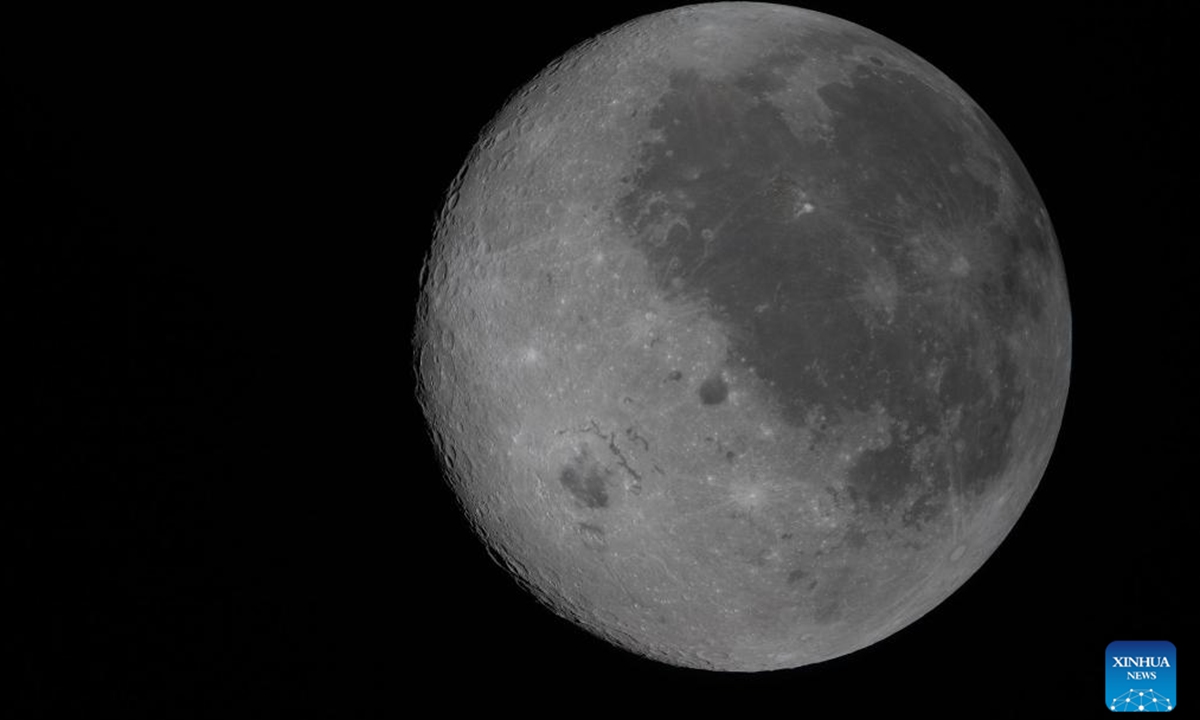
Photo taken on April 6, 2026 shows the Moon seen from the Orion spacecraft. The crew of the Artemis II mission on Monday broke the record for the farthest distance from Earth ever traveled by humans, surpassing the milestone achieved by Apollo 13 in April 1970, according to NASA. (NASA/Handout via Xinhua)
The crew of the Artemis II mission on Monday broke the record for the farthest distance from Earth ever traveled by humans, surpassing the milestone achieved by Apollo 13 in April 1970, according to NASA.
The milestone was reached at about 1:56 p.m. Eastern Time (1756 GMT), NASA said.
The four crew members are NASA commander Reid Wiseman, pilot Victor Glover, mission specialist Christina Koch, and Canadian Space Agency (CSA) mission specialist Jeremy Hansen. The mission was launched from NASA's Kennedy Space Center in the U.S. state of Florida on April 1.
The Apollo 13 crew set the previous record of 248,655 miles (about 400,171 km) on April 15, 1970, while executing an emergency free-return trajectory around the Moon after an oxygen tank rupture aborted their planned lunar landing.
The Artemis II crew named their Orion spacecraft Integrity before the mission. The crew said the name reflects the values of trust, respect, candor, and humility they consider essential for deep-space exploration. NASA has used Integrity as the spacecraft's callsign throughout the mission.
During the lunar flyby, CSA astronaut Hansen informed mission controllers that the crew was proposing names for two unnamed craters on the Moon. The crew proposed naming the first crater Integrity after their spacecraft. Hansen said the crater is located between the Moon's Orientale basin and the Ohm impact crater on the lunar far side. The crew proposed naming the second crater Carroll, a location on the near-far side boundary of the Moon. Mission Control acknowledged both proposals.
NASA astronaut Jim Lovell, a veteran of Gemini VII, Gemini XII, Apollo 8, and Apollo 13 who died on Aug. 7 at the age of 97, recorded a message for the Artemis II crew before his death, which the crew heard during their wake-up call on Monday morning. "Good luck and Godspeed from all of us here on the good Earth," Lovell said in the recording.
Artemis II is following a free-return trajectory similar to the one utilized by Apollo 13. Integrity is expected to reach its maximum distance of 252,760 miles from Earth at 7:07 p.m. Eastern Time before beginning its return.
The mission does not include a lunar landing. Splashdown is scheduled for April 10 in the Pacific Ocean off San Diego, California.
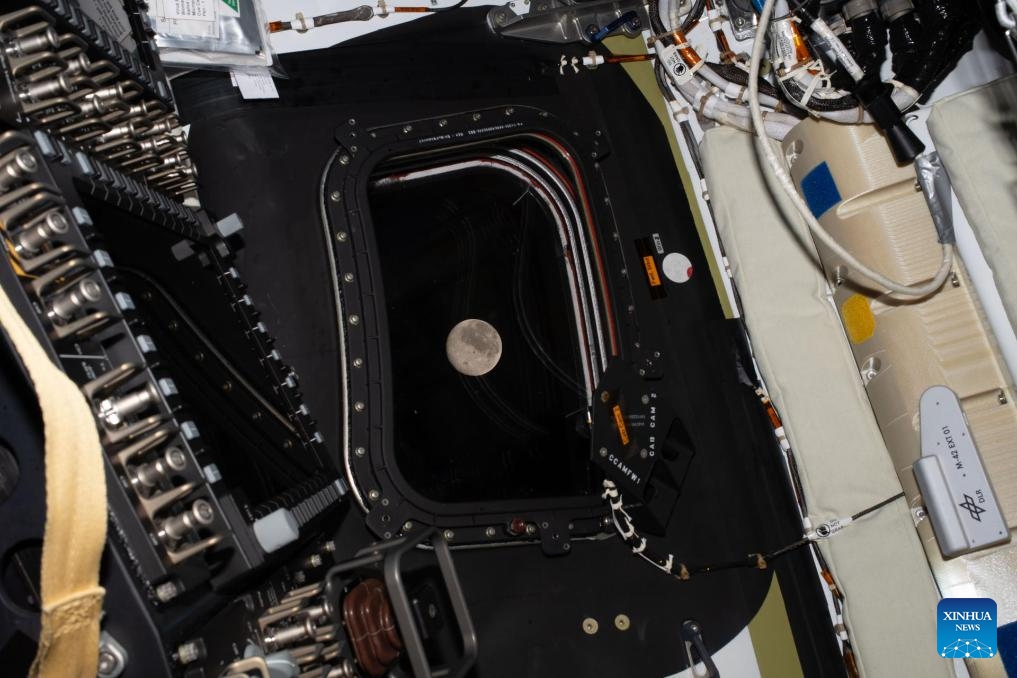
Photo taken on April 6, 2026 shows the Moon seen from the Orion spacecraft. The crew of the Artemis II mission on Monday broke the record for the farthest distance from Earth ever traveled by humans, surpassing the milestone achieved by Apollo 13 in April 1970, according to NASA. (NASA/Handout via Xinhua)
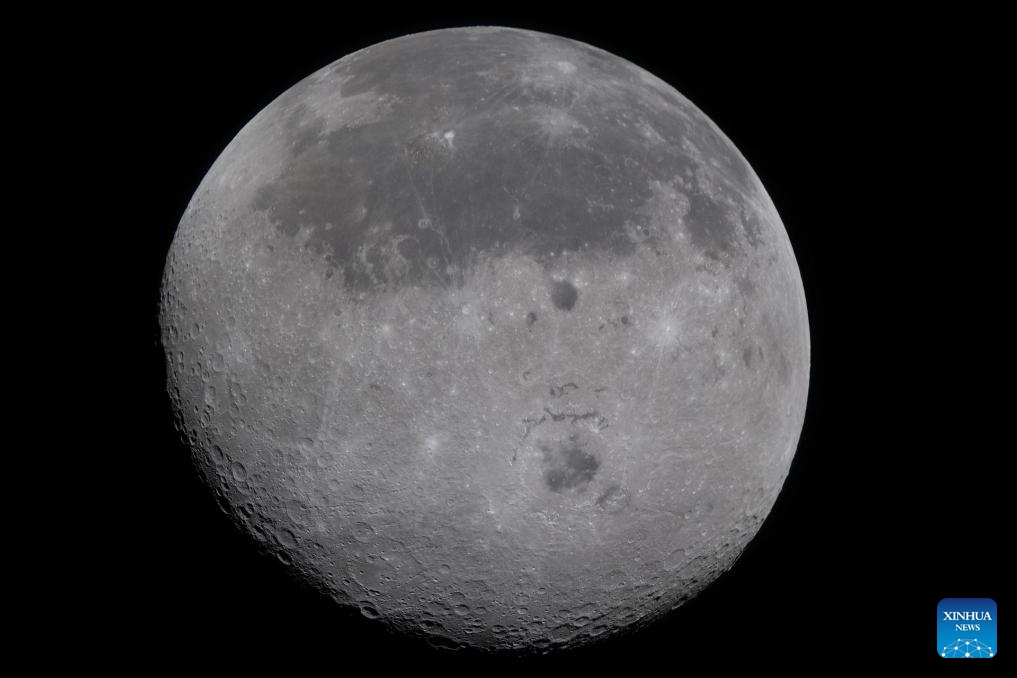
Photo taken on April 6, 2026 shows the Moon seen from the Orion spacecraft. The crew of the Artemis II mission on Monday broke the record for the farthest distance from Earth ever traveled by humans, surpassing the milestone achieved by Apollo 13 in April 1970, according to NASA. (NASA/Handout via Xinhua)
