ARTS / CULTURE & LEISURE
Hands-on tea making culture becomes popular spring activity in China
Sipping on a long history
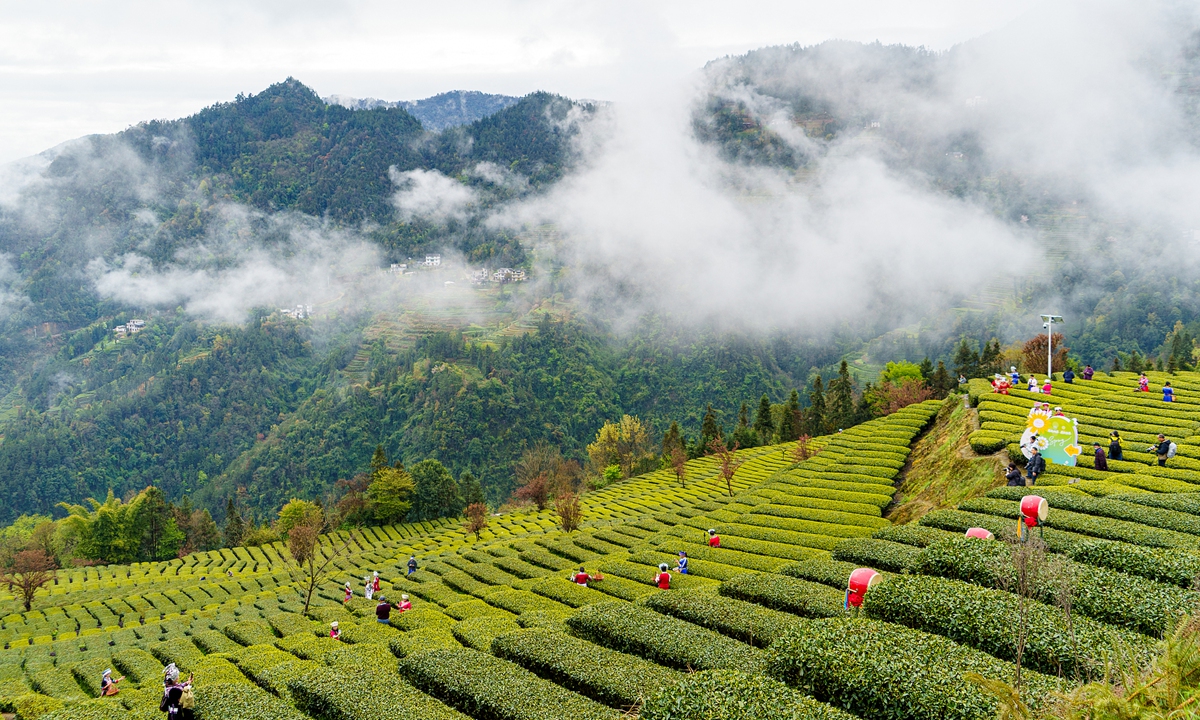
A spring-season tea garden in Hubei Province Photo: VCG
On April 4, the first day of the Qingming holidays, 26-year-old Sun Yiheng traveled from Northeast China's Jilin Province to a tea garden in Huzhou, East China's Zhejiang Province, to experience firsthand the traditional art of tea picking.For 68 yuan ($9.92), she joined a hands-on workshop that included plucking tender leaves, pan-frying them, sipping tea, and taking home her own creation.
"I grew up in the north, where tea gardens are virtually non-existent. I've never had the chance to pick tea myself, so there was always this natural curiosity," Sun told the Global Times.
For Sun, tea has long been an essential part of daily life in China, which made her eager to understand its journey from leaf to cup. Visiting during spring, a season associated with renewal, also offered a chance to experience nature's vitality up close.
Sun is not alone. On China's lifestyle-sharing platform Xiaohongshu, posts about tea garden visits and tea culture experiences across the country are increasingly common. Many have shared photos of their trips, during which they not only picked tea leaves but also took part in activities such as tea frying.
The popularity of tea-picking experiences reflects a growing desire among young Chinese to step into tradition in a more tangible way, said Zhu Yi, an associate professor at China Agricultural University in Beijing. "Beyond the photos and videos, they are engaging with Chinese history through hands-on work."
Experiencing the craft
For Zhang Wenwei, 27, a native of Hangzhou, East China's Zhejiang Province, the Qingming holidays offered an opportunity to engage with the local specialty, Longjing tea, in a way she had never done. Spending 88 yuan, she donned traditional tea-harvesting clothing and took part in a tea making workshop.
"The environment was beautiful, and focusing on one activity brought a real sense of flow," Zhang told the Global Times. "Identifying the right buds, single leaves or two-leaf shoots, takes time and patience. It's interesting, but if you do it all day, it's exhausting."
The popularity of tea experiences has led tea businesses to innovate. Zhang Menglu, head of Pu'er Tengyi Tea Co, oversees about 240 hectares of tea gardens in Pu'er, Southwest China's Yunnan Province, including more than 30,000 tea trees that are more than 100 years old.
During peak season, her tea garden welcomes 80 to 120 participants daily. Visitors are provided with free tea tools, traditional clothing, professional guidance, rest areas, free tea tasting, and photography spots.
The staff members teach visitors to identify the right buds, pick carefully, and work through each step of processing, from picking fresh leaves, pan-frying, rolling, sun-drying, and even steaming, so that they leave with tea they have made themselves.
Even with careful guidance, some inexperienced visitors may unintentionally harm tea trees. "Some may pull branches too hard, overharvest, trample the soil or leave litter," Zhang said. To mitigate this, tea gardens restrict access to sensitive areas, protect century-old tea trees, and clearly mark boundaries to reduce human impact.
Experiential tea picking in these gardens typically focuses on younger plantation trees or terrace-grown tea, which are easier to manage and better suited for both educational tours and photo-oriented visits. By contrast, access to ancient tea trees is divided into designated zones to minimize human impact.
This approach allows visitors to take part in immersive experiences while also gaining an awareness of ecological protection, according to Zhang.
Tea as cultural heritage
China is the birthplace of tea. Archaeologists in Zhejiang have identified the earliest known remains of artificially cultivated tea trees, dating back about 6,000 years. In East China's Shandong Province, tea residues believed to have been boiled or brewed were unearthed from ancient tombs, providing the oldest physical evidence of tea consumption, dating back roughly 2,400 years.
According to the color and processing method, tea is divided into six categories in China such as white tea and dark tea. In 2022, China's traditional tea-making techniques were inscribed on UNESCO's Intangible Cultural Heritage list.
Springtime is ideal for green teas such as Longjing and Biluochun, which rely on tender early shoots. These spring teas are highly time-sensitive in both harvesting and processing, with the finest known as "Pre-Qingming Tea." The term refers to tea picked before Qingming - which falls in the first week of April - when leaves are at their most tender and aromatic. Widely regarded as the year's highest-quality harvest, these early spring teas are prized for their freshness and fragrance, according to Zhu.
Zhu noted that, for today's youth, the appeal of tea lies not only in taste but in the experience itself - picking, processing, and savoring tea connects them to history, nature, and culture.
Both Sun and Zhang said in interviews that the experience gave them a firsthand understanding of how hard tea picking can be, leaving them with a deeper appreciation for every cup of tea they drink.
Zhang echoed the view, as she sees these experiences as a way to bring visitors closer to the work behind tea production and the traditions that sustain it. She said that many visitors also describe the experience as a rare pause from urban life, in which time slows down in the countryside and everyday routines give way to a closer connection with nature and a more mindful way of living.
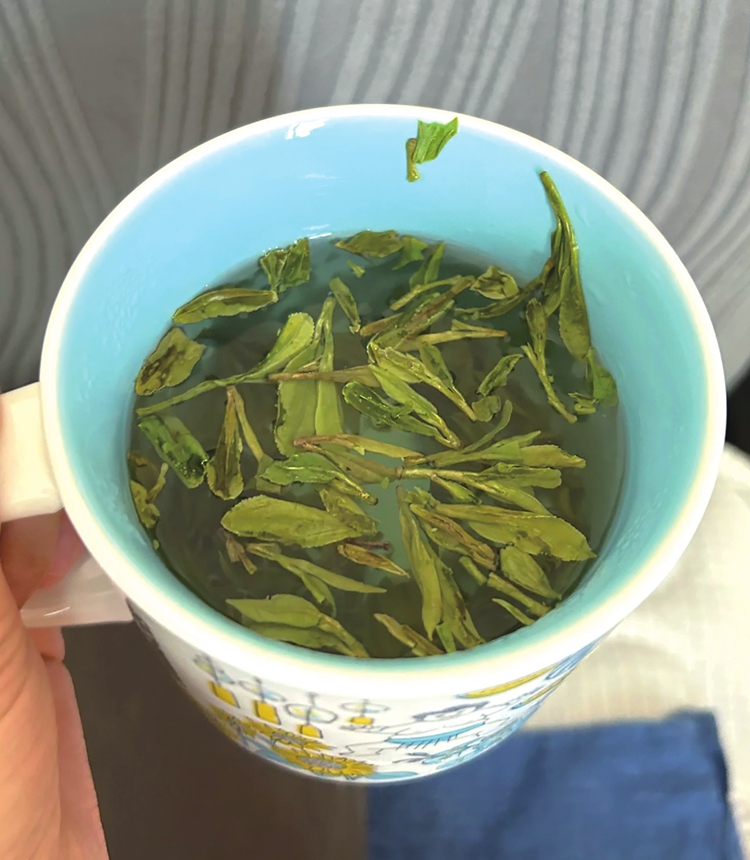
Longjing tea made from leaves picked by Zhang Wenwei in Hangzhou, Zhejiang Province Photo: Courtesy of Zhang Wenwei
RELATED ARTICLES