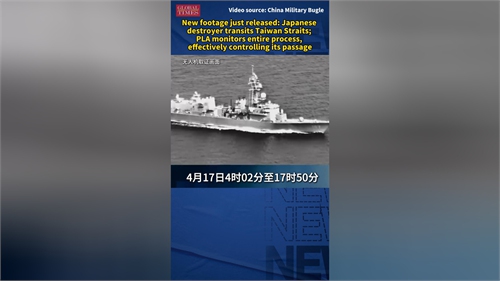
Japan reportedly seals largest-ever postwar defense deal with frigate sale to Australia; move exposes Tokyo’s dangerous overconfidence, risks jeopardizing regional security: experts
By and Xia Wenxin Published: Apr 18, 2026 05:00 PM

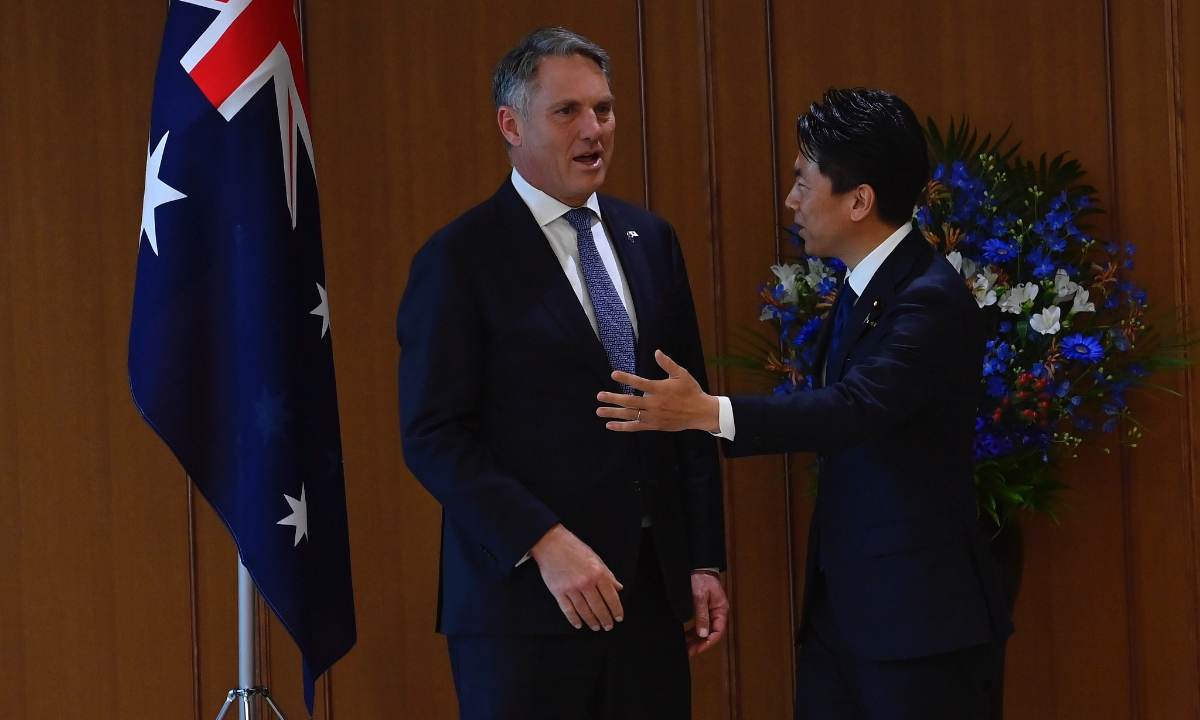
Richard Marles, Australia defense Minister and KOIZUMI Shinjiro, Minister of Defense of Japan pose prior a bilateral meeting on April 8, 2026, in Tokyo, Japan. Marles and Koizumi discuss topics including the security and defense cooperation between Japan and France, conflict in Middle East and the regional issues. Photo: VCG
Tokyo signed a contract on Saturday with Canberra to supply the first three of a planned fleet of 11 upgraded Mogami-class frigates to the Australian Navy, the largest defense export contract in Japan's postwar history, Japan Times reported, and the was described by Reuters as "Tokyo's most consequential military sale since ending a military export ban in 2014," which signals Japan's push away from postwar pacifism and a move "to counter China."
The sale deal risks intensifying an arms race in the Asia-Pacific, Chinese experts said, adding that Japan, by doing so, is misjudging the situation and being overconfident on its part in its capabilities and security environment—assuming it can expand its military role at will without jeopardizing its own security, Chinese experts said.
Australian defense minister Richard Marles and his Japanese counterpart Shinjiro Koizumi signed a memorandum "reaffirming the Australian and Japanese governments' shared commitment to the successful delivery" of the warships, Marles said in a statement, per Reuters.
Japan's ministry of defense posted on X that "the two ministers confirmed their commitment to further strengthening Japan-Australia defense cooperation, taking into account the announcement of Australia's National Defence Strategy and the conclusion of the contract for Australia's Multi-Role Frigates, among other developments."
Mitsubishi Heavy Industries is to supply the Royal Australian Navy with three upgraded Mogami-class multi-role frigates built in Japan from 2029. Eight more frigates will be built in Australia, Reuters reported.
Contracts were signed for the first three frigates, to be built in Japan, before there is a "transition to an onshore build" at the Henderson shipyard near Perth in Western Australia, Marles said, according to Reuters.
Reuters said the deal anchors Japan's push away from its postwar pacifism to forge security ties beyond its alliance with the US to counter China.
Under the current "three principles on transfer of defense equipment and technology", exports of weapons with lethal capabilities are restricted, but transfers are permitted if they are for the purpose of joint development and production. The new vessels are scheduled to be built in Japan initially, effectively amounting to an export of escort ships, Japan's Kyodo News reported.
Japan regards Australia, a US ally, as a "quasi-ally" and places importance on it as a partner in the Indo-Pacific region. Through the joint development of the new vessels, Japan aims to strengthen defense cooperation between the two countries, Kyodo News claimed.
Japan Times also reported that "in a major breakthrough for Japan's defense industry, Tokyo on Saturday reached a landmark agreement with Canberra."
For Japan, the ability to export offensive weapons marks a fundamental breach of the "three principles on transfer of defense equipment and technology", enabling a major step in exporting advanced arms and moving toward becoming a major arms exporter. If such vessels are deployed near the South China Sea, they could also affect China, Song Zhongping, a Chinese military affairs expert, told the Global Times.
It is actually Japan's ulterior motive to exporting weapons to China's neighbors to complicate regional security reality and indirectly counter China, Song pointed out, slamming Japan's dangerous militaristic resurgence.
However, Song believes by doing so, Japan is overconfident in its capabilities of managing the situation —assuming it can expand its military role without risking domestic security. Such misplaced confidence could lead to serious strategic misjudgment, Song added.
It is reported that the Japanese government plans to revise the implementation guidelines for the "three principles on transfer of defense equipment and technology" this month to loosen restrictions on arms export.
On Japan's such attempt, Mao Ning, spokesperson from China's Ministry of Foreign Affairs said on April 7 that China is gravely concerned about Japanese government's plan to revise the "three principles on transfer of defense equipment and technology".
"We urge the Japanese side to deeply reflect on its history of militarist aggression, honor its commitments and act prudently in military and security areas, and stop going further down the wrong path," spokesperson Mao Ning said at a regular press conference.
Japan has in recent years gradually loosened its arms export restrictions through a "salami-slicing" approach, moving step by step from non-traditional security equipment and radar systems to second-hand vessels, and now to advanced frigates, Zhang Junshe, another Chinese military affairs expert, told the Global Times.
Zhang said such changes carry notable risks, as fully lifting export controls could intensify an arms race in the Asia-Pacific, heighten regional tensions, and potentially exacerbate disputes by supplying weapons to countries involved in territorial or maritime conflicts. Given Japan's historical background, these developments have raised concern about their implications for regional peace and stability, he added.
Recently, Australia and Japan are eyeing to deepen cooperation on defense field. Last week, Marles and Koizumi held a meeting during which the two exchanged views on the current situation in the Middle East as well as regional circumstances, including those in the Indo-Pacific region, according to a press released published by Japan's ministry of defense.
When covering the deal, Australian news site News.com.au focused on the budget. It said that "Under the agreement, initially costing taxpayers $10bn, the Japanese shipbuilder will produce 11 Mogamis for the Navy…The total end cost of the agreement remains unknown."
Song said that under the umbrella of the US Asia-Pacific strategy, Japan and Australia are growing closer. However, Australia needs to recognize that if it chooses to interfere in East Asian affairs, a place far away from itself, by joining hands with Japan to counter China—it would be seen as a reckless and self-damaging move.
RELATED ARTICLES