Spain, Brazil and Mexico call for urgent action over the humanitarian crisis in Cuba amid US indication of a shift from Iran to Cuba
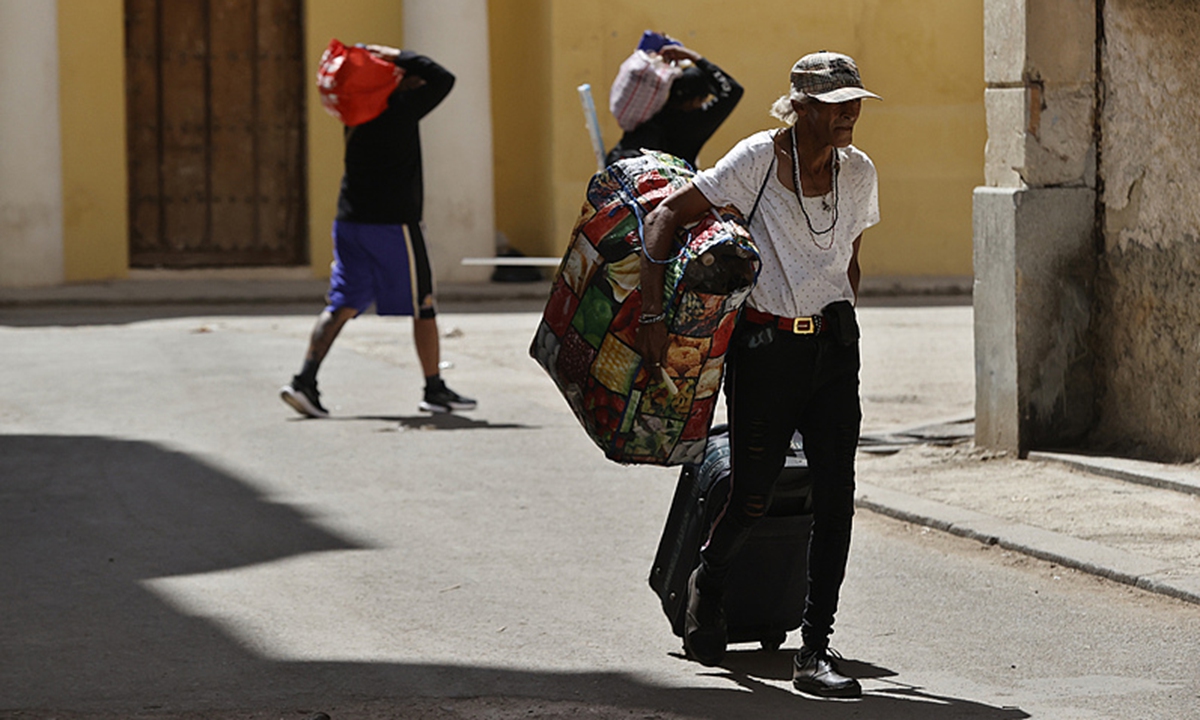
People walk down a street in Havana, Cuba, on April 10, 2026. Photo: VCG
In light of recent developments in Cuba and the dire situation the Cuban people face, the governments of Brazil, Mexico and Spain on Saturday expressed deep concern over the grave humanitarian crisis facing the Cuban people and urged necessary measures to ease the situation, according to a joint statement published on the Spanish Foreign Ministry's website. The statement came as US President has recently indicated to shift his focus from the war in Iran to Cuba.
The three governments also called relevant parties to avoid actions that worsen the living conditions of the population or that violate international law, and pledged to step up coordinated humanitarian response to alleviate the suffering of the Cuban people.
In the statement, the governments of Brazil, Spain and Mexico also reiterated the need to respect international law at all times, the principles of territorial integrity, sovereign equality and the peaceful settlement of disputes, as enshrined in the Charter of the United Nations.
The Trump administration has sent a senior delegation to Cuba last week to discuss a deal to address the humanitarian crisis on the island, according to The New York Times, the move came amid US President's stepped-up pressure on Havana.
On Friday, Trump indicated he was keen to shift his focus from the war in Iran to Cuba. "It's called a new dawn for Cuba," the US President claimed. "We're going to help them out with Cuba," The New York Times reported.
The Trump administration has blocked energy shipments to Cuba since January as part of a strategy to force the country into submission, according to another report of The New York Times.
This statement carries symbolic significance of opposing hegemony to a certain extent, Wang Hanyi, a research fellow at the China-UK Center for Cultural Exchange at Shanghai International Studies University, told the Global Times on Sunday.
Brazil and Mexico have long opposed the overwhelming US influence in the Western Hemisphere, and this move objectively provides transatlantic diplomatic backing for Latin American nations. The statement serves as a direct response to the long-standing US policy of blockade against Cuba, Wang said.
The joint statement on Saturday was released as leftist leaders from across the globe met in Barcelona.
By presenting Cuba's plight under the humanitarian issue of suffering, the statement in effect transforms geopolitical disputes into universal international concerns. What legitimacy can a policy claim if it inflicts large-scale humanitarian crises, asked the expert.
This joint initiative reflects emerging trends amid the global evolution toward multipolarity. Middle powers represented by Spain are seeking to align with Global South countries, bypass the dictates of superpower on specific issues, and articulate their independent positions.
Spain's recent stance on issues concerning Washington reflects Europe's overall positioning towards US at present. Rather than the blind allegiance based on shared values that has persisted since the Cold War, Europe has evolved into a vigilant partner. While upholding transatlantic alliance ties, Europe is increasingly soberly avoiding becoming a pawn in the US' geopolitical strategy, Wang said.
RELATED ARTICLES