ARTS / BOOKS
At 80, award winning illustrator Cai Gao still draws inspiration from childhood
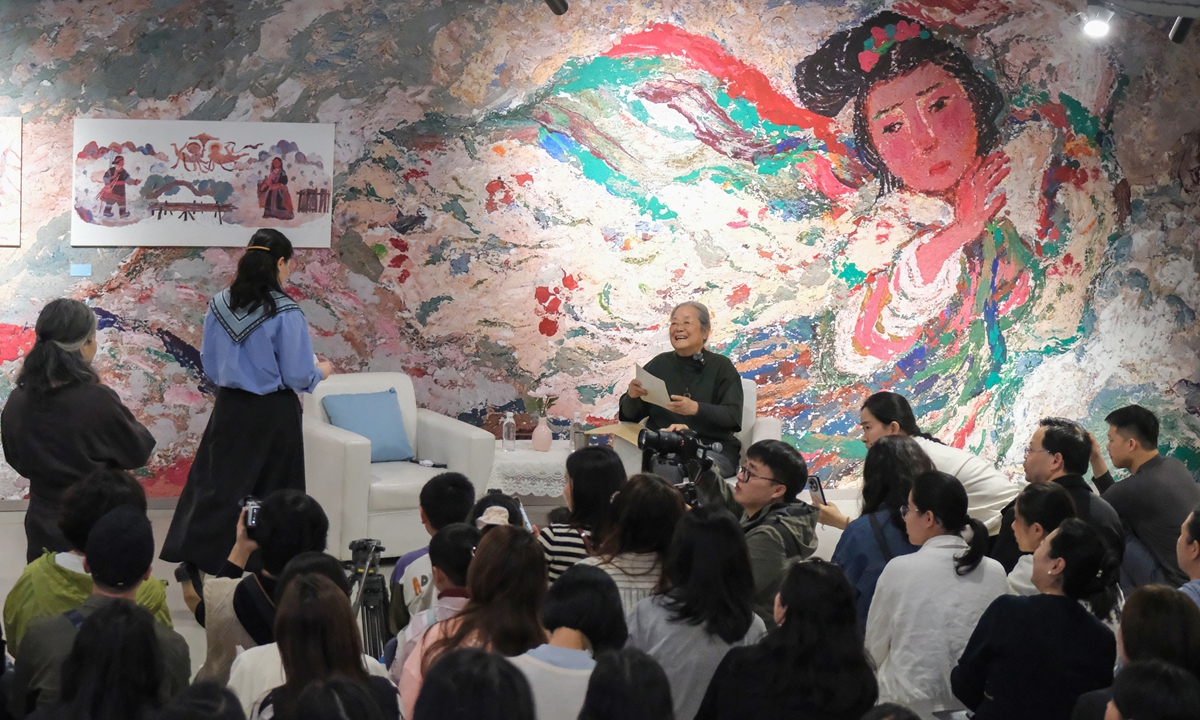
Cai Gao (center) interacts with readers at a book signing event in Changsha, Hunan Province on April 18, 2026. Photo: VCG
With silver hair, and a lifetime spent never leaving the world of childhood, 80-year-old Cai Gao, China's first illustrator to win the Hans Christian Andersen Award, has a memory and imagination that refuse to age.How good is Cai's memory? She can still summon, word for word, a Hunan folk lullaby her grandmother taught her at the age of three. With her wild imagination, she describes a train ride as "unrolling a moving scroll." She told the Global Times she loves illustrating the moon because it reminds her of children's "soft, round little faces."
Cai's reimagining of life's mundane moments is a gift, but it comes from observing life itself.
Over the past 50 years, be it nature's wind and stars, traditional heroes, Chinese folklore, or even war, Cai has framed them all into stories a child can grasp. It is this wide range of subjects and her diverse forms of expression that gave Cai another title among readers: "Treasure Nanny."
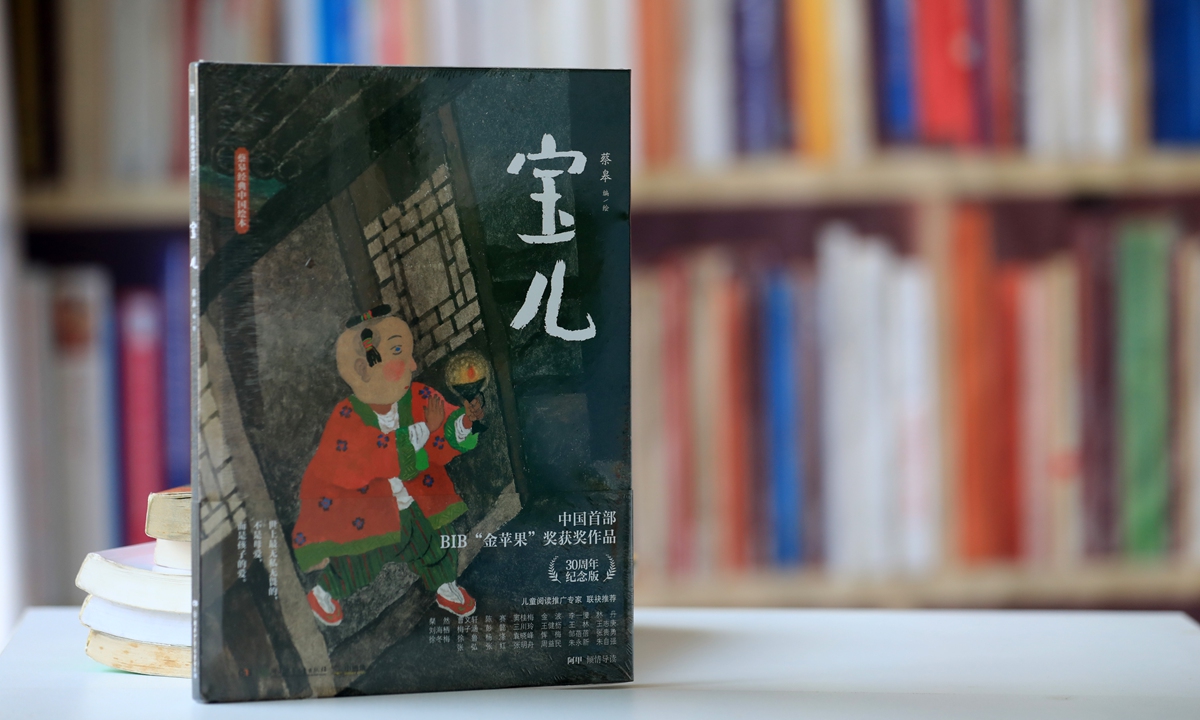
Cai Gao's book Bao'er Photo: IC
Reframing traditionOpening Cai's treasure chest reveals her early work The Fox Spirit in the Abandoned Garden, a stellar work and the one made her a household name. It was first published in the early 1990s, and later renamed as Bao'er.
The book tells the story of a child who outwits a fox to save his mother. Its original inspiration was rooted in a tale from the Qing Dynasty (1644-1911) short story collection Liaozhai Zhiyi, or Strange Tales from a Chinese Studio.
Though her illustrations reflect the atmosphere of the time, Cai told the Global Times that her story's true intention goes beyond the visual as she hopes it can teach children that "fearlessness and love are ways to overcome hardship."
Works like Bao'er, Hua Mulan, The Land of the Peach Blossom, and The Hundred-Birds' Feather Robe have made Cai an illustrator deft at interpreting traditional Chinese culture.
She has never stopped turning again and again to the classics, instead, she tries to connect ancient stories with contemporary social and cultural currents.
In The Land of the Peach Blossom, she did not follow Tao Yuanming from Eastern Jin (317-420), who portrayed his peach blossom land as a utopia that could never be found again once left. Instead, Cai emphasizes the beauty of nature and agrarian life, evoking in children a yearning for harmony between people and nature.
The Hundred-Birds' Feather Robe draws from a folk tale of the Miao ethnic culture. It tells the story of a poor boy who marries a girl who emerges from a painting.
Through the interactions between the two main characters, Cai says she hopes readers will see not only "the beauty of love" but also learn that "housework is a virtue to be shared by both men and women."
"It is a gift to all girls," Cai said, adding that the traditions in her work never feel outdated because "human values are eternal."
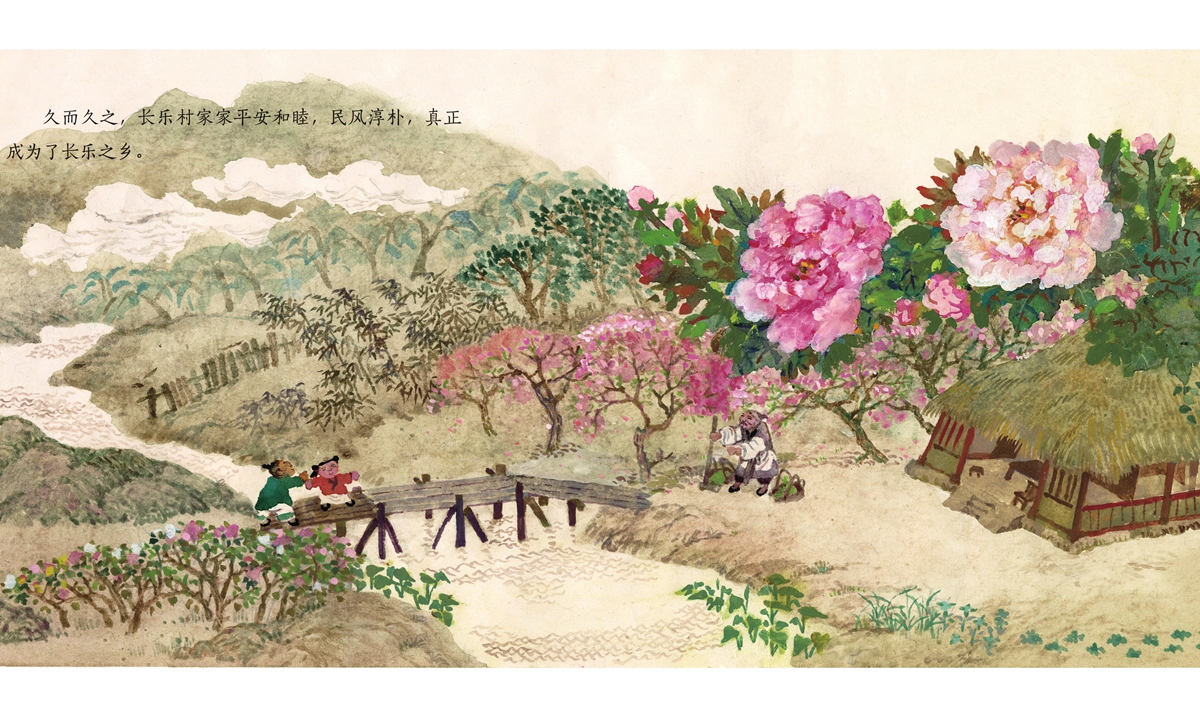
A section of Cai Gao's illustration piece Photo: Courtesy of the Hunan Juvenile and Children's Publication House
'Gentle things with power'
By connecting Chinese classics with contemporary life, Cai's works inspire children while also offering readers a window into traditional Chinese culture.
Beyond retelling ancient tales, she also paints her daily experiences into her books. "I carry a diary every day," Cai said. "Each illustration inside is like a 'seed' I plant for my book."
Based on her diary entries, How I Came to Be Me is one of Cai's most intimate works. It records the moments she shared with her grandson after his birth.
Written from the baby's point of view, the book traces his stories starting from the sensations of life in his mother's womb. Behind the book, Cai discusses the formation of family bonds and the weight of life.
In Cai's books, it seems anyone can be a child, and that includes herself. She revealed to the Global Times that she painted herself into Going with the Moon. The book is based on a local Hunan nursery rhyme.
"The moon goes, so do I, a flower basket I carry by the moon's side," these are some of the lines from the rhyme, and in the book, Cai is the little girl carrying the flower basket.
As for why this nursery rhyme holds such a deep place in her memory. Though she never went to school, Cai's grandmother would tell her folk stories and sing rhymes when Cai was just 2 or 3.
Born to a poor family, her grandmother always kept a clean handkerchief in her pocket, and when gardenias and jasmine bloomed, she would tuck them into Cai's pocket too.
These memories taught Cai how to find art in life's smallest details. She now calls this ability "discovering the power of gentle things."
Journey never ends
Before winning the Hans Christian Andersen Award in 2026, back in 2023, Cai had already become the first Chinese illustrator to win the "Golden Apple Award," one of the world's top honors in international children's illustration.
For younger creators like Xue Tao, "No one is more deserving of these honors than Cai," Xue said.
Yet, Cai herself said that these accolades have never belonged to her alone.
"When I learned that I had won the [2026] award, the first image that came to my mind was a group of creators of my generation. This award is not mine but ours," she said.
Before becoming an illustrator, Cai worked as a primary school teacher in a rural village during the 1960s.
At the age of 36, she was transferred to the Hunan Juvenile and Children's Publishing House as an editor. This became the starting point of her illustration career.
Cai said that rather than saying she was fortunate to have encountered illustration, it would be more accurate to say she was fortunate to have always been accompanied by childhood.
"The best things should be given to childhood," said Cai.
"Everyone has a childlike heart and innocence. The question is whether you consciously protect it."
RELATED ARTICLES