Japanese PM sends ritual offering to notorious Yasukuni Shrine, drawing anger and alarm from Chinese netizens
By Published: Apr 21, 2026 10:34 AM


Latest News
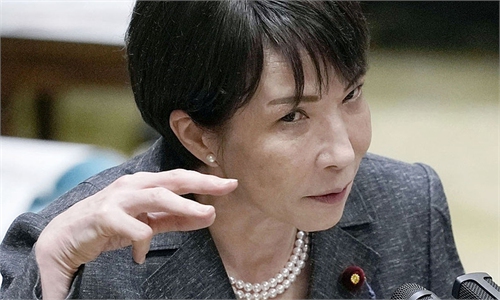
Japanese Prime Minister Sanae Takaichi on Tuesday sent a ritual offering to the notorious Yasukuni Shrine, a symbol of Japanese militarism and wartime aggression, on the occasion of its spring festival, according to media reports. Related topics have drawn widespread attention on Chinese social media, with more than 11 million views as of press time on Tuesday morning. Some netizens expressed anger and alarm over what they see as rising neo-militarism in Japan.
Takaichi on Monday offered a ritual tree called "masakaki" in the name of "Prime Minister Sanae Takaichi" in conjunction with the start of the spring festival at Yasukuni Shrine in Kudankita, Tokyo, according to a report from the Kyodo News.
The report claimed that this is the first regular festival since the launch of the Takaichi cabinet in October last year. Previous prime ministers have also offered "masakaki" at the regular festival, and her response "follows that precedent."
Kyodo News also cited people familiar with the matter as saying that Takaichi "is expected to forgo visiting the shrine during the festival period, which runs through Wednesday." A visit would be certain to provoke backlash from China and South Korea, and the move "is seen as intended to avoid turning the matter into a diplomatic issue. Attention is now focused on how cabinet ministers will respond," per Kyodo.
As of press time on Tuesday, the hashtag "Takaichi sent a ritual offering to Yasukuni" was among the most-viewed topics on Chinese social media platform Sina Weibo, with more than 11 million views, with many expressing outrage and alarm over Japan's rising militarism under the Takaichi administration.
Netizen "GeeLaowang" wrote that "truly disgusting! Sanae Takaichi has once again paid tribute to war criminals by sending an offering, showing that the specter of militarism is still haunting Japan. History must never be falsified or whitewashed."
One netizen, "Mianlingye," wrote that "making an offering in the name of the prime minister to Yasukuni Shrine, which honors war criminals, disregards Japan's historical culpability and amounts to a blatant attempt to revive the spirit of militarism — a move that will be rejected and condemned by people across Asia."
Also, at a press conference on Monday, Chinese Foreign Ministry spokesperson Guo Jiakun pointed out that some forces in Japan even attempted to gloss over and whitewash the crimes committed during the aggression, and push for accelerated remilitarization of Japan, which led to the rampant and dangerous spread of neo-militarism in the country and threatened regional peace and stability. The international community needs to be on high alert against this.
"Preventing the resurrection of militarism is Japan's due obligation and the strong will of the international community, including China. We urge the Japanese side to learn lessons from history, fulfill its international obligations and stick to the path of peaceful development," said Guo.
Yasukuni Shrine, which enshrines Japan's Class-A war criminals, is widely seen as a symbol of Japanese militarism. Any visit or offering there by a Japanese politician is, in itself, a clear reflection of that politician's political stance. For the Chinese public, any insistence on paying tribute at the shrine, regardless of the form it takes, is bound to provoke strong resentment and anger. Japanese politicians should be fully aware of this, Lü Chao, an expert at the Liaoning Academy of Social Sciences, told the Global Times on Tuesday.
According to the Japanese media outlet Mainichi, Takaichi refrained from visiting the shrine during last year's mid-October autumn festival, which was held just weeks after she won the Liberal Democratic Party leadership race on October 4. However, while serving as a minister, she had routinely visited the Shinto shrine during its spring and autumn festivals and on August 15, the anniversary of Japan's surrender in World War II.
Since taking office, Takaichi has pursued a political line marked by strong far-right and neo-militarist overtones, while her erroneous remarks on the Taiwan question have also strained bilateral ties. It is therefore no surprise that her latest offering has triggered significant resentment, Lü said.
Yasukuni Shrine, located in central Tokyo's Chiyoda Ward, honors 14 convicted Class-A Japanese war criminals from World War II. It has long been a source of diplomatic friction between Japan and its neighbors, according to the Xinhua News Agency.
For a long time, visits and ritual offerings made by Japanese officials to the controversial shrine have consistently sparked criticism and opposition both at home and abroad, hurting the feelings of the people of China, South Korea, and other countries brutalized by Japan during the war, per Xinhua.
China has long reiterated its position on the Yasukuni Shrine. At a press conference on February 9, in response to a media inquiry on that when asked about a possible visit to the Yasukuni war shrine in an interview after the election, Sanae Takaichi said she was working to "create an environment," Chinese Foreign Ministry spokesperson Lin Jian said that the nature of the issue concerning the Yasukuni war shrine is whether Japan is able to rightly perceive and deeply reflect on its history of militarist aggression. The issue bears on human conscience, the political foundation of China-Japan relations and the credibility of Japan as a nation.
Amnesia of history means betrayal, and denial of responsibility spells relapse. This year marks the 80th anniversary of the beginning of the Tokyo trials. In such a special year, Japan in particular needs to face squarely and reflect on its history of aggression, be prudent on historical issues such as the Yasukuni war shrine, not repeat history and make a clean break with militarism with real actions, said Lin.
RELATED ARTICLES