ARTS / CULTURE & LEISURE
How vlogger brings ancient Chinese poetry to life
From verses to vision
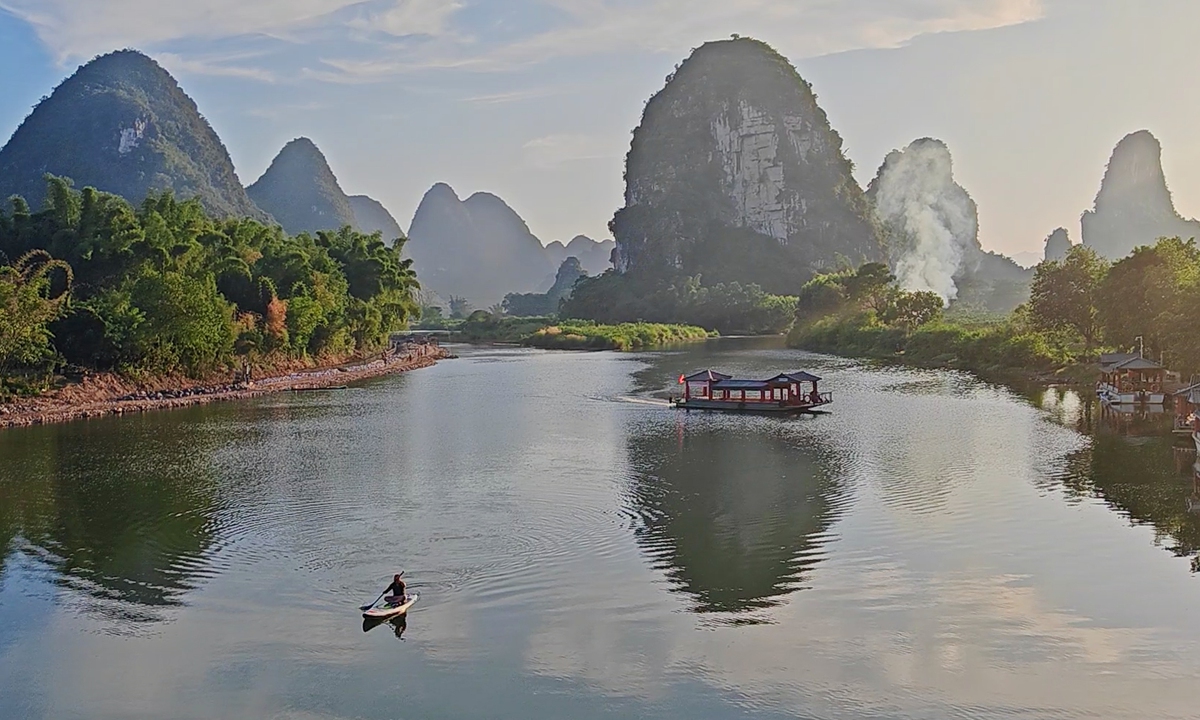
Xiyue's poetic photo interpretation of Lijiang River in South China's Guangxi Zhuang Autonomous Region
"A river of misty grass, willow catkins fill the city, rain falls in the season of ripening plums." This is a quote from a poem by Song Dynasty (960-1279) poet He Zhu. As a student, video blogger Xiyue never truly grasped the lingering sorrow embedded into the verses of this Song Dynasty poet. Years later, however, to the south of the Yangtze River, she ventured out in the rain, watching the dense curtain of rainfall blur distant buildings and mountains, and captured on camera the very scenes evoked in He Zhu's poem.Recently, the topic "Spending years capturing ancient Chinese poetry's landscapes" has trended on Chinese lifestyle-sharing platform Xiaohongshu, or RedNote, attracting millions of views. Several photographers and video bloggers traveled across the country, transforming abstract verses from Chinese literature into tangible, breathtaking landscapes. Through the bloggers' lenses, netizens can feel like they are walking along the same paths and enjoying the same breeze as poets were a thousand years ago.
"When we studied classical poetry as students, our teachers often told us that poets 'express their emotions through scenery.' But I used to feel frustrated as I had never actually seen such landscapes myself, so I struggled to fully grasp the emotions embedded within them," photographer and blogger Xiyue told the Global Times.
"Since the summer of 2023, I have begun to create a video series titled China in Classical Poetry. Through the poets' verses, I hope to witness the grandeur of our motherland, and through my camera, to recreate the landscapes they once wrote about, thus deepening my understanding of the emotions they expressed," Xiyue noted.
Xiyue has spent three years of her spare time traveling across nine provinces, turning 40 ancient poems into tangible visual landscapes.
Speaking of why these videos sparked discussions among many people on Chinese social media, another photographer named Taotao told the Global Times that classical poetry evokes memories of schooldays for many, while embodying a unique Chinese sense of romance.
In an age saturated with fragmented information, people often lack the time to slowly read and reflect on poetry. Content like this, however, helps calm people's mind, allowing them to rediscover the focus and joy they once felt when reciting these verses, said Taotao who spent seven years traveling 600,000 kilometers in recreating the landscapes of classical poetry.
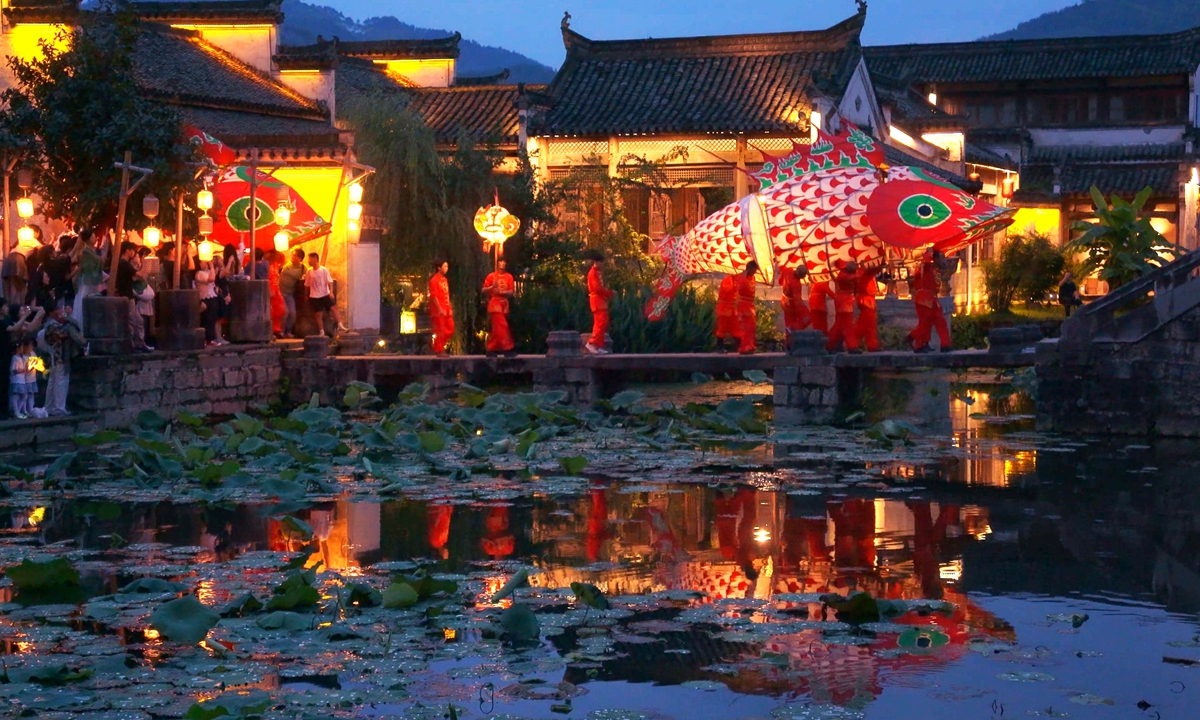
Xiyue's photo interpretation of a lantern fair in Chengkan, East China's Anhui Province Photos on this page: Courtesy of Xiyue
Seeking landscapesWithout a professional team or full-time creative support, it is challenging for Xiyue to seek out the precious places that resonate across a thousand years.
"I have to carry heavy photography gear across mountains and rough terrain, and endure severe weather conditions, which pushes me to my physical limits and tests my willpower," she said.
"On top of that, before each trip, I need to do extensive preparations in order to discover truly unique scenery, including selecting the best seasons, analyzing weather conditions, and carefully planning routes and timing," said Xiyue.
One of the most unforgettable moments for Xiyue was in Hongguan village in Wuyuan, East China's Jiangxi Province. While she was filming peach blossoms by a flowing stream at the village entrance, a group of ducks suddenly swam beneath the blooming trees, splashing in the water. In that instant, Song Dynasty poet Su Shi's line - "Beyond the bamboo, a few branches of peach blossoms; ducks are the first to sense the warming of the spring river" - seemed to transform into a living, moving painting right in front of her.
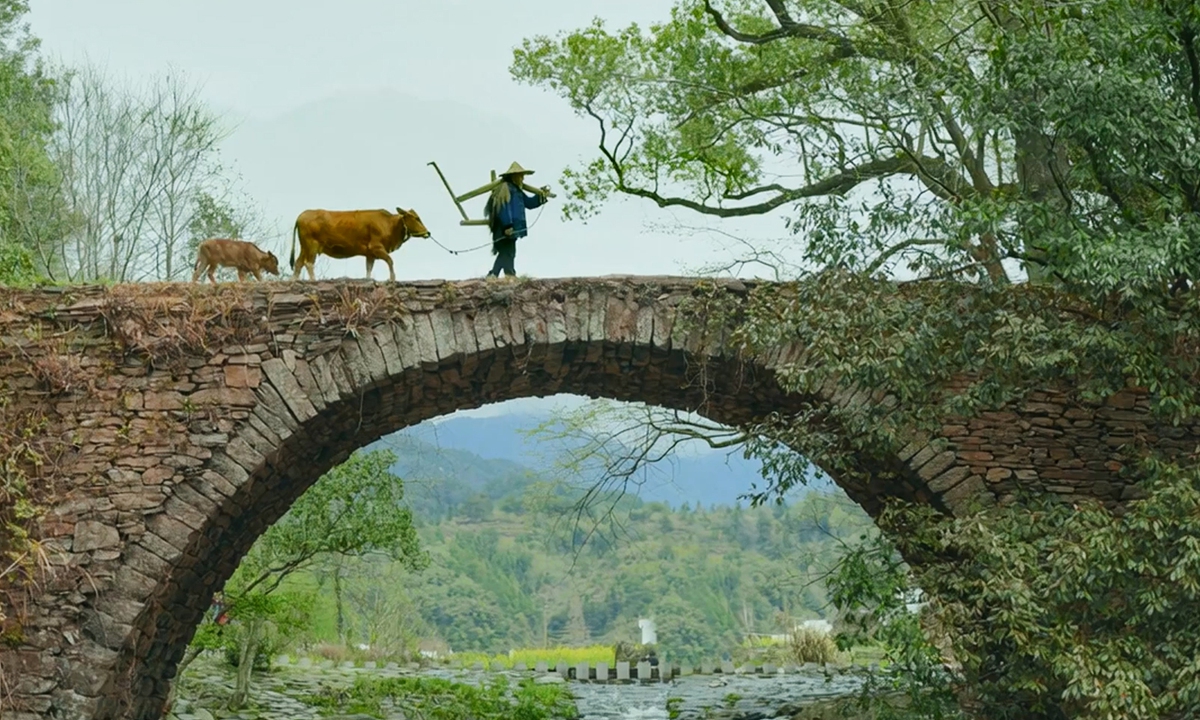
Xiyue's poetic photo interpretation of the Chaguan village in Wuyuan, East China's Jiangxi Province
Personal growthFor the bloggers, the process of filming is not only a dialogue with the ancients, but also a journey of self-healing and growth.
When Taotao traveled to Chongqing in 2020, as thick fog shrouded the riverside in the early morning, a verse of Tang Dynasty (618-907) poet Li Bai suddenly came to his mind: "The cries of apes on both banks never cease, while my light boat has already passed through countless mountains."
"I thought of how Li Bai once journeyed by boat along these very rivers in Chongqing, gazing out at the vast expanse of mountains and waters. In the face of nature's immense power, one's own hardships and setbacks seem so insignificant. Life should not be defined by momentary ups and downs, but by seeing farther ahead and embracing the passing decades with greater openness and resilience," Taotao said.
Once shooting at Mount Sanqingshan in Jiangxi Province, the foot of the mountain was completely shrouded in thick fog, so Taotao thought there would be nothing to capture. Even if he went uphill, it was still full of fog. But after he walked for more than 10 minutes, the mist suddenly cleared away, and a sea of clouds emerged.
Sometimes, slowing down is more meaningful than rushing to see the scenery you expect, he noted.
There have been similar heart-stirring moments for Xiyue, each one urging her to keep setting out, and using her lens to recreate the vivid scenes found in ancient poetry. "I am always reminded that we live on the same land as those poets from the past. Since the beginning, I believed that the sights they once witnessed must still exist today," she added.
These real-life videos inspired by ancient poetry resonate with the public as they awaken the cultural confidence and poetic sensibility long dormant within people.
Xiyue hopes to continue living in the company of poets, using their words to capture the fleeting beauty of the country's magnificent landscapes, tracing their footsteps, and drawing from them a spiritual strength that transcends mountains, rivers and seas.
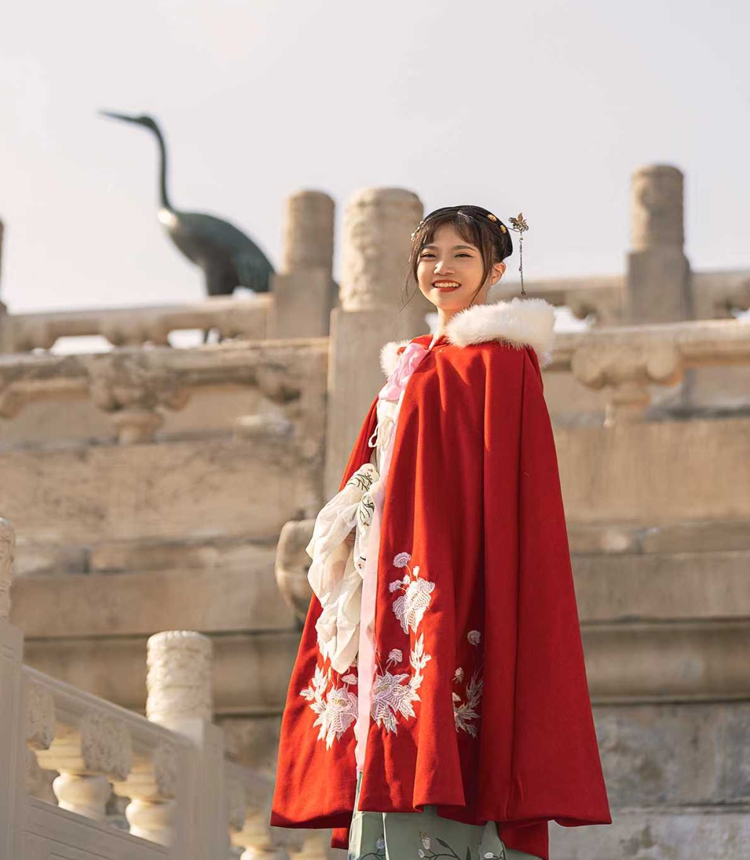
Photographer and vlogger Xiyue
RELATED ARTICLES