
PHOTO / CHINA
Shenzhen explores distinctive path for biodiversity conservation in urban areas
Published: Apr 23, 2026 12:23 PM
This undated screenshot from a video clip taken by an infrared camera shows a leopard cat walking through Kunpeng Trail No. 1 Bridge in Shenzhen, south China's Guangdong Province. In recent years, Shenzhen has explored a distinctive path for biodiversity conservation in urban areas by developing ecological trails, building eco-friendly facilities and implementing refined ecological management. These efforts have reserved sufficient space for wildlife habitats and migration routes, creating dual trails to support the harmonious coexistence of humans and wildlife. (Xinhua)

This undated screenshot from a video clip taken by an infrared camera shows a leopard cat walking through Kunpeng Trail No. 1 Bridge in Shenzhen, south China's Guangdong Province. In recent years, Shenzhen has explored a distinctive path for biodiversity conservation in urban areas by developing ecological trails, building eco-friendly facilities and implementing refined ecological management. These efforts have reserved sufficient space for wildlife habitats and migration routes, creating "dual trails" to support the harmonious coexistence of humans and wildlife. (Xinhua)
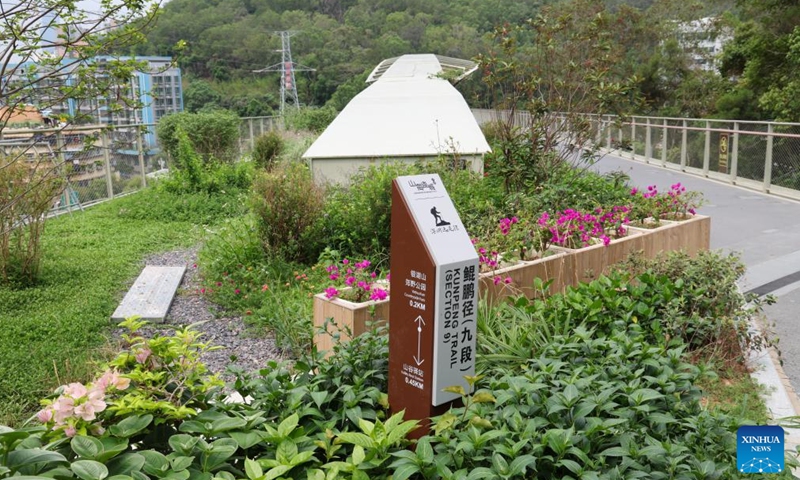

This photo taken on April 21, 2026 shows a view of Kunpeng Trail No. 2 Bridge, with a pedestrian walkway on the right and a wildlife passage on the left, in Shenzhen, south China's Guangdong Province. In recent years, Shenzhen has explored a distinctive path for biodiversity conservation in urban areas by developing ecological trails, building eco-friendly facilities and implementing refined ecological management. These efforts have reserved sufficient space for wildlife habitats and migration routes, creating dual trails to support the harmonious coexistence of humans and wildlife. (Xinhua/Liang Xu)

This photo taken on April 21, 2026 shows a view of Kunpeng Trail No. 2 Bridge, with a pedestrian walkway on the right and a wildlife passage on the left, in Shenzhen, south China's Guangdong Province. In recent years, Shenzhen has explored a distinctive path for biodiversity conservation in urban areas by developing ecological trails, building eco-friendly facilities and implementing refined ecological management. These efforts have reserved sufficient space for wildlife habitats and migration routes, creating "dual trails" to support the harmonious coexistence of humans and wildlife. (Xinhua/Liang Xu)


A drone photo taken on April 21, 2026 shows a view of Kunpeng Trail No. 1 Bridge in Shenzhen, south China's Guangdong Province. In recent years, Shenzhen has explored a distinctive path for biodiversity conservation in urban areas by developing ecological trails, building eco-friendly facilities and implementing refined ecological management. These efforts have reserved sufficient space for wildlife habitats and migration routes, creating dual trails to support the harmonious coexistence of humans and wildlife. (Xinhua/Liang Xu)

A drone photo taken on April 21, 2026 shows a view of Kunpeng Trail No. 1 Bridge in Shenzhen, south China's Guangdong Province. In recent years, Shenzhen has explored a distinctive path for biodiversity conservation in urban areas by developing ecological trails, building eco-friendly facilities and implementing refined ecological management. These efforts have reserved sufficient space for wildlife habitats and migration routes, creating "dual trails" to support the harmonious coexistence of humans and wildlife. (Xinhua/Liang Xu)
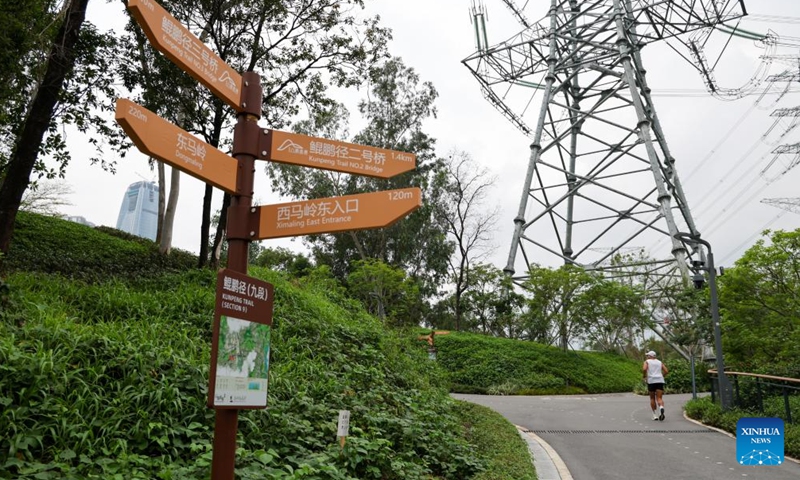

This photo taken on April 21, 2026 shows a sign board indicating Kunpeng Trail bridges in Shenzhen, south China's Guangdong Province. In recent years, Shenzhen has explored a distinctive path for biodiversity conservation in urban areas by developing ecological trails, building eco-friendly facilities and implementing refined ecological management. These efforts have reserved sufficient space for wildlife habitats and migration routes, creating dual trails to support the harmonious coexistence of humans and wildlife. (Xinhua/Liang Xu)

This photo taken on April 21, 2026 shows a sign board indicating Kunpeng Trail bridges in Shenzhen, south China's Guangdong Province. In recent years, Shenzhen has explored a distinctive path for biodiversity conservation in urban areas by developing ecological trails, building eco-friendly facilities and implementing refined ecological management. These efforts have reserved sufficient space for wildlife habitats and migration routes, creating "dual trails" to support the harmonious coexistence of humans and wildlife. (Xinhua/Liang Xu)