ARTS / CULTURE & LEISURE
Science reveals 1,000-year mystery of official’s genome
Facial image reconstructed for Tang Dynasty figure
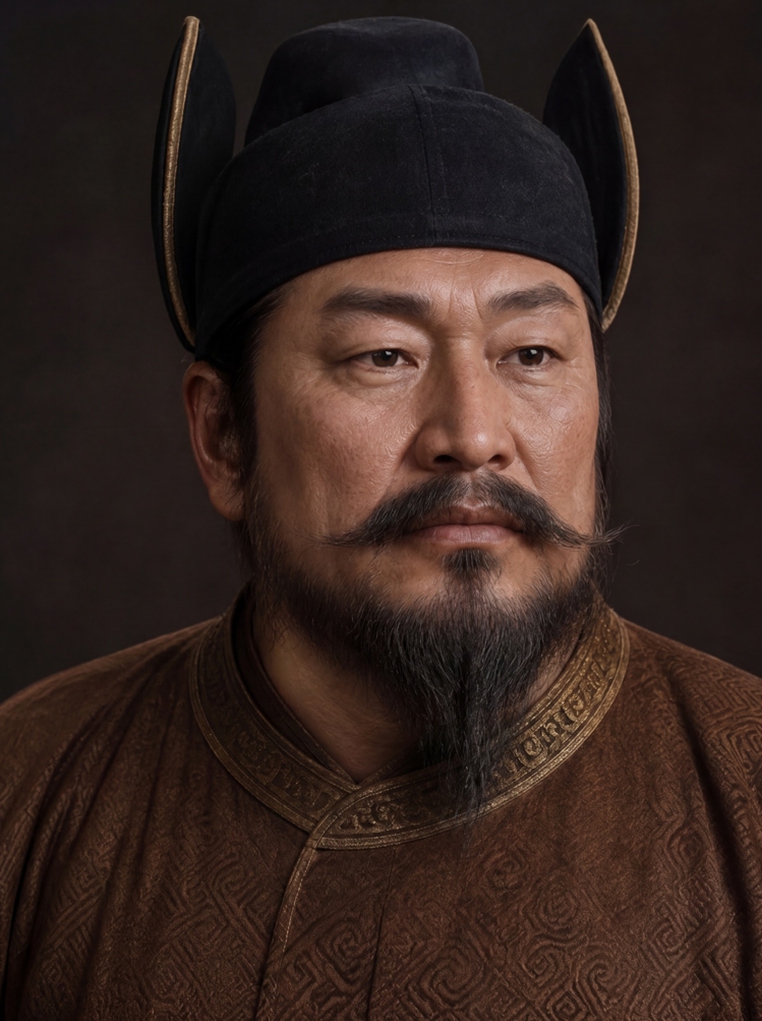
The reconstructed image of Li Keyong, a late Tang Dynasty (618-907) military leader and Shatuo Turkic leader Photo: Courtesy of Wen Shaoqing
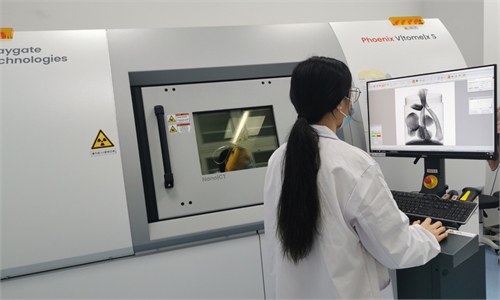
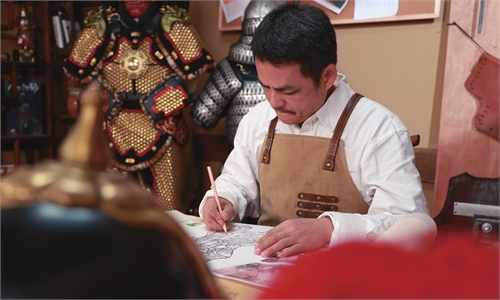
A DNA study and facial reconstruction project has shed fresh light on the genetic origins of Li Keyong, a powerful late Tang Dynasty (618-907) military leader and Shatuo Turkic leader, according to researchers from Fudan University in Shanghai.A team from the university's Department of Cultural Heritage and Museology recently released a facial reconstruction image based on cranial remains and genomic analysis. The work is part of the team's ongoing research in the growing field of archaeogenetics, which combines ancient DNA sequencing with traditional archaeology to reconstruct historical populations and individuals.
Li, who died in 908 at the age of 53 and was buried in present-day Daixian county in North China's Shanxi Province, was a major military figure in the late Tang Dynasty.
Northern Shanxi has long been a crossroads of ethnic diversity and cultural exchange. From the pre-Qin period (pre-221BC) onward, ethnic groups such as the Rong, Xiongnu, Xianbei and Shatuo have all been active there.
For centuries, however, the precise physical identity of Li has remained uncertain. His tomb was disturbed on multiple occasions over time, and three sets of remains are present within it. According to the research team, only one of the skeletons align chronologically and biologically with the historical figure.
Radiocarbon dating and physical anthropological analysis identified a male individual aged roughly 40 to 50 years old, whose lifespan aligns closely with Li's known historical timeline. The other two skeletons, belonging to younger individuals aged approximately 18-24, were dated to the Song (960-1279) and Jin (1115-1234) periods, suggesting they were likely later intruders, possibly tomb robbers.
The study was published in the Journal of Genetics and Genomics.
Through comprehensive population genetic analyses, it was found that Li had a nearly balanced genetic admixture, with 53.4 percent ancient Northeast Asian and 46.6 percent Western Steppe ancestry. Additionally, he carried a Western Eurasian paternal lineage and an Eastern Steppe maternal lineage, according to the study.
Historical records state that Li's mother bore the surname Qin, which suggests a possible connection to Central Plains Han Chinese lineages. However, whole-genome analysis indicates that her genetic profile was more closely related to northern nomadic populations.
The study also suggests that Li likely had black or dark brown hair and intermediate-to-light skin pigmentation, similar to modern Northeast Asian or East Asian populations. His genotype for lactase persistence indicates lactase non-persistence, a trait prevalent in East Asia but contrasting with the lactase persistence frequently found in western Central Asian pastoralists.
Additionally, his alcohol metabolism profile reflects a typical East Asian pattern associated with rapid acetaldehyde accumulation. These phenotypic traits provide functional genomic evidence of his East Asian biological affinity.
His genomic profile, characterized by the deep integration of Western Steppe and Northeast Asian ancestries, indicates that the Shatuo elite stemmed from extensive biological admixture across the Eurasian steppe rather than from a single, homogeneous origin, Wen Shaoqing, an associate professor at Fudan University, told the Global Times.
Although the limited sample size precludes comprehensive generalizations, this disparity suggests that ancient Turkic individuals had notably diverse ancestral backgrounds. These findings also highlight the importance of ancient DNA in distinguishing genetic ancestry from ethno-political identity in Inner Asian history, Wen said.
"These findings have provided new scientific evidence for understanding ethnic integration and interaction during the late Tang and Five Dynasties (907-960) period, as well as the formation of China's multi-ethnic, unified historical structure," noted Wen.
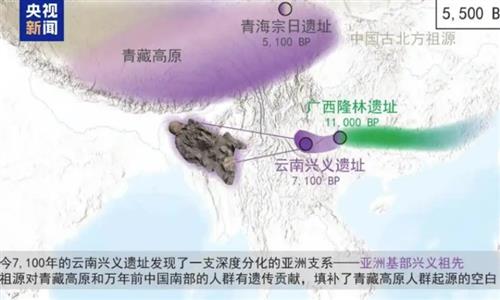
In recent years, the research team has been systematically tracing the lineage and relationships between ancient populations by analyzing skeletal remains unearthed from archaeological cultures from different periods and regions to describe the dynamic process of ethnic fusion within the Chinese nation.
For example, the Hexi Corridor has long served as a vital route for the exchange of populations between the East and the West. However, due to the scarcity of ancient DNA data, research into the region's population history has been nearly nonexistent. Through the reconstruction of ancient genomes, the genetic history of populations in the Hexi Corridor has been illuminated, confirming the profound impact of major historical events on its people.
In 2024, the appearance of Emperor Wu of the Xianbei-led Northern Zhou Dynasty (557-581), a Chinese emperor from an ethnic minority group who lived in the sixth century, was reconstructed by the team.
In modern times, molecular archaeology also plays an important role in the identification of martyrs' DNA, family reunification efforts, and facial reconstructions.
"Molecular archaeology can bring history back to life, with the only challenge now being the ability to obtain high-quality genomic data of ancient people," said Wen.
RELATED ARTICLES