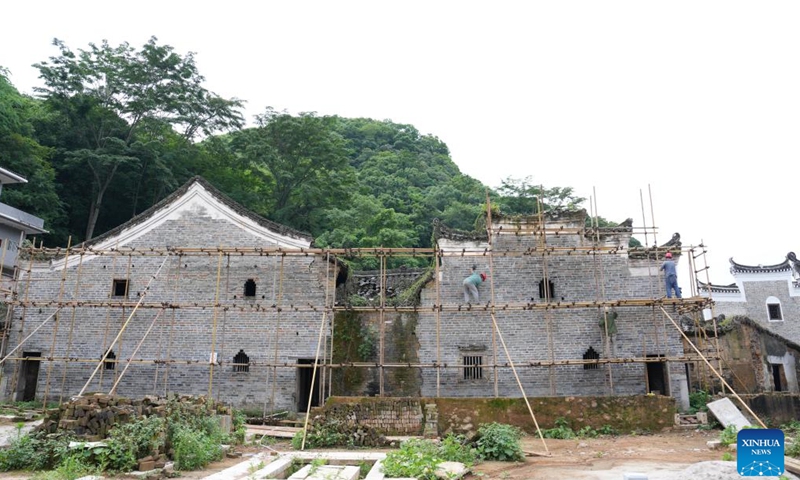
Workers repair an ancient residence in Baojing Village of Yongzhou, central China's Hunan Province, May 10, 2026. Nestled amid the mountains of Jianghua Yao Autonomous County in Yongzhou, Baojing Village was built by the ancestors of the He family in 1650, and is therefore called the "Courtyard of Family He." There are 180 existing ancient residences, 7 gate towers and 36 alleys.
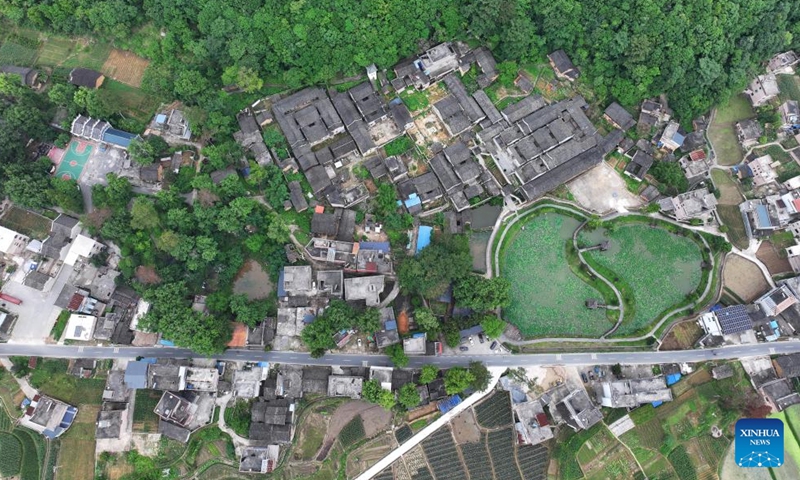
An aerial drone photo taken on May 9, 2026 shows the ancient residences in Baojing Village of Yongzhou, central China's Hunan Province. Nestled amid the mountains of Jianghua Yao Autonomous County in Yongzhou, Baojing Village was built by the ancestors of the He family in 1650, and is therefore called the "Courtyard of Family He." There are 180 existing ancient residences, 7 gate towers and 36 alleys.
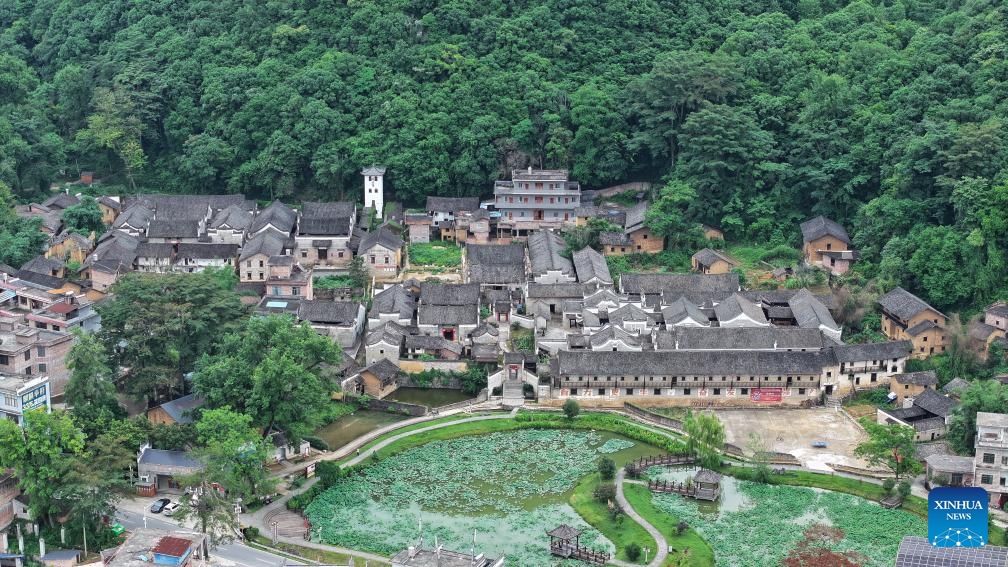
An aerial drone photo taken on May 10, 2026 shows the ancient residences in Baojing Village of Yongzhou, central China's Hunan Province. Nestled amid the mountains of Jianghua Yao Autonomous County in Yongzhou, Baojing Village was built by the ancestors of the He family in 1650, and is therefore called the "Courtyard of Family He." There are 180 existing ancient residences, 7 gate towers and 36 alleys.
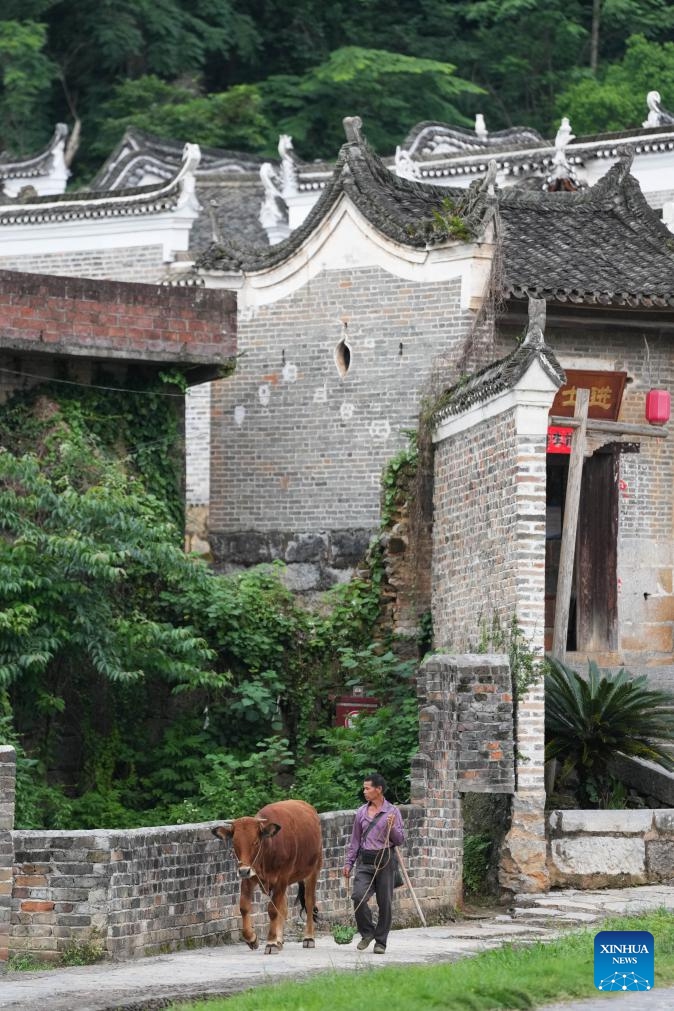
A villager walks past the ancient residences with his cow in Baojing Village of Yongzhou, central China's Hunan Province, May 9, 2026. Nestled amid the mountains of Jianghua Yao Autonomous County in Yongzhou, Baojing Village was built by the ancestors of the He family in 1650, and is therefore called the "Courtyard of Family He." There are 180 existing ancient residences, 7 gate towers and 36 alleys.
