ARTS / FILM
Director Gao Qunshu reflects on how commitment to truth shaped film ‘Tokyo Trial’
Director on how commitment to truth shaped film ‘Tokyo Trial’
By Published: May 12, 2026 10:03 PM
Editor's Note:
This year marks the 80th anniversary of the beginning of the International Military Tribunal for the Far East, also known as the Tokyo Trial.
Eighty years ago, judges from 11 countries presided over 818 hearings over two and a half years, 419 witnesses testified, 4,336 pieces of evidence were examined, and more than 48,000 pages of trial records were produced. In the end, 25 defendants were found guilty, and seven of them, including Hideki Tojo, were sentenced to hanging.
As the largest international trial in human history, the Tokyo Trial carries profound historical significance. Together with the Nuremberg Tribunal, it established - for the first time through international judicial practice - that "a war of aggression constitutes a crime" and individuals must bear criminal responsibility for it. They sent a clear message to the world that "aggression will be punished and atrocities will be held to account," laying an important cornerstone of the post-war international order.
Looking back on the century-defining trial, its historical weight has not diminished in the slightest with the passage of time.
This year marks the 80th anniversary of the beginning of the International Military Tribunal for the Far East, also known as the Tokyo Trial.
Eighty years ago, judges from 11 countries presided over 818 hearings over two and a half years, 419 witnesses testified, 4,336 pieces of evidence were examined, and more than 48,000 pages of trial records were produced. In the end, 25 defendants were found guilty, and seven of them, including Hideki Tojo, were sentenced to hanging.
As the largest international trial in human history, the Tokyo Trial carries profound historical significance. Together with the Nuremberg Tribunal, it established - for the first time through international judicial practice - that "a war of aggression constitutes a crime" and individuals must bear criminal responsibility for it. They sent a clear message to the world that "aggression will be punished and atrocities will be held to account," laying an important cornerstone of the post-war international order.
Looking back on the century-defining trial, its historical weight has not diminished in the slightest with the passage of time.
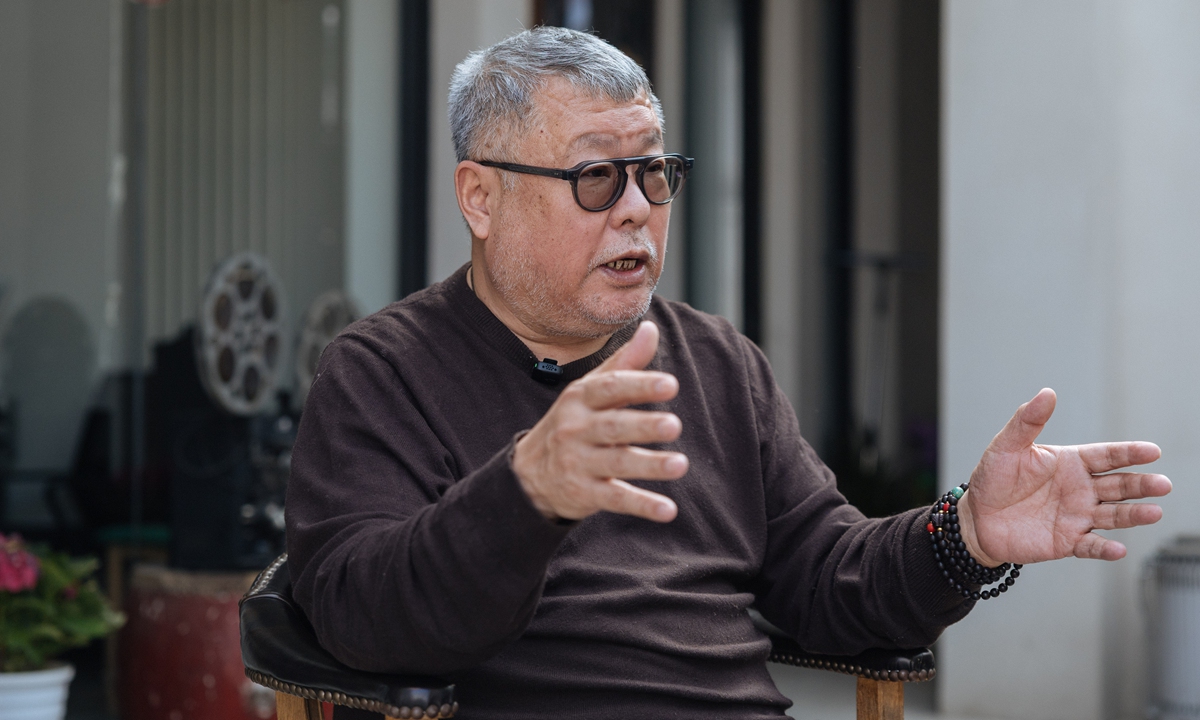
Director Gao Qunshu Photo: Li Hao/GT
On a warm spring afternoon, inside director Gao Qunshu's studio just off Beijing's East Fifth Ring Road, the conversation turned to the film he had made two decades earlier.Without hesitation, Gao recited some of the most powerful lines from the movie The Tokyo Trial, recalling every historical detail with striking precision. Twenty years on, that chapter of history seems to have become part of his very being.
"If I cannot send the war criminals to the gallows, I would rather drown myself in the sea." The solemn vow, spoken by Judge Mei Ru'ao in the 2006 film, once moved countless audiences.
In an exclusive interview with the Global Times, Gao looked back with deep emotion on the creation of the film and shared its lasting resonance and significance across two decades.
"Taking on this film happened almost by accident," Gao recalled. Around 2004, he was offered a script titled The International Military Tribunal for the Far East, but it focused not on the courtroom drama, but rather on a fictionalized story of Mei being assassinated in Tokyo.
"Honestly, before that, I knew almost nothing about the judge or the specific proceedings of the Tokyo Trial," Gao recalled.
Gao, 60, is one of the prominent filmmakers in China known for combining sharp realism with strong narrative tension. He has directed a series of influential films, including The Message, Wind Blast and Silent Witness.
Driven by the instinct for truth, Gao decided to dig into the historical reality. He soon discovered that Chinese-language materials on the Tokyo Trial were extremely scarce at the time.
"I found almost nothing at the National Library, and online there were only very brief introductions," he said.
The breakthrough came in Nanjing, where Gao's assistant discovered a valuable collection of books at Nanjing Normal University Library.
The most important was Records of the Tokyo Trial by 100 Reporters, which compiled striking courtroom dispatches written by journalists from various countries during the more than two-year trial.
"Those reporters' writing was so lively that it felt almost like a ready-made screenplay," Gao said. "About 70 percent of the courtroom dialogues in our film came directly from excerpts and compilations in that book."
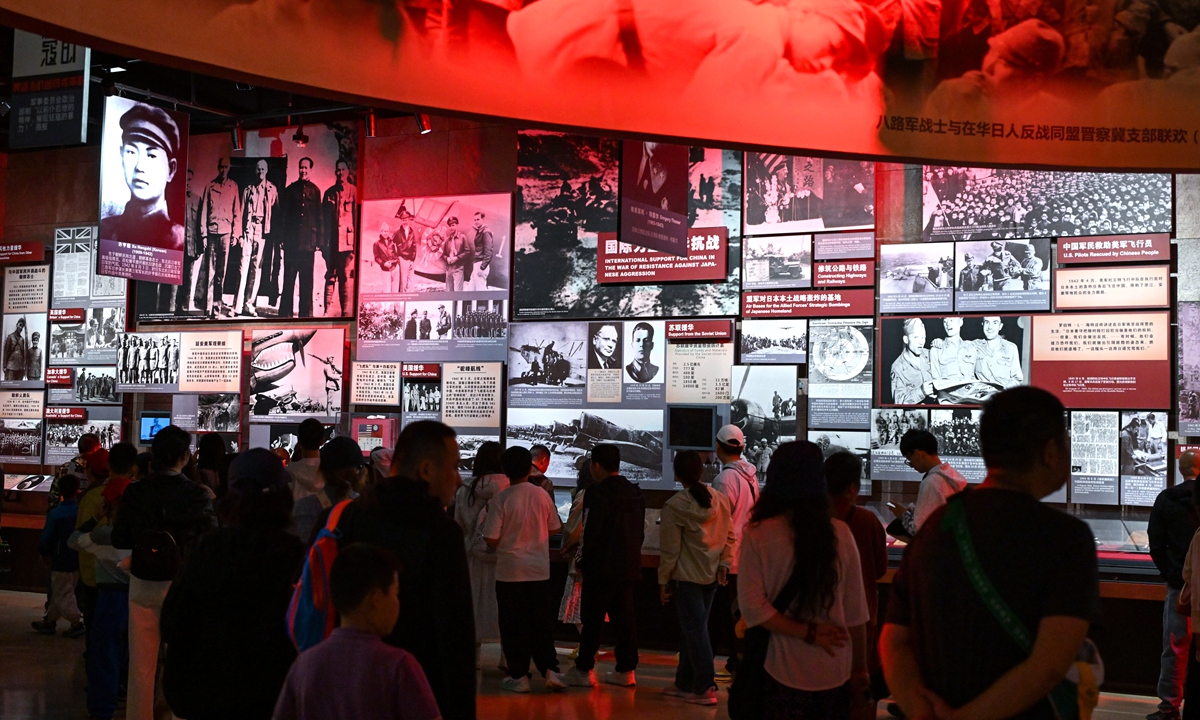
Visitors explore the historical photos related to the Chinese People's War of Resistance Against Japanese Aggression at the Memorial Hall of the Victims of the Nanjing Massacre in Nanjing on May 2, 2025. Photo: VCG
Unearthing historyFrom the very beginning, the production team set a strict rule: Every line of courtroom dialogue and every event must be grounded in historical sources, conform to international legal procedures, and contain no fabrications.
This profound respect for historical facts gave the film its serious, epic quality. Memorable dramatic moments - such as the "dispute over seating order" and the final "11 judges voting 6 to 5 to impose the death penalty" - all have solid historical foundations.
In the film's opening, Mei storms out in anger when the Chinese judge's seat is placed after the British one.
In reality, Tribunal President William Webb initially arranged the order as the US, the UK and China. Mei protested strongly, arguing that seats should follow the order of signatures on Japan's instrument of surrender (US, China and the UK).
Mei even removed his robe during a rehearsal and threatened to resign, ultimately forcing the court to yield. The chair became the center of the story's narrative.
For Gao, what Mei fought for was not merely protocol, but China's international status and voice in the tribunal. "Behind it [the chair] was the dignity a victorious nation deserved," Gao said.
The film's climactic scene shows the 11 judges voting on whether to sentence the war criminals to death.
This scene is entirely consistent with historical fact. Indian Judge Radhabinod Pal advocated acquittal for all, while judges from the US, the UK, and other countries held differing views on capital punishment.
Dignity on trial
During recesses, Mei engaged in extensive persuasion. In the end, by a single vote, seven Class-A war criminals, including Hideki Tojo, were sent to the gallows.
Gao revealed that Mei once told his assistant, "Kenji Doihara and Iwane Matsui have the blood of the Chinese people on their hands. If we fail to punish them severely, I will have no face to meet my countrymen again. I would rather drown myself to apologize to the nation."
Released in 2006, The Tokyo Trial achieved the eighth-highest box office among domestic films that year. Through repeated broadcasts on movie channels, it has influenced generations of viewers.
"This may be its greatest significance," Gao reflected.
"Twenty years later, if one wants to understand the Tokyo Trial through a film or television work, this remains the only and most widely recognized choice. Its accuracy and seriousness have allowed it to withstand the test of time."
He said he firmly believes that serious narratives concerning national memory remain indispensable, and envisioned the possibility of creating a TV series on the Tokyo Trial from a broader international perspective.
RELATED ARTICLES