PHOTO / CHINA
Oriental white storks enter breeding season in N China's Hebei
Published: May 17, 2026 02:24 PM
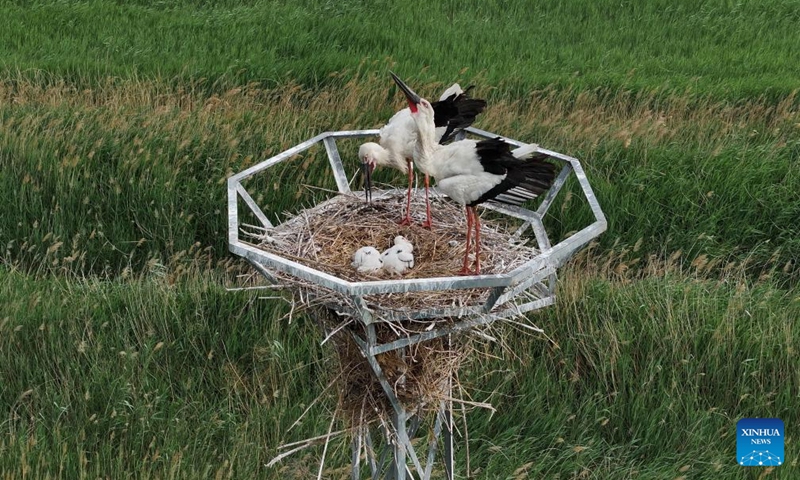
A drone photo taken on May 16, 2026 shows oriental white storks tending their chicks at the Caofeidian Wetland in Tangshan City, north China's Hebei Province. Recently, oriental white storks at the Caofeidian Wetland have entered their breeding season, with more than 40 pairs building nests and raising their young on the wetland's iron towers.

The oriental white stork, a top-level protected species in China, is listed as endangered by the International Union for Conservation of Nature. Photo: Xinhua
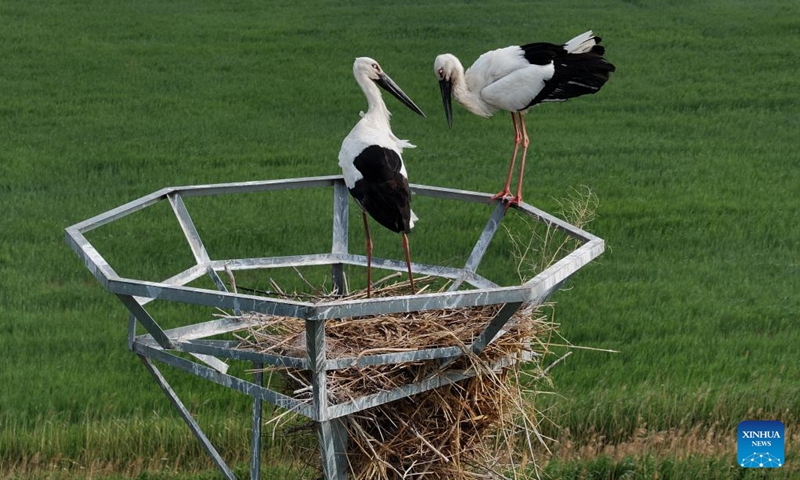
A drone photo taken on May 16, 2026 shows oriental white storks tending their chicks at the Caofeidian Wetland in Tangshan City, north China's Hebei Province. Recently, oriental white storks at the Caofeidian Wetland have entered their breeding season, with more than 40 pairs building nests and raising their young on the wetland's iron towers. The oriental white stork, a top-level protected species in China, is listed as endangered by the International Union for Conservation of Nature. Photo: Xinhua

A drone photo taken on May 16, 2026 shows oriental white storks resting in their nest at the Caofeidian Wetland in Tangshan City, north China's Hebei Province. Recently, oriental white storks at the Caofeidian Wetland have entered their breeding season, with more than 40 pairs building nests and raising their young on the wetland's iron towers.

The oriental white stork, a top-level protected species in China, is listed as endangered by the International Union for Conservation of Nature. Photo: Xinhua
A drone photo taken on May 16, 2026 shows oriental white storks resting in their nest at the Caofeidian Wetland in Tangshan City, north China's Hebei Province. Recently, oriental white storks at the Caofeidian Wetland have entered their breeding season, with more than 40 pairs building nests and raising their young on the wetland's iron towers. The oriental white stork, a top-level protected species in China, is listed as endangered by the International Union for Conservation of Nature. Photo: Xinhua
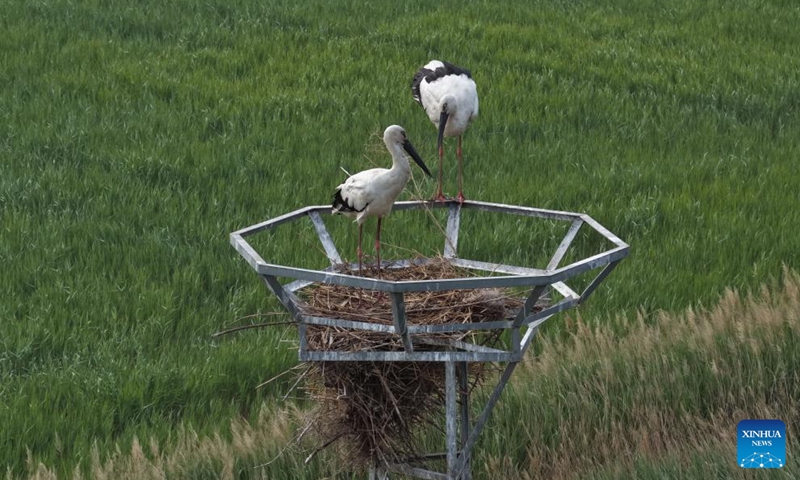

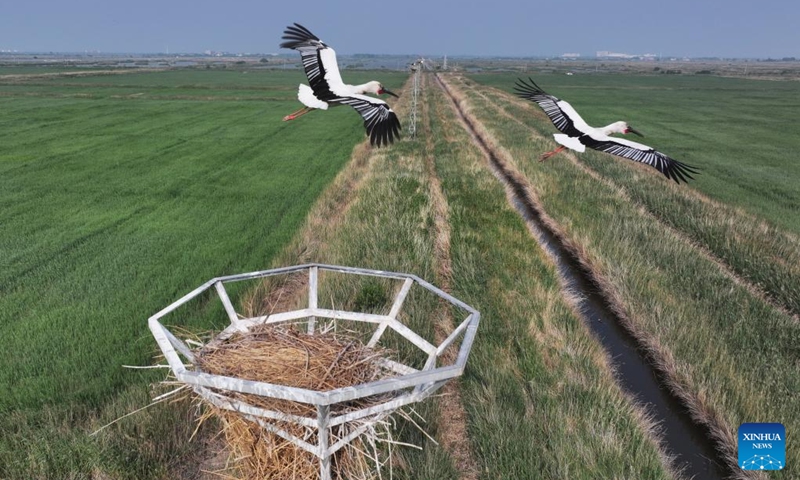
A drone photo taken on May 16, 2026 shows oriental white storks flying over their nest at the Caofeidian Wetland in Tangshan City, north China's Hebei Province. Recently, oriental white storks at the Caofeidian Wetland have entered their breeding season, with more than 40 pairs building nests and raising their young on the wetland's iron towers.

The oriental white stork, a top-level protected species in China, is listed as endangered by the International Union for Conservation of Nature.  Photo: Xinhua

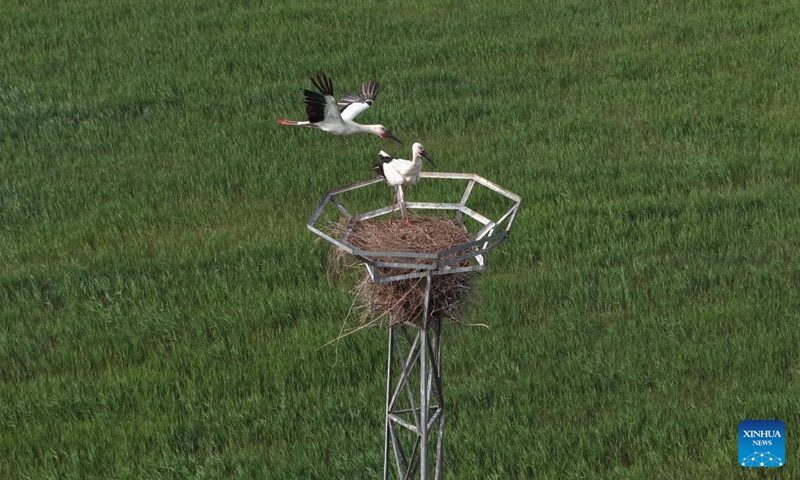
A drone photo taken on May 16, 2026 shows oriental white storks flying over their nest at the Caofeidian Wetland in Tangshan City, north China's Hebei Province. Recently, oriental white storks at the Caofeidian Wetland have entered their breeding season, with more than 40 pairs building nests and raising their young on the wetland's iron towers. The oriental white stork, a top-level protected species in China, is listed as endangered by the International Union for Conservation of Nature. Photo: Xinhua
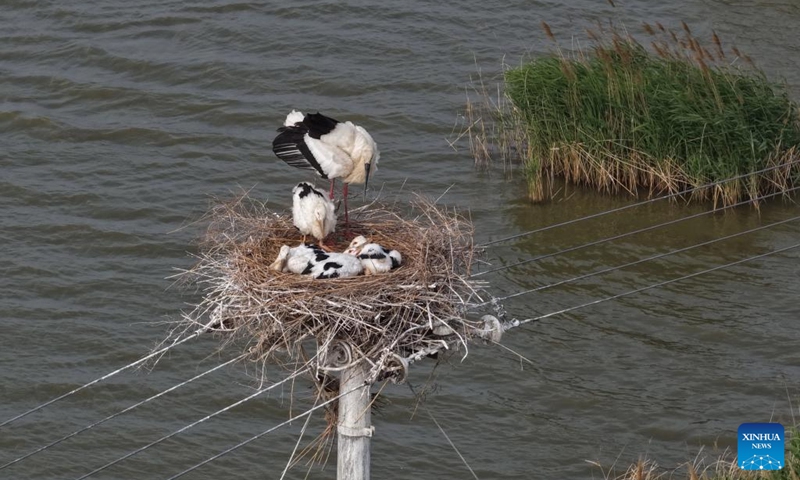

A drone photo taken on May 16, 2026 shows oriental white storks resting in their nest at the Caofeidian Wetland in Tangshan City, north China's Hebei Province. Recently, oriental white storks at the Caofeidian Wetland have entered their breeding season, with more than 40 pairs building nests and raising their young on the wetland's iron towers.

The oriental white stork, a top-level protected species in China, is listed as endangered by the International Union for Conservation of Nature. Photo: Xinhua

A drone photo taken on May 16, 2026 shows oriental white storks resting in their nest at the Caofeidian Wetland in Tangshan City, north China's Hebei Province. Recently, oriental white storks at the Caofeidian Wetland have entered their breeding season, with more than 40 pairs building nests and raising their young on the wetland's iron towers. The oriental white stork, a top-level protected species in China, is listed as endangered by the International Union for Conservation of Nature. Photo: Xinhua


A drone photo taken on May 16, 2026 shows oriental white storks resting in their nest at the Caofeidian Wetland in Tangshan City, north China's Hebei Province. Recently, oriental white storks at the Caofeidian Wetland have entered their breeding season, with more than 40 pairs building nests and raising their young on the wetland's iron towers.

The oriental white stork, a top-level protected species in China, is listed as endangered by the International Union for Conservation of Nature. Photo: Xinhua

A drone photo taken on May 16, 2026 shows oriental white storks resting in their nest at the Caofeidian Wetland in Tangshan City, north China's Hebei Province. Recently, oriental white storks at the Caofeidian Wetland have entered their breeding season, with more than 40 pairs building nests and raising their young on the wetland's iron towers. The oriental white stork, a top-level protected species in China, is listed as endangered by the International Union for Conservation of Nature. Photo: Xinhua


A drone photo taken on May 16, 2026 shows an oriental white stork tending its chicks at the Caofeidian Wetland in Tangshan City, north China's Hebei Province. Recently, oriental white storks at the Caofeidian Wetland have entered their breeding season, with more than 40 pairs building nests and raising their young on the wetland's iron towers.

The oriental white stork, a top-level protected species in China, is listed as endangered by the International Union for Conservation of Nature. Photo: Xinhua

A drone photo taken on May 16, 2026 shows an oriental white stork tending its chicks at the Caofeidian Wetland in Tangshan City, north China's Hebei Province. Recently, oriental white storks at the Caofeidian Wetland have entered their breeding season, with more than 40 pairs building nests and raising their young on the wetland's iron towers. The oriental white stork, a top-level protected species in China, is listed as endangered by the International Union for Conservation of Nature. Photo: Xinhua