ARTS / CULTURE & LEISURE
Chinese museums expand global exchanges through public programs
Connecting culture, history
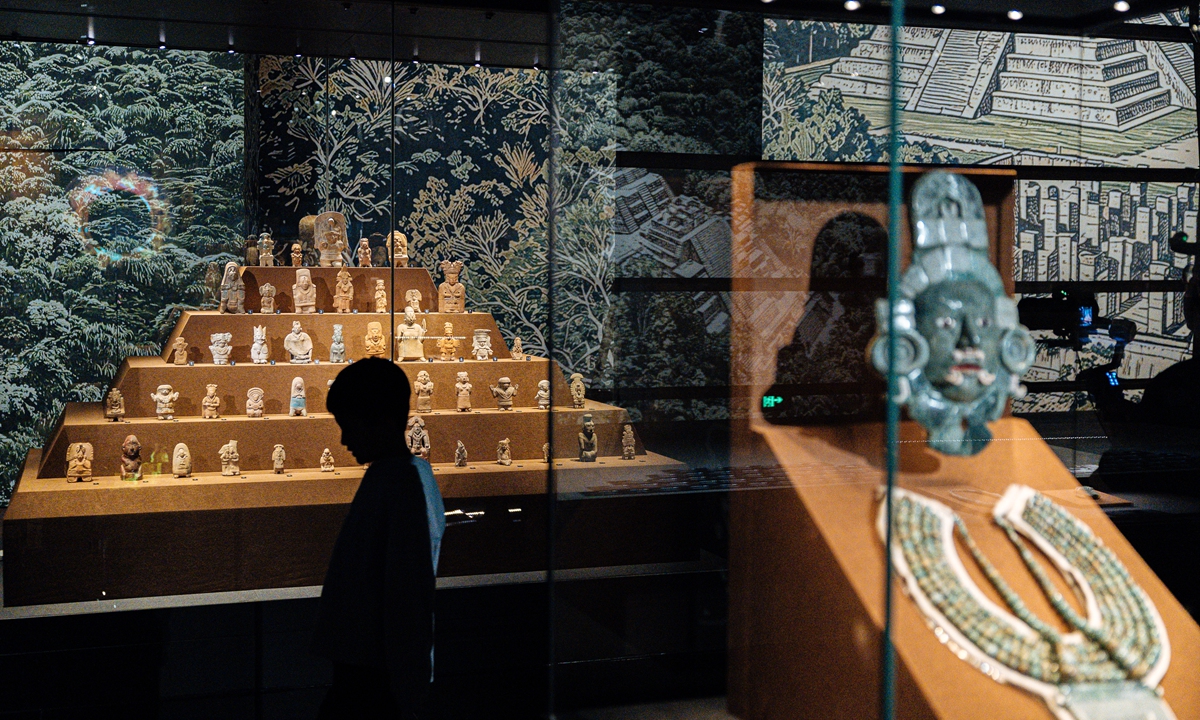
A kid walks past displayed artifacts at the Capital Museum in Beijing on May 17, 2026. Photo: Li Hao/GT
Inside a glass case at the Capital Museum in Beijing lie silver ingots and finely crafted silverware from ancient civilizations.A nearby label explains that, in the 16th century, silver mined in Latin America under Spanish colonial rule entered global maritime trade networks. Some of it eventually reached China during the Ming Dynasty (1368-1644), contributing to the growing use of silver as currency.
The display offers a glimpse of the broader themes of cultural exchange explored in the Maize, Gold, Jaguar: The Great Maya and Ancient Andean Civilizations Exhibition.
Opening on Monday to coincide with the International Museum Day, the show is the largest international exhibition ever staged by the museum, bringing together around 800 artifacts from more than 20 museums and cultural institutions in Mexico and Peru.
For Zhao Yazhuo, a curator at the Capital Museum's Exhibition Department, the exhibition goes far beyond displaying rare objects. It closely aligns with this year's International Museum Day theme, "Museums Uniting a Divided World."
"Culture has always been one of the most important bridges in our world. By holding this exhibition, we hope to help people understand that our histories are interconnected," Zhao told the Global Times.
"Although Chinese and American civilizations developed separately in ancient times, they were never completely isolated from one another. Eventually, they became linked as part of a shared history of the world."
Far beyond a single exhibition or the celebrations surrounding International Museum Day, museums across China have been strengthening their role as cultural bridges through a growing range of international exhibitions and innovative public programs, from 2025's record-breaking ancient Egypt exhibition at the Shanghai Museum to immersive nighttime museum tours held nationwide.
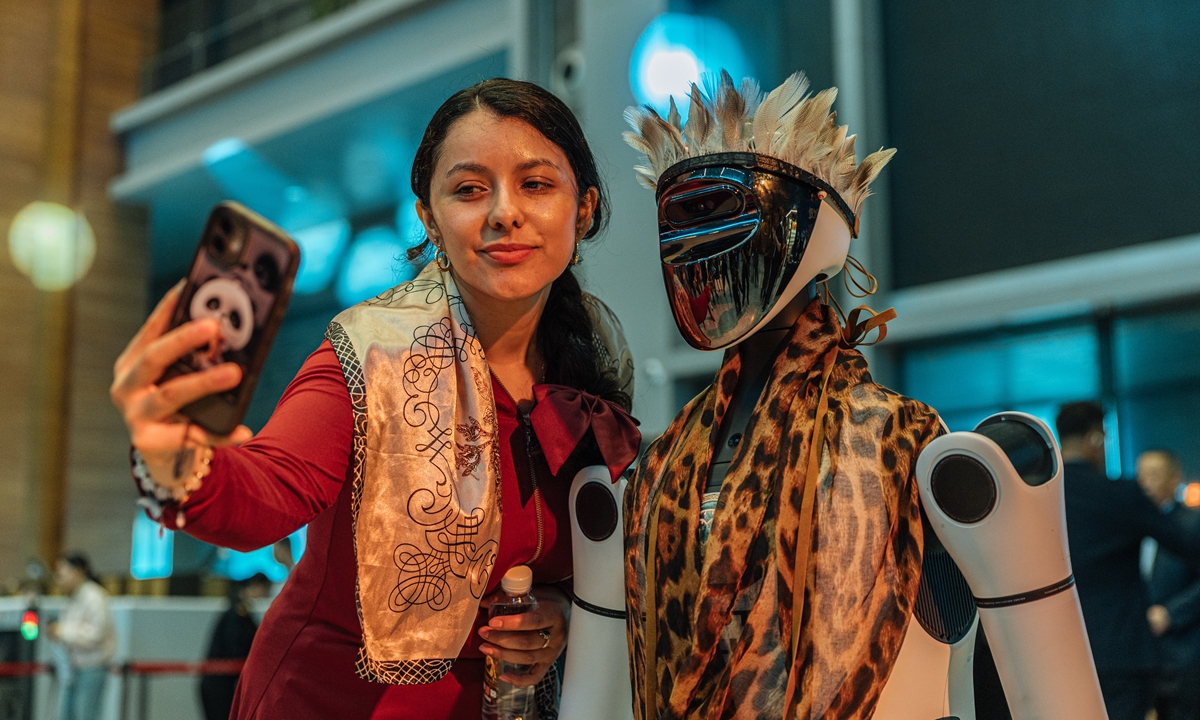
A visitor poses for a photo with a robot at the Capital Museum. Photo: Li Hao/GT
Featuring gold masks, painted pottery, ritual objects, textiles and animal-themed relics, the exhibition at the Capital Museum spans nearly 3,000 years of history and introduces Chinese audiences to two of the Americas' most remarkable ancient civilizations.
Organized into three sections, the exhibition traces different facets of these cultures.
In "The World of the Maya," 90 percent of the artifacts are being displayed in Beijing for the first time. "Temples of the King" focuses on Peru's Sipán royal tombs, offering insight into burial customs and advanced metalworking techniques.
Around 80 percent of the objects in this section are making their debut in China, with half of them leaving Peru for overseas exhibition for the first time.
The final section, "Spirits of Nature," turns to the relationship between humans and animals through narrative story-telling, with all works shown in China for the first time.
According to Zhao, although Chinese and Latin American civilizations developed separately thousands of years ago, history shows they were never completely isolated.
She said the exhibition aims to help Chinese audiences better understand ancient American civilizations and explore shared ideas and values that resonate across cultures, past and present.
Speaking at the event, Shahbaz Khan, director of the UNESCO Regional Office for East Asia, noted that the exhibition vividly demonstrates how museums can transcend geographical and historical boundaries and build channels of communication between different cultures and civilizations.
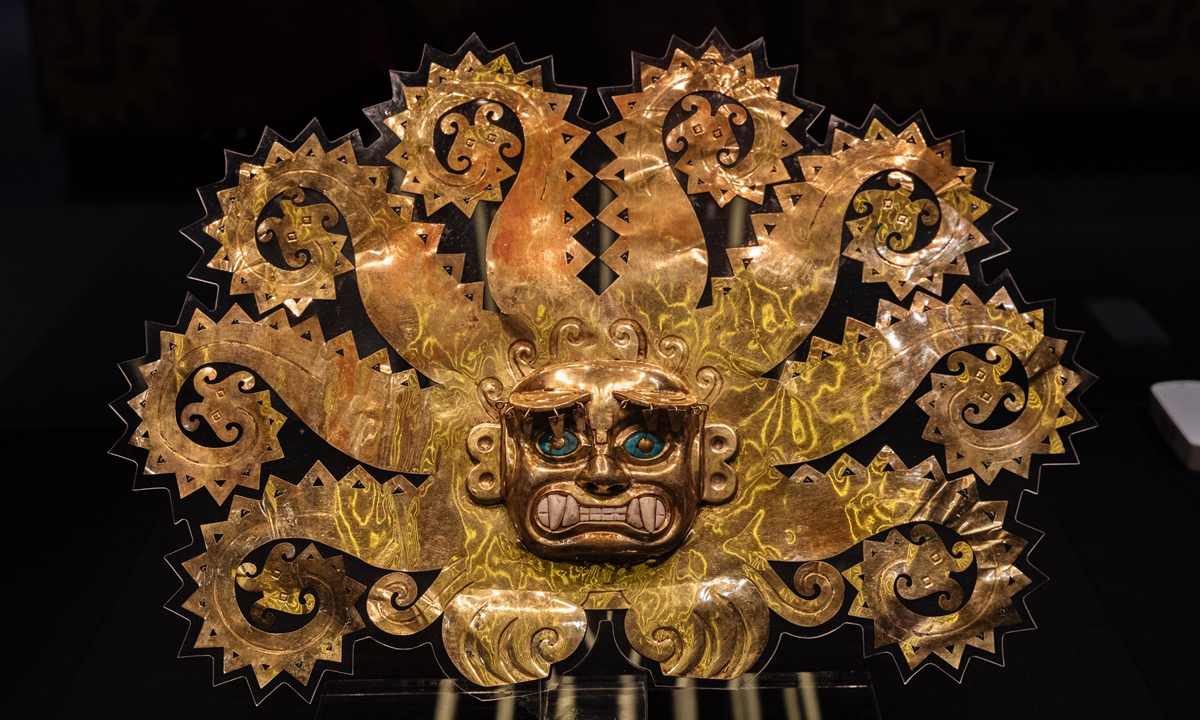
An artifact on display at the exhibition at the Capital Museum Photo: Li Hao/GT
The role of museums as cultural connectors has become increasingly visible across China in recent years.
Beyond large-scale exhibitions, museums are expanding through collaborative projects, educational programs and immersive public events designed to make history more accessible to younger generations.
China has participated in International Museum Day activities since joining the International Council of Museums in 1983, and since 2009, the National Cultural Heritage Administration (NCHA) has co-organized the national main venue event with provincial governments.
This year's International Museum Day flagship event will be held in Hohhot, North China's Inner Mongolia Autonomous Region, marking the return of the main venue to the city for the first time in a decade.
Alongside exhibitions and academic forums, organizers have planned around 280 educational and social activities, including 165 youth-oriented sessions such as archaeology blind-box workshops, historical role-playing games and intangible cultural heritage craft experiences, according to the NCHA.
Museums across the country are also exploring new ways to engage the public, ranging from "museum nights" and NPC-guided immersive tours to hands-on study programs that blend entertainment with historical learning.
Khan said museums serve as spaces for education, exchange, innovation and public engagement, helping people trace historical roots, better understand cultural identity and foster greater understanding and respect across cultures.
One example frequently cited is Shanghai's blockbuster ancient Egypt exhibition in 2025. The exhibition was the largest ancient Egypt showcase held outside Egypt in more than two decades and attracted massive public attention in China.
Behind such exhibitions lies an expanding network of international cooperation.
The theme of the International Museum Day reflects a broader effort to position museums as spaces for dialogue and understanding, helping rebuild trust and connections in an increasingly fragmented world, said Zhao Feng, vice-president of the Chinese Museums Association and an executive committee member of the International Council of Museums (ICOM).
He added that through joint efforts led by organizations such as the ICOM, cultural heritage protection has continued to make steady progress even in challenging circumstances, underscoring the deep global connections that have been built within the museum sector.
According to Zhao, the 80th anniversary of the ICOM in 2026 adds further symbolic weight to this year's observance, with global events this week aimed at amplifying the voice of museums and encouraging coordinated action for global peace.
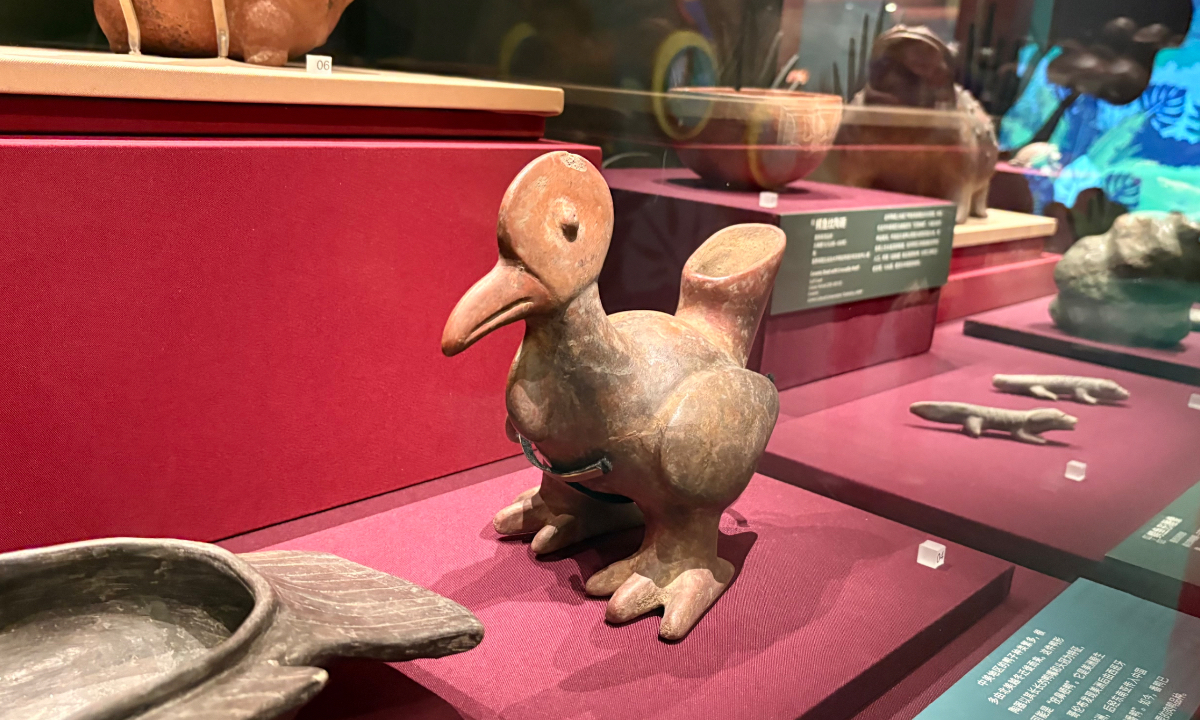
An artifact exhibited at the show at the Capital Museum Photo: Li Hang/GT
RELATED ARTICLES