ARTS / CULTURE & LEISURE
Starting from slogan, copyright protection demands multiple-pronged approach
By Published: May 17, 2026 10:53 PM

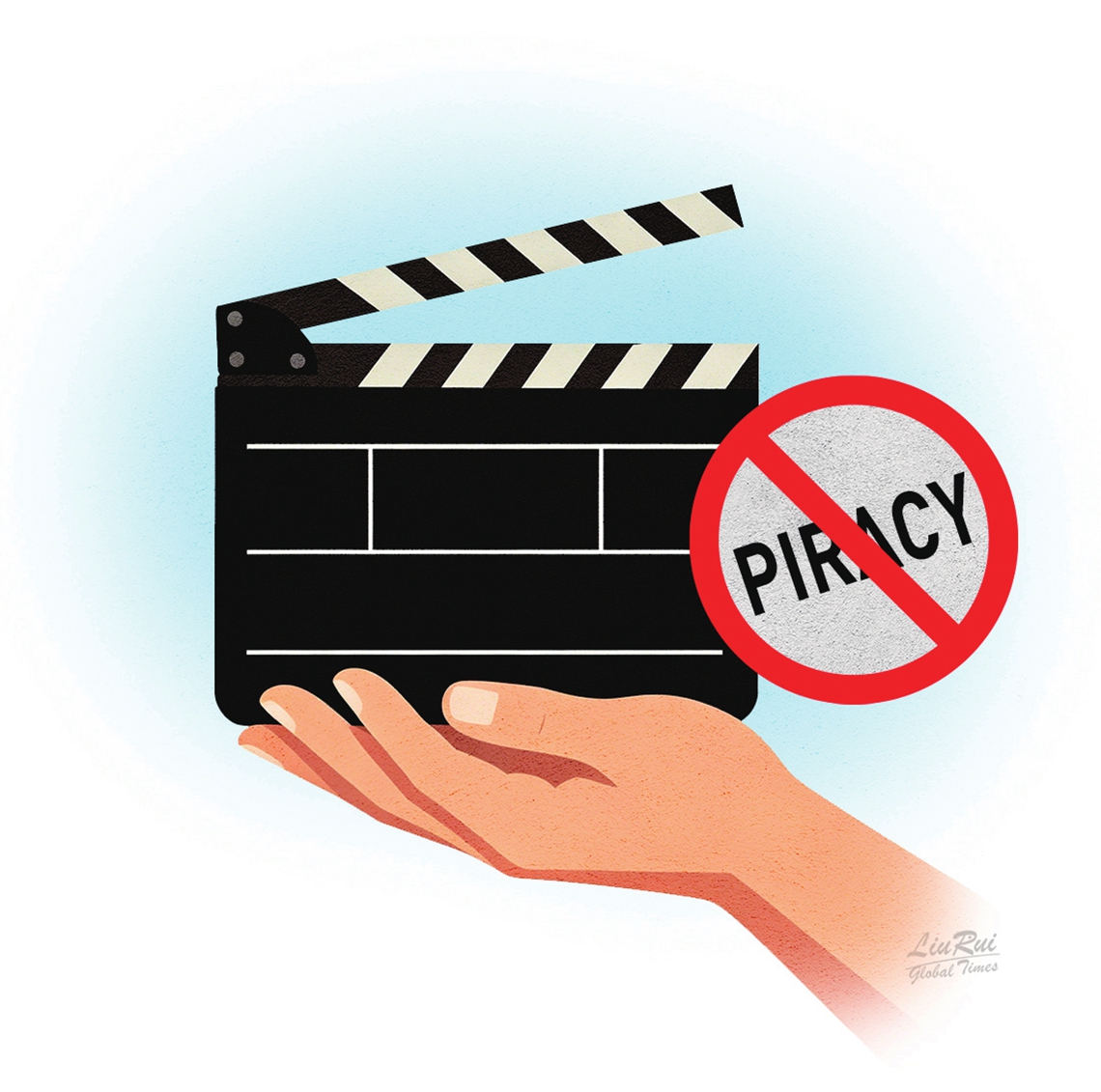
Illustration: Liu Rui/GT
A few seconds at the very start of a Chinese TV drama have drawn great attention. When the series Bloom Life greeted viewers with a new on-screen message, "Protect originals, everyone's responsibility," audiences became focused on the issue of copyright protection again. This seemingly simple copyright warning has sparked debate across the industry and among the public. Does it hint at a deeper transformation in China's film and TV ecosystem?Actually, adding a copyright protection warning at the beginning of TV dramas will become "standard practice" for all major long-form video platforms and TV stations releasing new series in the near future. This was emphasized at a recent mobilization meeting for the focused crackdown on TV drama copyright infringement held by the National Radio and Television Administration, according to a report by the Beijing Daily.
The release of a promotion plan for building a strong intellectual property nation in 2026 on Saturday also lends powerful context to this debate. With the plan, China's national IP strategy has laid out steps to tackle longstanding challenges. Among these are the "Jianwang 2026" campaign against online infringement, "Jianying 2026" for cinema copyright, and a seasonal campaign for educating young viewers about the importance of intellectual property. The aim is to build long-lasting mechanisms for turning creative rights into real industry value, ensuring everyone - from creators to audiences - plays their part, according to CCTV News.
More film and TV industry insiders have already noticed that Chinese authorities are stepping up their efforts to protect copyright. Shi Wenxue, a director and film critic, observed that the pace of special campaigns to crack down on piracy and other infringements has clearly accelerated in 2026, and the scope of enforcement is expanding. He told the Global Times on Sunday that, at the same time, more industry insiders and the public are coming to realize that piracy is not only a legal issue, but also one that undermines the very foundation of the industry.
Luo Luo, a film producer, feels the same way. She told the Global Times on Sunday, "The creators around us start taking actions to protect their copyrights when they reach a certain stage of creation. Sometimes we see some workers defending their own works, which indicates that the entire industry has developed a stronger sense of copyright, protecting both the works and the creators."
These industry insiders agree that adding copyright notices at the beginning of TV dramas and films can play a role in furthering and deepening copyright protection. At the same time, Shi pointed out that the primary function of the slogan is to serve as an educational tool and that it cannot replace the deterrent effect of the law or the preventive capabilities of technology. The opening copyright notice is only one element within the broader governance system. Ultimately, what plays a decisive role are improvements to the legal framework, stronger law enforcement, the effective application of technology, and the clear assignment of responsibility to platforms to protect copyrights.
In today's highly digital world, pirates can illegally capture high-definition content in as little as 180 seconds, the Beijing Daily reported. Just hours after a popular period drama is released, entire seasons appear on illegal websites. These acts of infringement have not only seriously violated the legal rights of film and television producers and undermined the enthusiasm of content creators, but also disrupted the normal order of the cultural market and hindered the healthy development of the film and television industry.
In response to these infringement issues, Shi put forward more suggestions regarding supervision and rectification. He noted that a major issue facing the film and television industry today is the severe imbalance of the "low cost of infringement and high cost of rights protection." Therefore, a "blacklist" system for copyright infringers should be established, with greater compensation and harsher penalties to put the squeeze on piracy in the industry.
Enhancing the role of technology in preventive interventions might be another effective measure, according to Shi. Digital watermarking technology already played a positive role in protecting film copyrights in 2025. In the future, technological empowerment should be further enhanced by utilizing digital watermarking, video fingerprinting, and AI-based intelligent monitoring to achieve a three-tiered protection loop of "early warning, real-time blocking, and post-event accountability."
Tackling the challenge of protecting copyrights cannot fall to one group alone. The 2026 plan and the move to standardized copyright warnings reflect a growing recognition that lasting protection requires the coordinated action of multiple stakeholders - a "joint governance" model. Copyright owners, broadcast and streaming platforms, government regulators, and industry organizations should each play their part.
"Protect originals, everyone's responsibility" is not just a slogan; it is a shared responsibility for the entire film and television industry, online platforms, and the wider audience.
The author is a reporter with the Global Times. life@globaltimes.com.cn
RELATED ARTICLES