ARTS / CULTURE & LEISURE
2,000-year-old Han tomb discovered in Hohhot, revealing ancient cultural exchanges
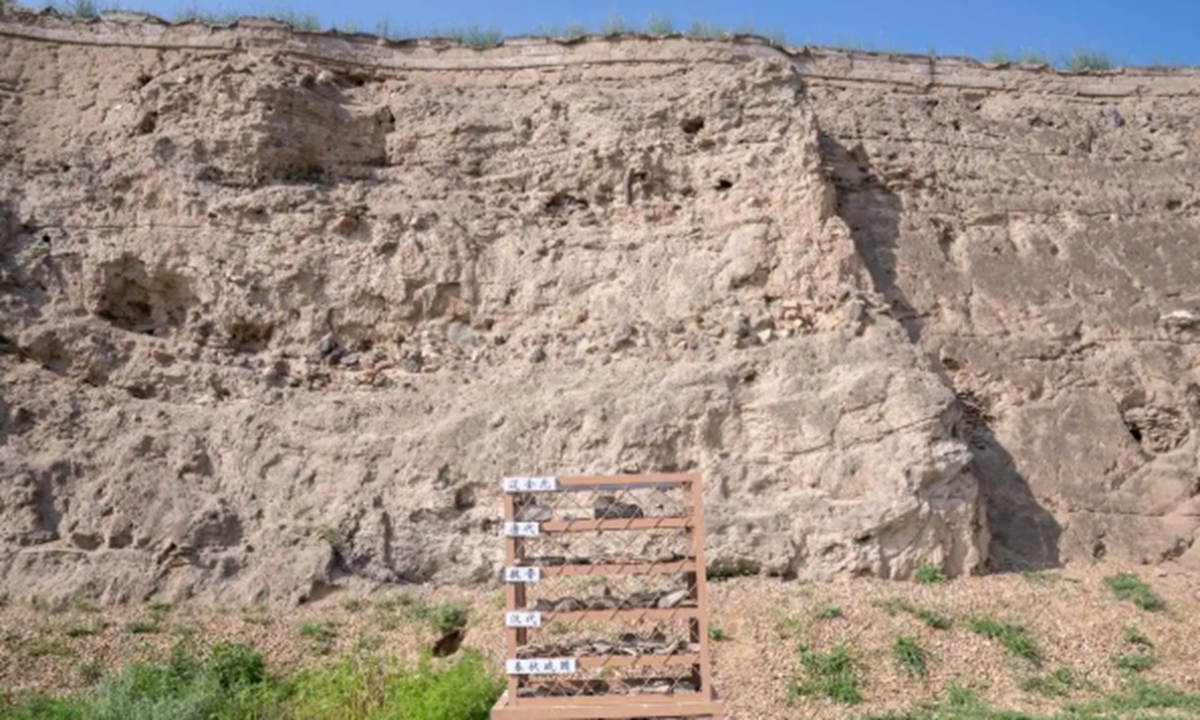
Horinger Tuchengzi Archaeological Site
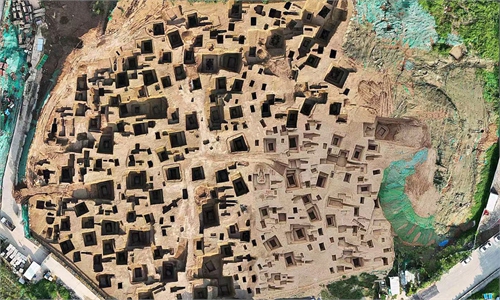
Archaeologists have discovered a high-ranking tomb from the Han Dynasty (206BC-AD220) in Hohhot, capital city of North China's Inner Mongolia Autonomous Region. Beyond unearthed artifacts, excavation of the tomb has provided insight into the cultural exchanges between China's frontier regions and the Central Plains over 2,000 years ago.The tomb was unearthed near the local Horinger Tuchengzi Archaeological Site Park in Hohhot' Horinger county. The park was established around the Tuchengzi site. Chen Yongzhi, the archaeological site's lead, told the Global Times that as the largest ancient city site discovered so far on the northern banks of the Yellow River, the site's cultural strata, which are over 10 meters deep, contain cultural remains from different dynasties spanning more than 2,000 years.
"During the Spring and Autumn Period (770BC-476BC), only the western part of the city existed. The southern part of the city was expanded during the Han Dynasty, the central city was built during the Wei and Jin dynasties (220-420), and the northern part of the city, which is the largest in area, was built during the Tang Dynasty (618-907)," Chen remarked. The Han Dynasty tomb discovered this time is located approximately 300 meters northwest of the archaeological site park.
Through excavations, archaeologists have clarified the tomb's layout. The tomb is about 8 meters deep from the ground surface, with the burial chamber facing due north, and a sacrificial pit located in the northeast corner connected to the main tomb passage. Inside, four horse-drawn carriages, two sets of horse harnesses, one pottery stove, and two nuji, or crossbow trigger mechanisms, were found.
The structural design of the sacrificial pit resembles that of the main burial chamber, but without the latter's piled-up charcoal layer. "In the Han Dynasty, the primary function of the charcoal layer was moisture-proof and can defend against corrosion," archaeologist Wang Meng told the Global Times. "It represents the wisdom of the tomb design at that time."
Including the charcoal remains, archaeologists also discovered the remains of pottery. Both materials were used around the outer area of the coffin chamber. Dong Sarina, deputy director of the Hohhot Institute of Cultural Relics and Archaeology, said that this construction technique is "similar to the techniques used in high-ranking Han Dynasty tombs on the Central Plains," thus reflecting "the dissemination of Central Plains funeral practices into the frontier region and its localized adaptions."
"In ancient times, the form and structure of a tomb carried profound cultural significance, embodying ancient people's philosophy of life and death as well as their beliefs. The exchange of such tomb forms essentially shows China's fusion of diverse cultures and beliefs," Wang, the archaeologist, told the Global Times.
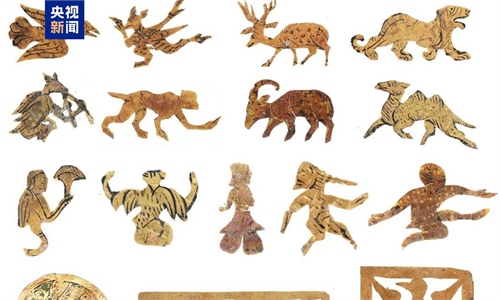
Other than the tomb, archaeologists also discovered 88 sets of burial artifacts, primarily bronze vessels, including pottery wares, iron objects, and residual lacquer skin from lacquerware.
"After more than 2,000 years, this tomb has been preserved relatively well. Our preliminary assessment suggests that it dates from the late Western Han Dynasty to the early Eastern Han Dynasty," Dong said.
Prior to the discovery of the current tomb, a total of 31 Han tombs were also unearthed in Horinger county in 2021. These tombs exhibit a particularly diverse range of forms, including vertical earthen shaft tombs, earthen cave tombs, brick-walled tombs, and brick-chambered tombs, demonstrating the evolution of ancient tomb structures. The burial artifacts discovered were also abundant, with a pottery assemblage consisting of a "jar, pot, stove, and well-shaped container" being the most distinctive find.
RELATED ARTICLES