BRASIL 247 / MORE
Brazil promotes critical minerals and investment agenda at G7 meeting
Finance minister says Brazil seeks to expand industrialization and attract foreign capital amid global economic uncertainty
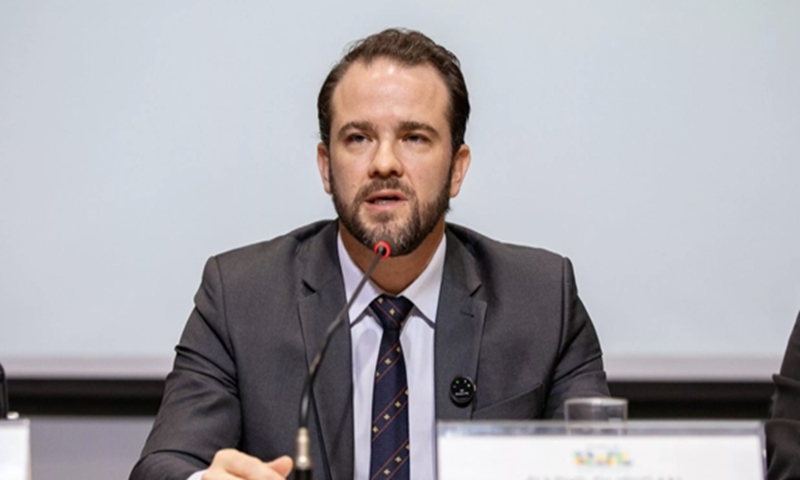
Brazil's Finance Minister Dario Durigan. Photo: Brazil's Ministry of Finance
By Brasil 247 - Brazil's Finance Minister Dario Durigan is participating this week in a G7 meeting in Paris with an agenda focused on the economic impacts of the conflict in the Persian Gulf, the attraction of foreign investment to Brazil, and discussions on critical minerals. The information was originally reported by Brazilian newspaper O Globo in a report by journalist Miriam Leitão.
According to Durigan, the meeting among representatives of the world's largest economies provides an opportunity for Brazil to share experiences regarding the economic effects of the conflict in the Middle East while reinforcing the country's image as a safe destination for international investors.
Speaking to journalists in the French capital, the minister said the Brazilian government has been monitoring measures adopted by other countries to address the effects of the war on inflation, fuel prices and economic growth.
"We have been leading a global debate about the effects of the war around the world, in Brazil and in Latin America, but it has also been important to hear ministers and leaders from other countries who are experiencing the impact of the war from a different perspective," Durigan said.
He added that discussions with Gulf countries invited to the G7 meeting have helped Brazil better understand local perspectives on the development of the conflict in the region.
Durigan also highlighted recent conversations with European authorities on how governments are responding to the economic consequences of the conflict.
"I recently spoke with Portuguese, Spanish and German authorities during the trip with President Lula, and we were able to see how they are dealing with the war in a very similar way to Brazil, through limited subsidies and tax reductions on some fuels that affect global and domestic inflation," he said.
Another central point of Brazil's agenda at the G7 meeting is the promotion of the country as a strategic destination for international investment. According to the minister, the government intends to present economic measures and programs designed to provide financial security for investors, including initiatives such as Eco Invest.
"A forum such as the G7 allows us to present how we have improved Brazil's economic situation from a macroeconomic perspective, with the indicators we have been showing, while also presenting new programs such as Eco Invest in detail so that they can be promoted within their countries as opportunities to invest in Brazil," Durigan said.
The minister also pointed to the stability of Brazil's currency and the performance of the country's financial market as positive factors for attracting foreign capital.
"The debate about the Brazilian economy, how stable our currency is, and how the Brazilian stock market, despite suffering in recent weeks as markets around the world have, has still responded positively to investment, shows that Brazilian assets remain attractive and relatively inexpensive," he stated.
Critical minerals also became a major topic during Brazil's participation in the meeting. Durigan cited interest from countries such as France in Brazilian mineral reserves and defended a development model aimed at expanding industrialization of these resources within Brazil.
According to the minister, recently approved legislation in Brazil's Chamber of Deputies establishes guidelines focused on national sovereignty and legal security for investors.
"Brazil recently approved a new law on critical minerals in the Chamber of Deputies that establishes two major principles: sovereignty, reaffirming that the Brazilian Union owns these critical minerals, and the promotion of industrialization of these resources in Brazil, moving away from the historical model of merely exporting critical minerals," he explained.
Durigan added that the government intends to encourage foreign investment capable of generating jobs and promoting technology transfer to Brazilian universities and companies.
"If there is French, German or American capital interested in investing in this sector, it should happen in Brazil, generating jobs in Brazil and sharing technology with Brazilian universities. That is our guideline," he concluded.
(Reported by Brasil 247 on May 18, 2026)
