ARTS / FILM
State Council Taiwan Affairs Office responds to mainland film ‘Dear You’ resonating across Taiwan Straits
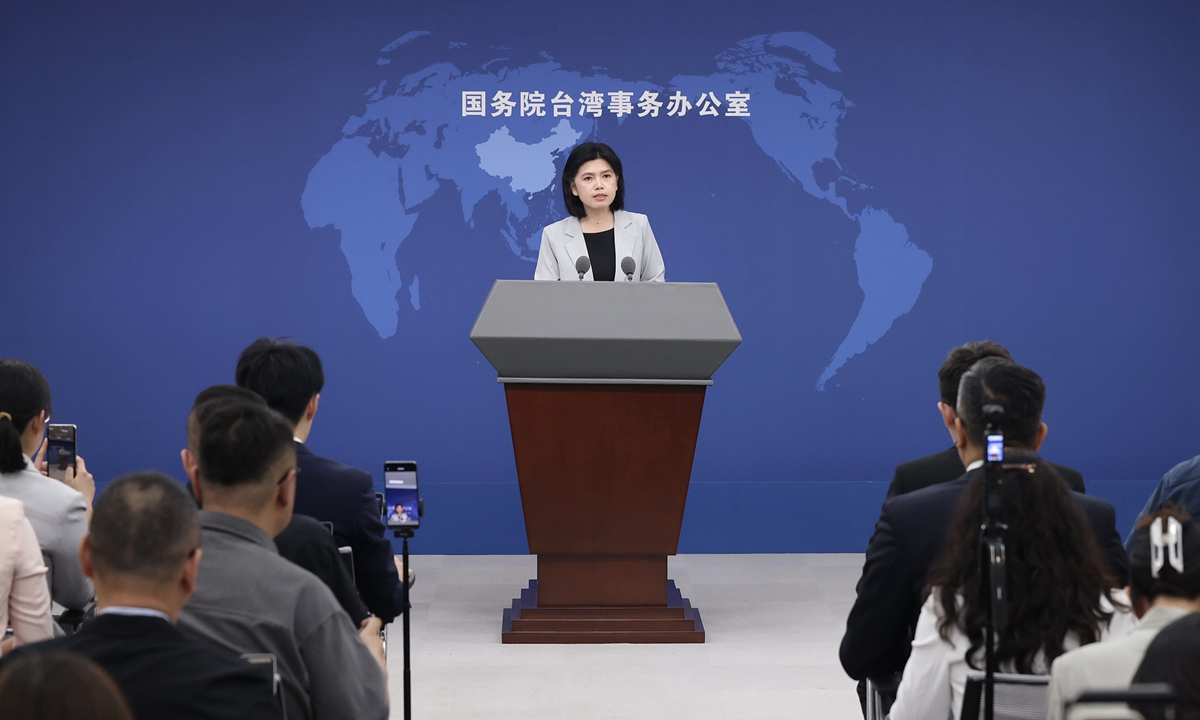
Zhu Fenglian, a spokesperson for the Taiwan Affairs Office of the State Council Photo: VCG
When asked about the Chinese mainland film Dear You, which has recently attracted widespread attention across the Taiwan Straits, and how to comment on the "affection and loyalty" and "love for family and country" conveyed in the film that have resonated strongly with audiences on both sides, Zhu Fenglian, a spokesperson for the State Council Taiwan Affairs Office, said on Wednesday that the word "Ah Ma" carries the shared linguistic origin across the Straits, while the virtue of being affectionate and loyal embodies the cultural root and soul shared by people on both sides.
Zhu said with qiaopi, a unique form of personal mail, as the carrier, the film Dear You tells a touching story of watchfulness in Chaoshan's overseas Chinese hometown, spanning mountains and seas for more than half a century through delicate and simple shots.
There are many similarities between Chaoshan and Taiwan regions in terms of language and customs. Taiwan compatriots who have watched the film feel a special connection with the large number of Chaoshan dialects, the core of integrity and righteousness, and the strong family and country feelings in the film.
The word "Ah Ma" is the common dialect of the same origin on both sides of the Straits, and the phrase "one must always be affectionate and righteous" is the root and soul of the same culture and ethnicity on both sides. The love of this film by Taiwan compatriots fully shows that compatriots on both sides of the Straits have a common inheritance and strong resonance with Chinese culture.
As of the end of May this year, nine films from the island of Taiwan have been released in the mainland cinemas, attracting the attention of mainland audiences. We also welcome more Taiwan compatriots to pay attention to and watch excellent mainland films, and hope that more mainland films can be released in Taiwan, allowing more Taiwan compatriots to deeply feel the profound heritage and innovative development of Chinese culture, Zhu said.
Global Times
RELATED ARTICLES