World sports governing bodies strongly condemn steroid-fueled Enhanced Games ahead of launch
Photo: CCTV News
The controversial Enhanced Games, marketed by organizers as a new sporting model embracing "science and innovation," is set to begin on Sunday in Las Vegas, reigniting debate across the global sports community over athlete safety and fairness as it encourages the use of performance-enhancing substances.
The event, whose inaugural edition will feature swimming, athletics and weightlifting competitions in which athletes are permitted to use banned performance-enhancing substances, has drawn sharp criticism from the World Anti-Doping Agency (WADA).
"WADA condemns the Enhanced Games as a dangerous and irresponsible concept," WADA Spokesperson James Fitzgerald said in an email to the Global Times ahead of the launch of the event.
"The health and well-being of athletes is WADA's No.1 priority. Clearly this event [Enhanced Games] would jeopardize that as it seeks to promote the use of powerful substances and methods by athletes," Fitzgerald added.
The International Olympic Committee (IOC) also told the Global Times that "any events encouraging the use of performance-enhancing substances and methods are a betrayal of everything that athletes stand for."
WADA warned that even substances approved for medical use may carry severe risks when used for performance-enhancement purposes.
"Just because a drug is FDA-approved, including most of the substances on WADA's Prohibited List, or is provided under medical supervision, does not mean it can be taken risk-free," Fitzgerald said.
He also pointed out the potential side effects associated with substances such as anabolic steroids, human growth hormone, testosterone and EPO, including heart attacks, strokes, infertility, blood clots and sudden cardiac death.
"The reality is that sports medicine still doesn't fully understand the long-term consequences of stacking multiple substances together at the doses elite athletes might use to chase records," Fitzgerald noted.
According to WADA regulations, athletes hoping to return to competitions governed by the World Anti-Doping Code after participating in the Enhanced Games could still face anti-doping consequences and targeted testing by national anti-doping organizations and international federations.
WADA also expressed concern about the message such an event could send to younger generations.
"The beauty and popularity of sport is based on the ideal of clean and fair competition," Fitzgerald said. "Athletes serve as role models and WADA believes that this event sends a dangerous message to young people around the world."
The China Anti-Doping Agency (CHINADA) has previously voiced strong opposition to the event.
In 2025, when the Enhanced Games initiative was proposed, CHINADA described the event as "a distorted competition that turns pure sports competition into a drug contest," noting that it seriously contradicts the purpose of the World Anti-Doping Code, Xinhua News Agency reported.
CHINADA further warned that the event "severely threatens the physical and mental health of athletes as well as the spirit of sport," while criticizing the organizers' "capital-driven" approach and their use of substantial prize money to attract participants.
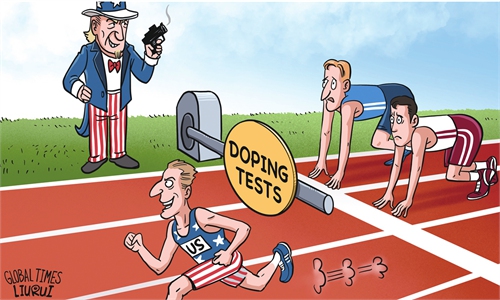
The Chinese agency also urged the US Anti-Doping Agency (USADA) to "follow the code and international standards and take decisive measures to oppose the Enhanced Games," saying that USADA's response had revealed "its weakness in the face of powerful interest groups and wealthy sponsors."
While USADA has publicly criticized the event, it has so far not announced any concrete actions against it. USADA Chief Executive Travis Tygart reportedly labeled the Enhanced Games a "dangerous clown show" and warned of serious health risks tied to performance-enhancing drugs.
The growing controversy has also sparked discussion within the scientific community.
Kim Wolff, head of King's College London's Drug Control Centre, the UK laboratory for sports testing, argued in Nature that the Enhanced Games "miss the point," warning that an event openly championing performance-enhancing substances poses risks not only to athlete health, but also to the integrity of sport itself. She argued that anti-doping science should continue to evolve to protect clean competition rather than normalize drug use in elite sport.
RELATED ARTICLES