ARTS / CULTURE & LEISURE
Fusing tradition and creativity, revived heritage shows Ningbo’s urban ingenuity

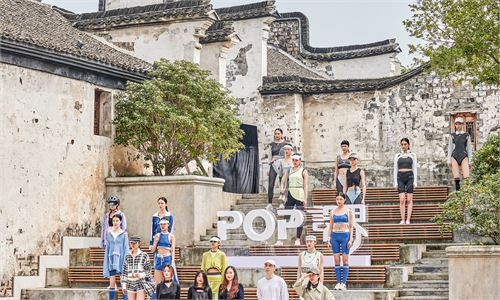
The renovated ancient architectural complex at Cicheng Ancient Town Photo: Courtesy of Shen Guofeng
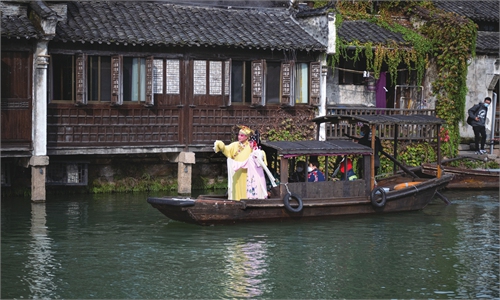
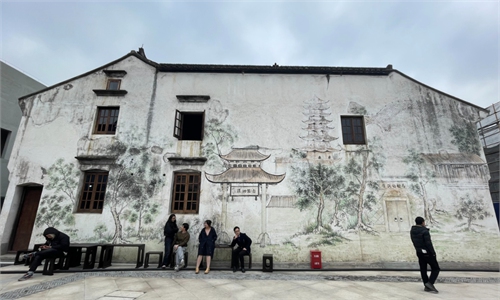
Set within the city of Ningbo, East China's Zhejiang Province, Cicheng Ancient Town stands as most intact millennium-old town in the region. Going back as far as the Neolithic period, this area was already home to the early ancestors of Ningbo. From that time onward, the everyday customs, cultural traditions, and urban planning insights born from such human activities have been refined and passed down through generations within this ancient town.The ancient town features a turtle back layout with a raised central axis and lower surrounding areas, while its streets and lanes follow a double checkerboard pattern. Scattered around are well-preserved historical sites such as a Confucian Temple and traditional dwellings dating back to the Ming (1368-1644) and Qing (1644-1911) dynasties. While some old towns serve as static containers of historical remains, what sets Ningbo's ancient town apart is that it still lives in harmony with generations of local residents. Shen Guofeng, 54 years old this year, is one of them.
Pushing open the door at the old town's No.55 Minsheng Road, one steps into Shen's home. Shen was born here and lived here as a child, and his parents still live in this very house today. As a living map of the town, Shen knows every corner of it. To the east, he can point out which old building once housed the workshop for making Ningbo's iconic intangible cultural heritage (ICH) food - rice cakes. To the west, he can lead visitors straight to the Confucian Temple, where stands a stone tablet inscribed by the Northern Song (960-1127) literati Wang Anshi during his stay.
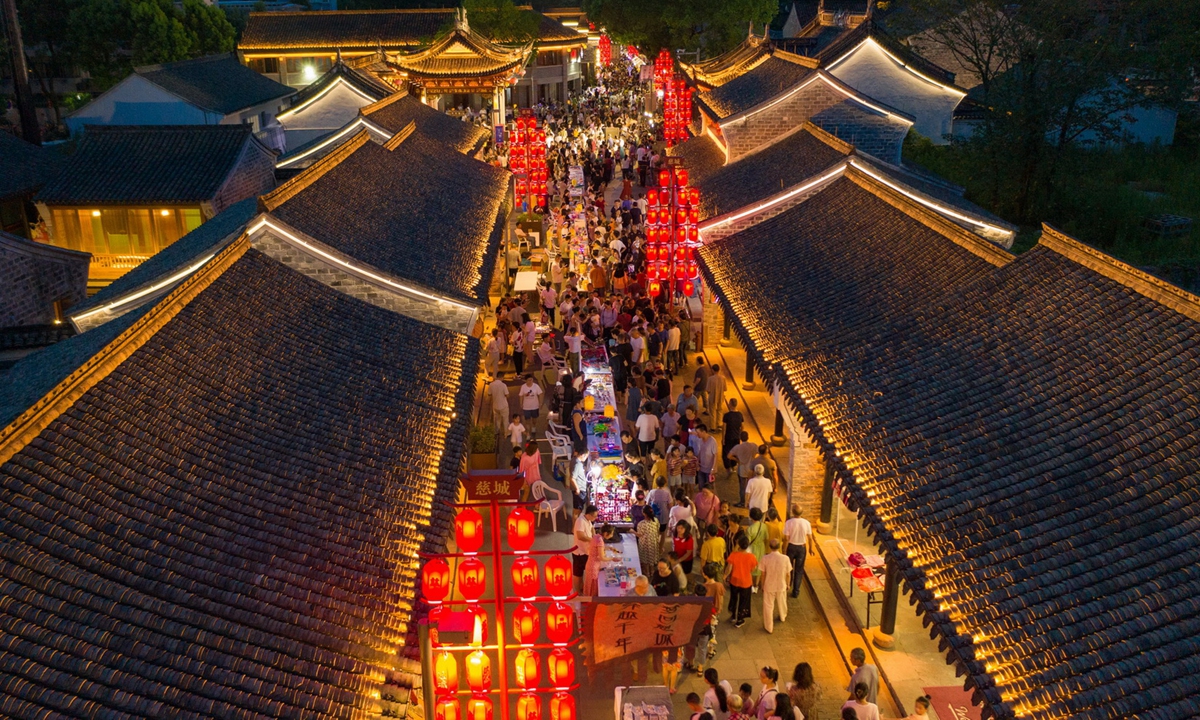
People stroll around a night market at Cicheng Ancient Town. Photo: Courtesy of Shen Guofeng
Behind a humble-looking wooden door at the town is the workshop of Shao Yida, an ICH inheritor of the luodian (lit: mother-of-pearl inlay) craft. Shao's studio is modest in size, yet hidden inside is an 8.4-meter-long luodian version of the stellar painting Along the River during the Qingming Festival.Such details that carry the living heritage of human memories are rich at Cicheng Ancient Town. "Without them, the new scenes here would not have such a solid foundation as it does today," Xu Gan, an urban planning expert based in Beijing, told the Global Times.
But what are the old town's "new scenes"? The answer lies in how the Ningbo local government underpins the old town's regeneration.
Since 2010, driven by the local efforts, a "protection regulation" tailored specifically to Cicheng Ancient Town was implemented, making it the first local regulation in China designed for a single ancient county. In line with this regulation, over the years the Ningbo local officials have carefully crafted multiple policies, adhering to the principle of "protection first, moderate construction, and restoring the old as it was" to bring new life into this historic district through new commercial and cultural formats such as catering, an ICH experiencing center and more.
One milestone came in 2021 when Cicheng was selected as one of Zhejiang Province's first batch of "Thousand-Year Ancient City Revival" pilot projects. This milestone not only promoted the upgrading of the ancient town in terms of public facilities, cultural tourism experiences and more, but also turned Cicheng's creative cultural tourism model into a reference for the renewal of many other ancient towns.
Other than the ancient town, Xiushui Street - a district with more than 1,200 years of history in Ningbo's pear-shaped old town - is set to debut on Friday. With the goal of becoming "Ningbo's cultural living room," the street will offer not only conventional restaurants and cafes, but also ICH exhibitions and art spaces where the public can gather for cultural exchanges.
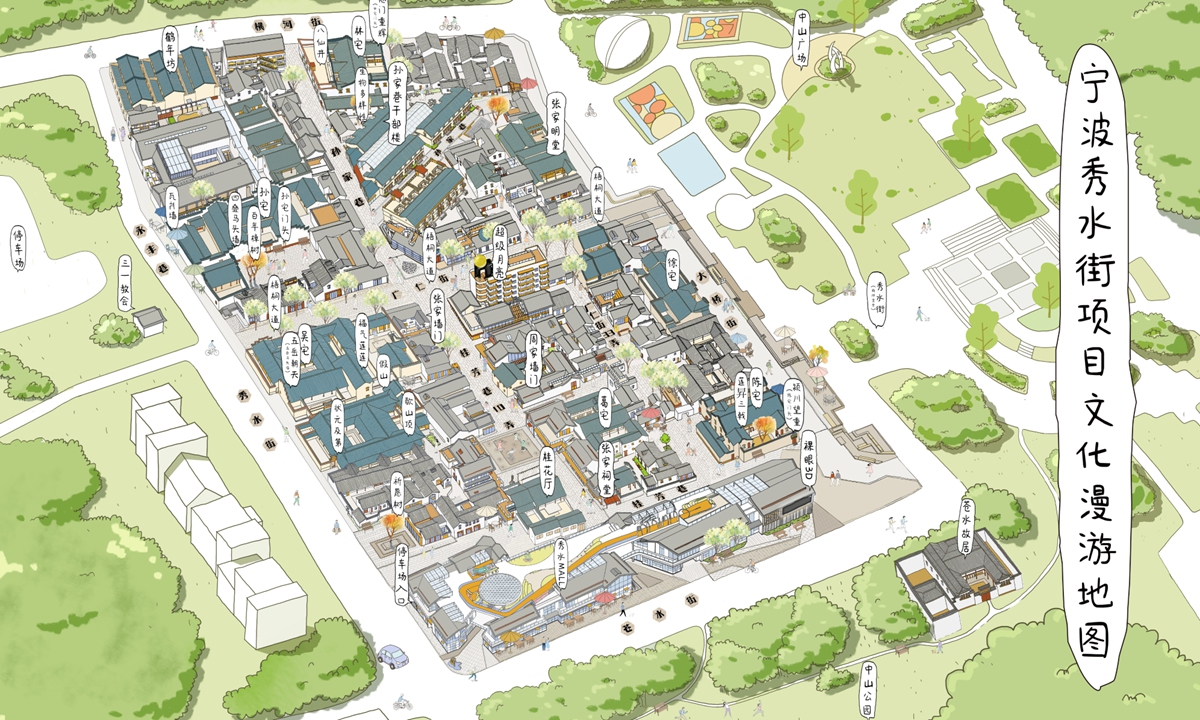
A map of Xiushui Street
At the same time, thanks to its unique classical-meets-modern landscape, Xiushui Street has broken free from geographic constraints to become a popular filming location for TV dramas, as well as a social media hot spot."Through these changes, we can see local people's efforts to build platforms, revitalize traditions with creativity, and connect consumption with experiences, creating urban renewal solutions that align with the city's cultural characteristics," Xu remarked.
Roughly a 10-minute bike ride away from Xiushui Street stands Ningbo's landmark, the Laowaitan, or known as the Old Bund. One hundred and eighty-two years ago, this area was already opened for global trade, marking a century-long historical corridor that witnessed Ningbo's role as one of the major spots along the Maritime Silk Road. Whether it's the Gothic cathedral or the architecture blending both Chinese and Western aesthetics, the Old Bund has long embodied Ningbo's embrace of global cultures.
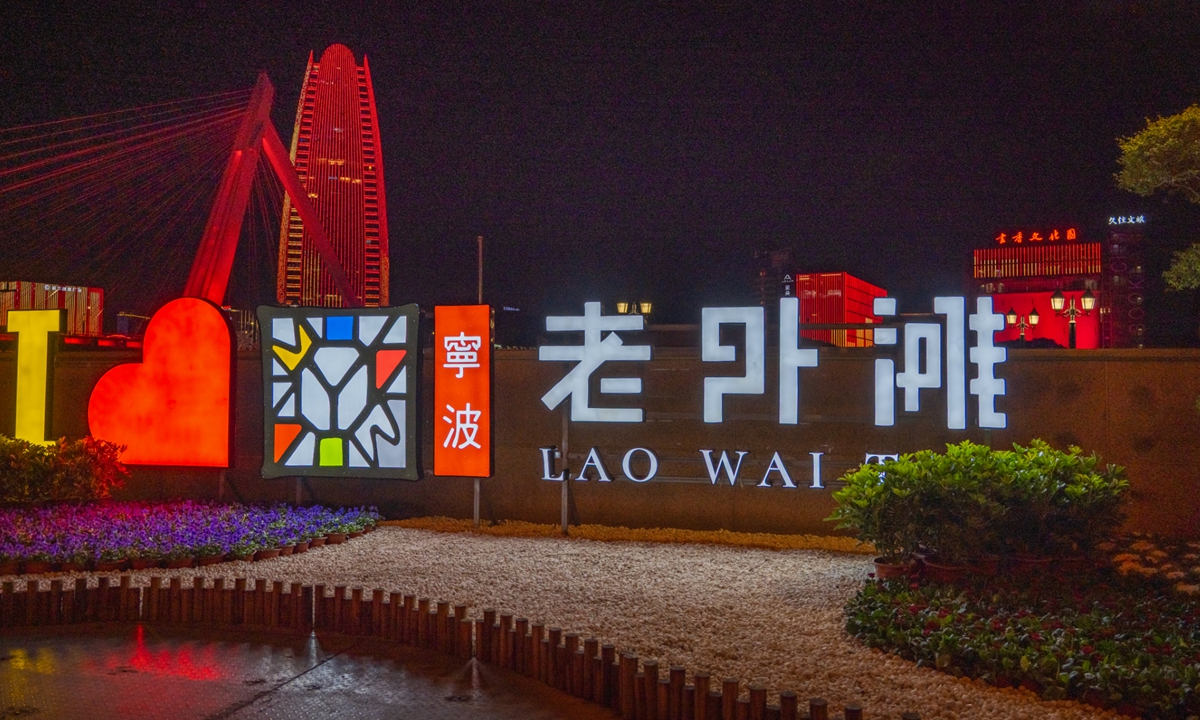
Laowaitan Photo: VCG
Driven by urban renewal, the Old Bund's distinctive international aesthetics continue into the present day. He Tao, a representative from the Old Bund subdistrict's Urban Renewal Office, told the Global Times that in recent years, the local government has not only enhanced the visitor experience at the Old Bund through initiatives such as "intelligent lighting systems and landscape enhancements," but has also created cultural IPs such as "From a Tang-Song Ancient Port to a Shanghai-style Cosmopolitan Hub," showcasing how Ningbo's unique maritime silk culture continues to thrive in the contemporary era.Scattered with dazzling bars, tea shops, and restaurants, today's Ningbo Old Bund is not only a leisure destination for locals but also attracts people from different countries. Tesh, a London native, is one of them. Calling Ningbo his second "hometown," Tesh told the Global Times that the "vibrant community culture and work-life balance" he experiences in this city have allowed him to feel the charm of a Chinese lifestyle.
RELATED ARTICLES