SPORT / MISCELLANY
Zheng Qinwen suffers shocking first-round exit at French Open
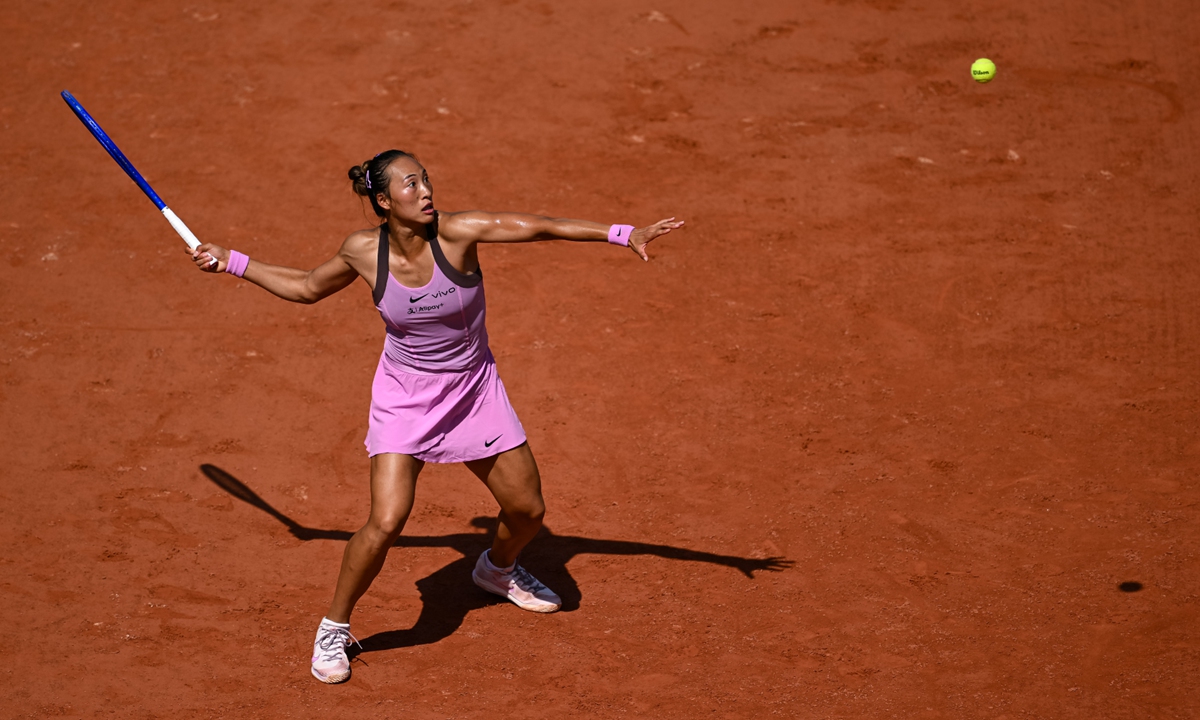
Zheng Qinwen of China in action against Maja Chwalinska of Poland during the women's singles first round match on Day Two of the 2026 French Open at Roland Garros on May 25, 2026 in Paris, France. Photo: VCG
Chinese tennis ace Zheng Qinwen suffered a shocking first-round exit at the 2026 French Open on Monday, falling 6-4, 6-0 to Polish qualifier Maja Chwalińska in Paris in one of the biggest upsets of the opening rounds.The match, lasting just over an hour, saw the former Olympic champion struggle to find her rhythm against the world No.114 qualifier, who was making her French Open main-draw debut after advancing through qualifying rounds.
For Zheng, the defeat marked another setback in what has been a difficult comeback season following elbow surgery in 2025. The former world No.4 returned to competition in February after missing the latter part of the 2025 season and the 2026 Australian Open during her recovery period.
Entering this year's French Open as an unseeded player, Zheng had hoped the clay courts of Paris would help reignite her form as Roland Garros has been one of the most successful venues of her career. In 2025, she reached the quarterfinals here for the first time, while in 2024 she captured the women's singles gold medal at the Paris Olympics.
However, Monday's loss means Zheng will be unable to defend the ranking points earned from 2025's deep run in Paris, potentially causing another drop in the WTA rankings in the coming weeks.
The defeat also highlighted the difficult position Zheng currently faces on the WTA Tour. Another significant ranking drop could leave her facing tougher draws, fewer seeded protections and potentially even qualification routes for certain tournaments later this year.
Although Zheng has showed flashes of improvement during the European clay swing in the buildup to the French Open, including several wins in Madrid and Rome, consistency has remained an issue since her return.
Against Chwalińska, Zheng struggled with unforced errors and failed to impose her usual aggressive baseline game.
After losing a competitive opening set 6-4, the Chinese player's level dropped sharply in the second set as the Polish qualifier dominated proceedings to seal the biggest Grand Slam win of her career.
Despite Zheng's exit, Chinese women's tennis enjoyed some positive news in Paris.
No.32 seed Wang Xinyu advanced to the second round after defeating Austria's Lilli Tagger in three sets, recording the 20th Grand Slam main-draw win of her career. Qualifier Wang Xiyu also progressed with a straight-sets victory over Montenegro's Danka Kovinic.
China also had representation in the men's singles draw, with Zhang Zhizhen and Wu Yibing competing at Roland Garros this year.
Zhang continues to lead Chinese men's tennis on the ATP Tour, while Wu is attempting to rebuild momentum after multiple injury interruptions in recent seasons.
Zheng's early exit nevertheless remains a major disappointment for Chinese fans, particularly given her previous success on clay and the expectations surrounding her return this season.
Before the tournament, many observers believed Paris could provide an ideal environment for Zheng to rebuild confidence because of her powerful topspin-heavy game and strong movement on clay.
Instead, the first-round loss means she will now have limited opportunities to gain momentum before the grass-court season begins.
The setback may also increase pressure on Zheng heading into Wimbledon and the second half of the season, as she continues attempting to regain both ranking position and consistency following surgery.
"The challenge for Zheng now is not just about recovering her form, but rebuilding her ranking," tennis commentator Chen Chi told the Global Times following Zheng's French Open exit.
"Under current conditions, she will need to play qualifying rounds or lower-tier events simply to rebuild points and regain direct entry into the bigger tournaments."
Despite the defeat, Zheng remains one of the most accomplished players in Chinese tennis and one of the country's leading figures among the post-Li Na generation.
RELATED ARTICLES