Guinea bauxite export curbs seen lifting costs but not causing structural disruption to China's supply: experts
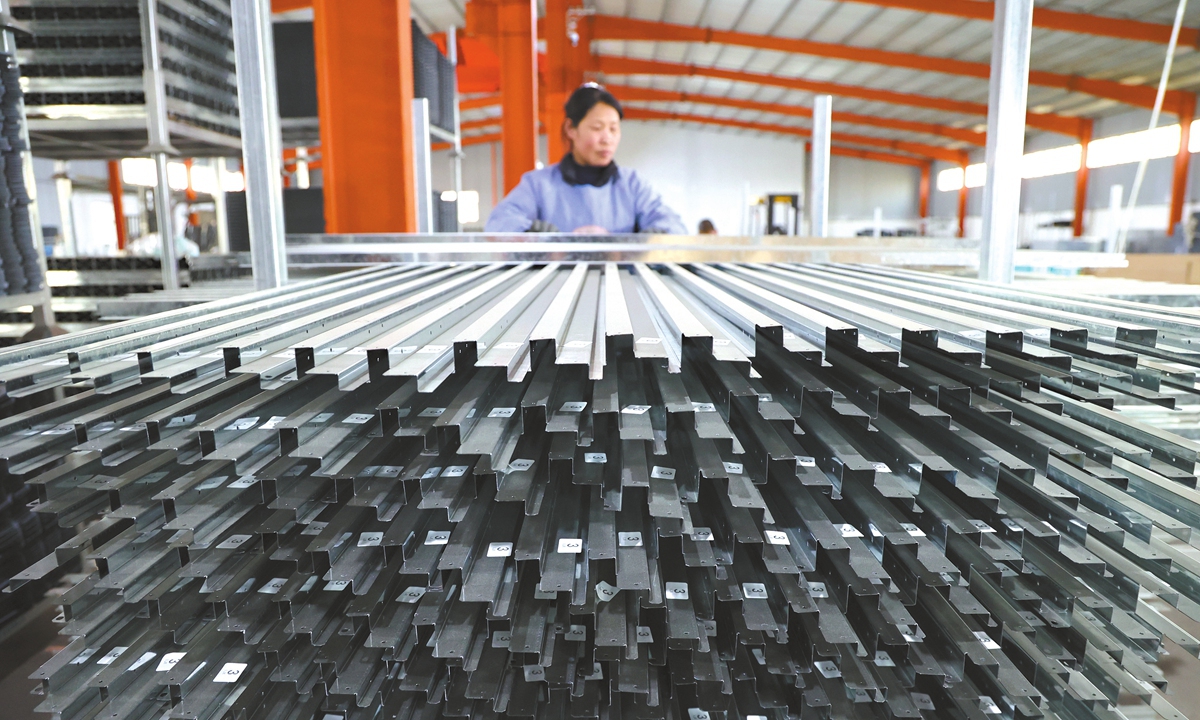
A worker produces metal bars for overseas clients in a factory in Zijiao township, Binzhou, East China's Shandong Province, on April 15, 2025. Photo: VCG
Shares of multiple key Chinese aluminum-related companies rallied sharply on Tuesday after reports said Guinea, the world's largest bauxite exporter, plans to curb exports starting in June to support prices, fueling market expectations of potentially tighter raw material supply and higher costs across the aluminum industry chain.
At Tuesday's close, Aluminum Corp of China Ltd, with a market capitalization exceeding 200 billion yuan ($29.43 billion), had surged 10.01 percent to hit its daily trading limit. Other sector-related stocks also posted strong gains, with Nanshan Aluminum rising 8.81 percent and China Hongqiao Group Ltd climbing 8.14 percent. Alumina futures for June 2026 delivery on the Shanghai Futures Exchange rose 4.25 percent.
The market rally came after reports that Guinea, the world's largest exporter of bauxite, is reportedly set to curb bauxite exports starting in June in an effort to shore up prices, a move that Chinese experts said could raise costs across China's aluminum supply chain but is unlikely to trigger structural disruptions.
Bloomberg reported that Guinea will set out steps to control bauxite exports in June, according to the West African country's Mines and Geology Minister Bouna Sylla, in a bid to address a slump in global prices of bauxite.
The report noted that Guinea's bauxite shipments surged by more than 25 percent in 2025 to 183 million tons.
At a regular press conference held on Tuesday, Chinese Foreign Ministry spokesperson Mao Ning said that as a matter of principle, every country has the responsibility to keep the industrial and supply chains stable. Mao spoke in response to a media request for comment on Guinea's announcement that it is finalizing a bauxite export control plan set to take effect next month.
Wang Guoqing, research director with the Beijing-based Lange Steel Information Research Center, told the Global Times on Tuesday that China's dependence on imported bauxite stands at about 77 percent, with annual imports exceeding 200 million tons, the majority of which come from Guinea. "If Guinea imposes export restrictions, the domestic market could face supply gaps, driving up prices across the industrial chain," she noted.
However, Wu Chenhui, an independent analyst specializing in the critical minerals sector, pointed out that as a major importer of bauxite, China maintains relatively ample reserves. "Even if costs rise in the short term, the move is not expected to have a structural impact on the related industrial chain," he said.
RELATED ARTICLES