Ebola outbreak in DR Congo occurs in complex context; risk very high at national level but low at global level: WHO tells GT
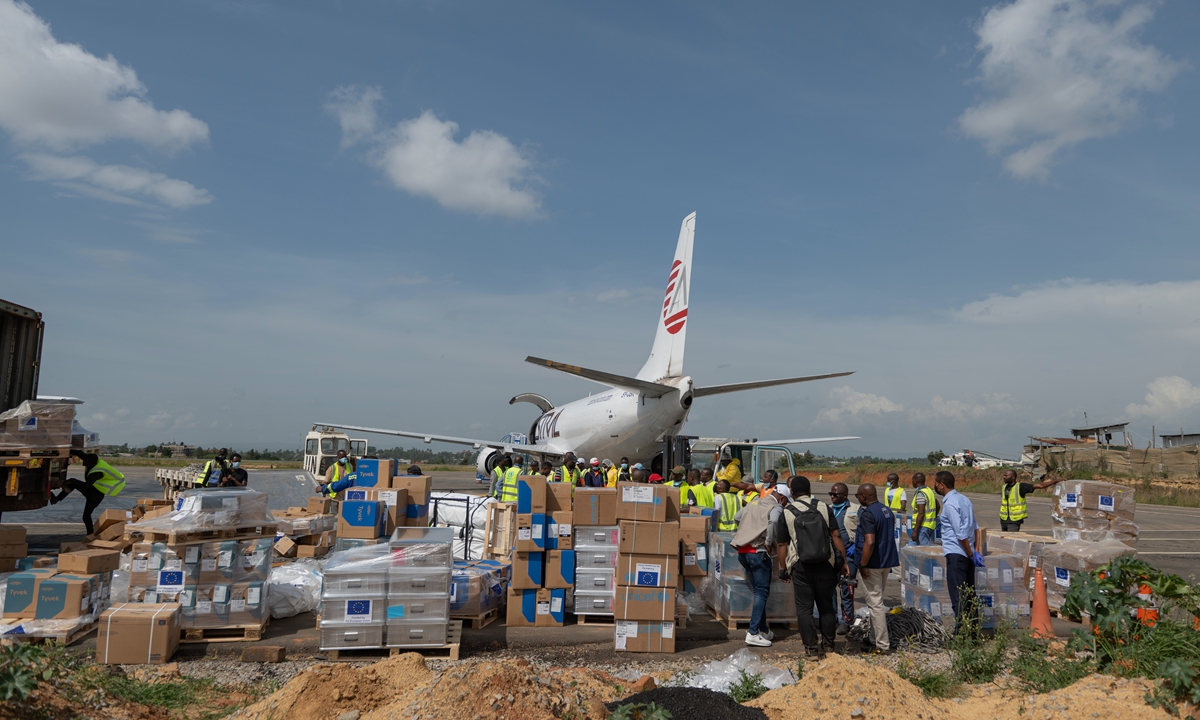
Workers offload medical and emergency supplies donated by the European Union to support frontline workers in their fight against Ebola upon arrival at the national airport in Bunia, Congo, on May 28, 2026. Photo: VCG
Amid the Ebola outbreak in the Democratic Republic of the Congo (DRC), which has prompted enhanced monitoring efforts by multiple countries, the World Health Organization (WHO) told the Global Times in a written response that the outbreak is occurring in a complex epidemiological and humanitarian context, while assessing the risk of the epidemic as very high at the national level but low at the global level.
The number of suspected Ebola cases in the DRC has surpassed 1,000 as the latest outbreak continues to spread across eastern provinces, according to a situation report released Wednesday by the country's Ministry of Health, the Xinhua News Agency reported.
The situation report, based on figures compiled as of Tuesday, put the cumulative number of suspected cases at 1,077. The country has recorded 121 confirmed Ebola cases and 238 suspected deaths since the outbreak was declared on May 15.
The current outbreak marks the country's 17th Ebola epidemic. Laboratory tests identified the Bundibugyo strain of the virus, a relatively rare form of Ebola, Xinhua reported.
In a response late Wednesday, the WHO said the outbreak is occurring in a complex epidemiological and humanitarian context. "There are significant uncertainties to the actual number of infected persons and geographic spread of this outbreak, with limited understanding of the epidemiological links with known or suspected cases," the spokesperson of media relations from the WHO told the Global Times.
Ituri's role as a commercial and migratory hub and proximity to Uganda and South Sudan further increases the risk of regional exportation and cross-border transmission, WHO said.
"We are working closely with neighboring countries and partners to strengthen preparedness across borders. The International Health Regulations provide an important framework for this cooperation, and WHO is supporting countries to use that system," the spokesperson noted.
The spokesperson added that the WHO is also getting regular alerts from South Sudan and Kenya, which shows that surveillance and preparedness activities are being carried out at scale.
Ugandan authorities on Wednesday ordered the closure of the border with Congo "with immediate effect" as suspected cases surge near 1,000 in its neighbor of a rare type of Ebola and as others emerge at home, AP News reported.
A local Ebola task force made the decision to close the border after a rise in Ugandan health workers exposed to the virus by Congolese patients who crossed before the outbreak was declared on May 15, per the report.
The Chinese Embassy in the DRC said on Thursday that the country is facing a complex and severe security situation, alongside a new Ebola outbreak in eastern DRC. It reminded all Chinese nationals there to pay close attention to safety and to closely monitor the epidemic, raise awareness of prevention, take responsibility for their personal health, and maintain strict hygiene measures.
Chinese citizens are advised to avoid travelling to Ituri Province and its surrounding high-risk areas, and to reduce non-essential outings and cross-regional travel.
According to Reuters, the US on Wednesday said it must prevent any cases of Ebola from entering the country from the DRC.
Last week, a US citizen who was treating patients in the DRC as a medical missionary was confirmed to have contracted Ebola and was moved to Germany for treatment along with five others who were exposed. A seventh person was taken to the Czech Republic, per Reuters.
Other countries have also stepped up surveillance and preparedness measures in response to the outbreak. Thailand imposed a 21-day quarantine order for people travelling from or having transited through the DRC or Uganda, Straits Times reported.
The Canadian government said Tuesday that travelers from Ebola-affected regions will be required to self-isolate for 21 days, and that immigration authorities are temporarily suspending decisions on applications from Congo, South Sudan and Uganda, according to AP News on Wednesday.
The WHO told the Global Times that it assesses the risk of the epidemic as very high at the national level, high at the regional level, but low at the global level.
RELATED ARTICLES