ARTS / BOOKS
Chinese sci-fi writer brings Chaoshan culture to the cosmos
Dancing into the future
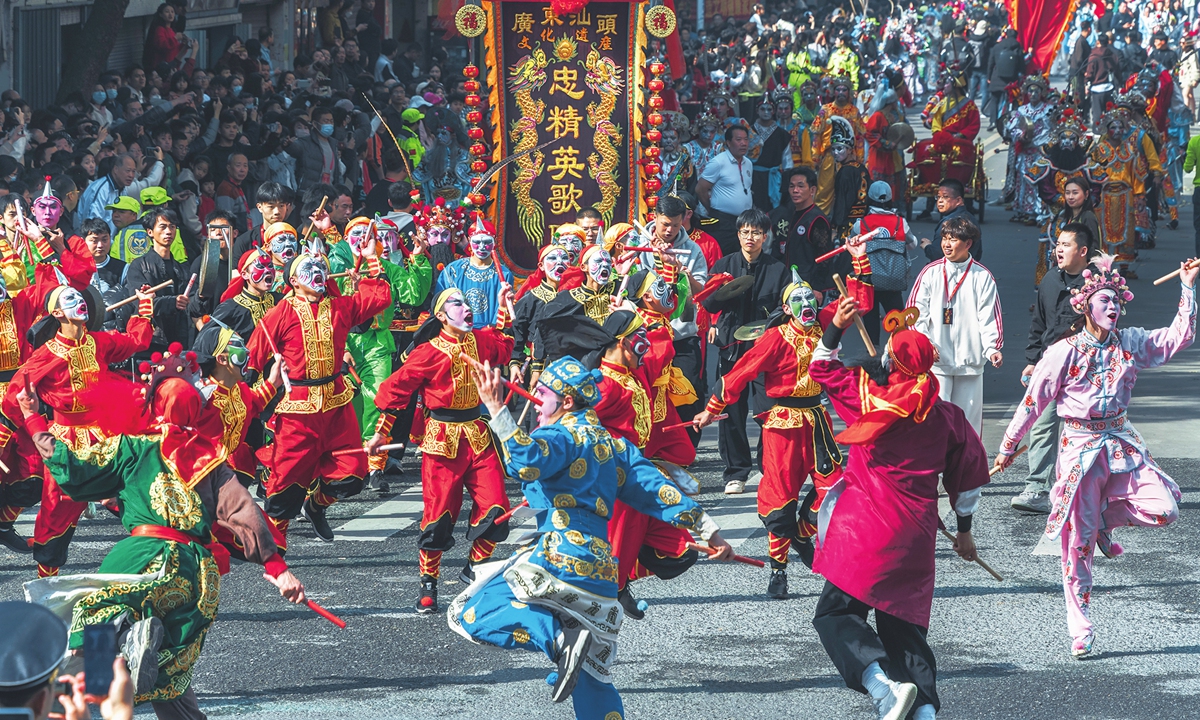
Dancers perform the Yingge dance surrounded by audiences Photo: VCG
In the distant future, on a planet known as Chao Planet, descendants of Chaoshan migrants keep alive traditions carried from Earth centuries earlier. Among them is Yingge dance, an ancient performance that has taken on new meaning in a world where culture and technology exist side by side.This is the premise of Raging Yingge trilogy, the latest science fiction work by Chinese author Chen Qiufan. In contrast to the cyberpunk worlds that first earned him international recognition, the new series draws to Chaoshan culture, weaving together folk traditions, local customs, cuisine and speculative futures.
The story follows Mei Ying, a young girl who defies restrictions to learn Yingge dance in a desperate attempt to save her injured brother. In the process, she discovers that the dance resonates with an unseen quantum field, drawing her into a widening crisis that could shape the fate of her civilization.
For Chen, 45, a recipient of China's Nebula and Galaxy Awards, the new book is rooted in both cultural identity and personal experience.
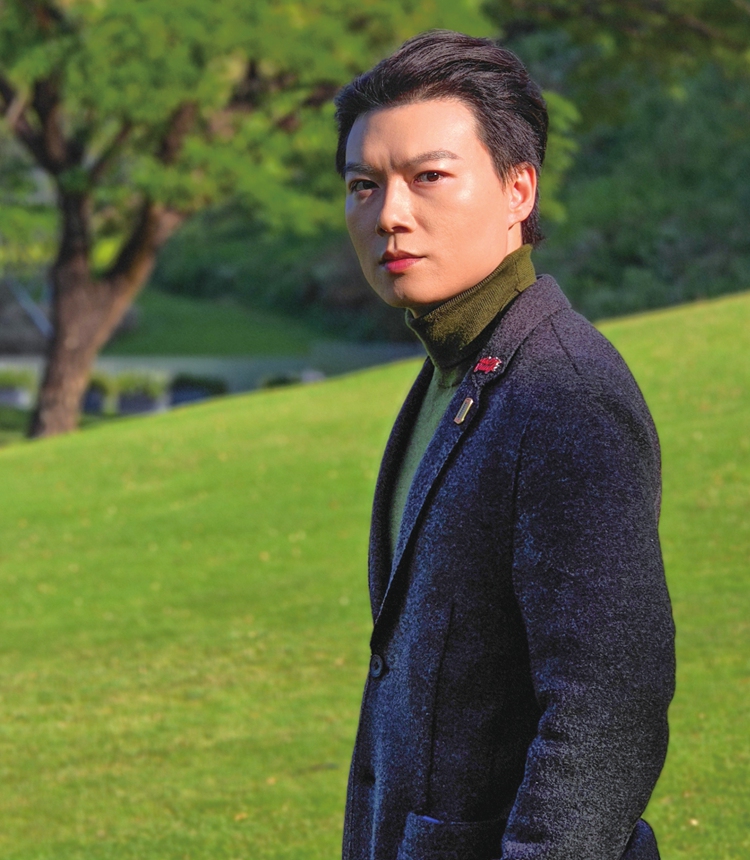
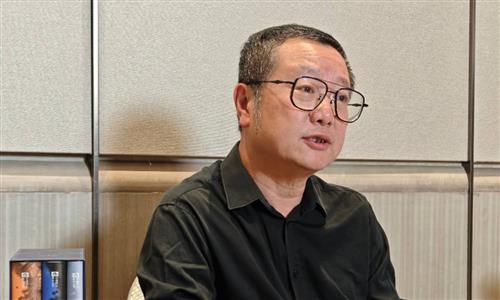
Chinese writer Chen Qiufan Photo: Courtesy of The Shanghai Translation Publishing House
Chaoshan goes cosmic
Born in Shantou, South China's Guangdong Province, Chen has long been drawn to the outward-looking spirit of the Chaoshan people.
"Chaoshan people have always been willing to venture beyond their homeland," he told the Global Times. "What fascinates me most is that wherever they go, they preserve their dialect, cuisine, customs and traditions remarkably well."
That observation sparked a question: If humanity one day migrates to other planets, would the Chaoshan people once again be among the pioneers? And if they carried their culture into space, how might it transform?
Those questions eventually gave rise to Chao Planet, a world where advanced technologies such as anti-gravity spacecraft, neural implants and planetary-scale digital systems coexist with arcade-style architecture, Mazu worship, Chaoshan embroidery and ceremonial Yingge performances.
In Chen's imagination, Yingge dance becomes a kind of energy language, with its rhythms and gestures resonating through the planet's invisible quantum field. When fully synchronized, dancers not only express emotion but also influence their physical surroundings, turning performance into a force capable of responding to crisis and safeguarding civilization.
By 2024, Yingge dance had already become a nationwide cultural phenomenon. "I felt it was particularly suitable for expression through science fiction," Chen recalled.
He recently watched the hit film Dear You, another work deeply rooted in Chaoshan culture, and found himself deeply moved.
"I cried terribly," he said. "Although the story is based on a specific regional culture, the emotions it conveys are universal."
That belief - that the most local stories can also be the most universal - has become increasingly important as Chinese science fiction gains global recognition.
After reading Chen's latest work, Cheng Jingbo, a fellow Chinese sci-fi writer described the novel as "more than just a space adventure." In her view, through the lens of science fiction, Chen breathes new life into ancient cultural heritage, turning the story into an interstellar journey of cultural memory and identity.
A universal language
Since The Three-Body Problem by Liu Cixin won the Hugo Award in 2015, Chinese science fiction has expanded rapidly, reaching a far broader international audience over the past decade.
In Chen's view, part of this trend "reflects China's growing strength in technology and innovation." Meanwhile, a younger generation of sci-fi writers is exploring broader forms and themes, from ecological writing to cross-media storytelling and artificial intelligence (AI) generated content-driven creation.
But the next challenge is how writers express their own cultural identity. For Chen, successful cultural exchange is not about adapting Chinese stories to fit foreign expectations.
As a genre, science fiction naturally transcends national boundaries. It explores humanity's relationship with technology, the future and shared destiny, questions that resonate regardless of language or culture. By combining those universal themes with distinctive Chinese traditions, writers can create stories that are both globally accessible and culturally specific.
"Science fiction provides a common language," Chen said.
The future of storytelling, however, is being increasingly shaped by another transformative technology: AI.
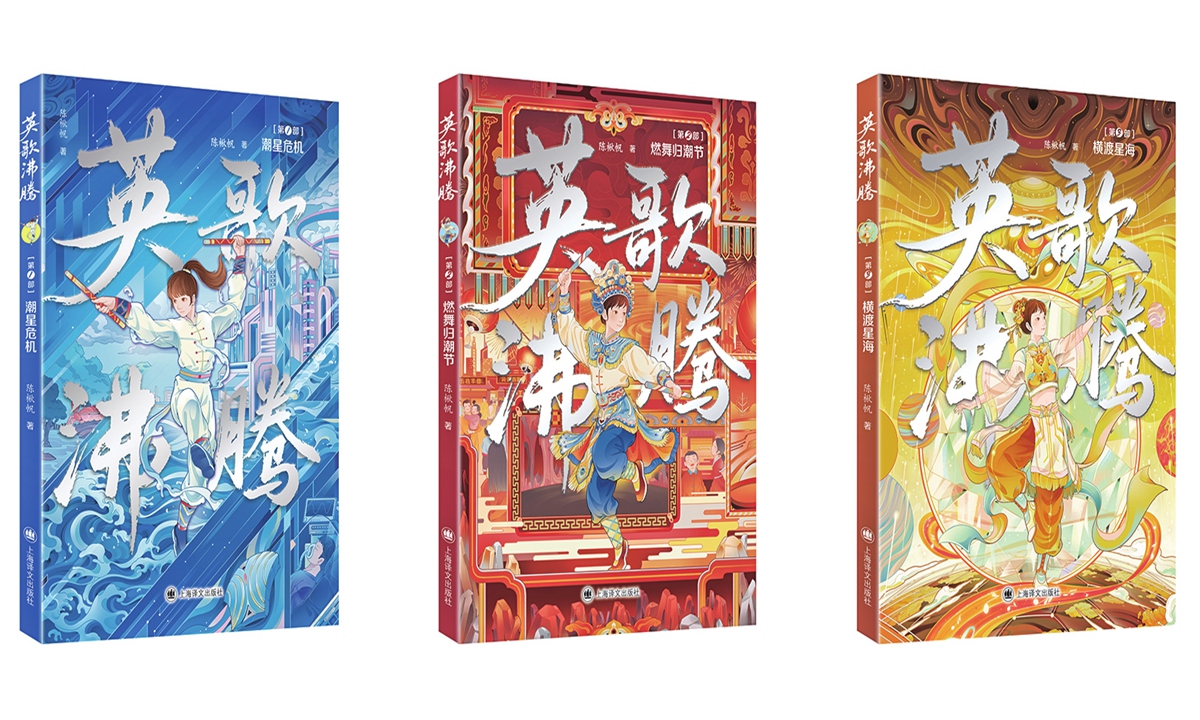
The Raging Yingge trilogy Photo: Courtesy of The Shanghai Translation Publishing House
AI as collaborator
Chen is no stranger to AI. Before becoming a full-time writer, he worked for major technology companies after graduating from Peking University and has experimented with AI tools for more than a decade.
"I was probably one of the earliest Chinese writers to engage with AI," he said. "What people call large language models today only emerged in the last few years, but I've witnessed the development process from much earlier stages."
In his creative process, AI serves as a collaborative partner. He often assigns it different roles, such as philosopher, scientist or thinker, and engages it in extended conversations.
Earlier this year, the AI-assisted short drama The Magic Brush, for which Chen served as head writer and Liu Cixin acted as literary supervisor, surpassed 100 million views online.
For Chen, technology may accelerate creation, but human judgment remains very essential.
"Every piece of science fiction written by Chen points us toward certain directions of the future. He is one of the most noteworthy scholar-writers in today's China," said Wu Yan, a professor from Southern University of Science and Technology.
"Many ideas that once existed only in science fiction are becoming reality," Chen said. "Using AI is a natural development. But creators must continue to think independently. Ultimately, what determines the value of a work is still human creativity."
RELATED ARTICLES