BRASIL 247 / MORE
Brazil's PIX fuels financial inclusion
Industry data show card usage growth after payment system's launch
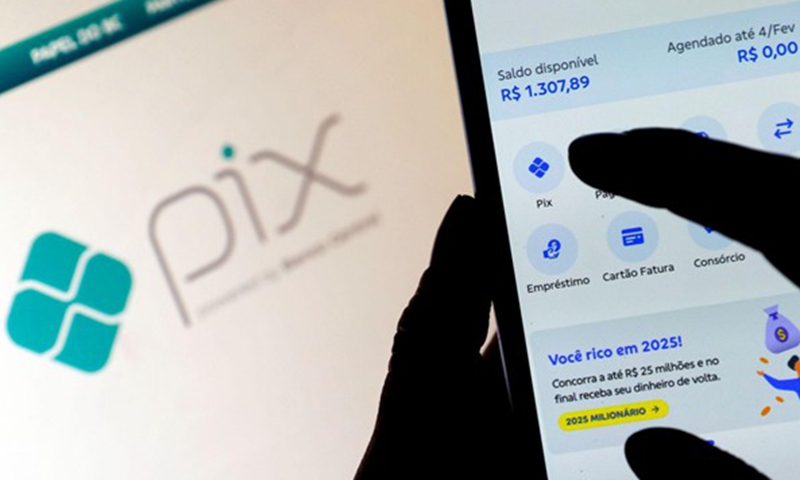
Photo: Agência Brasil
By Brasil 247 - The expansion of PIX in Brazil has not reduced the relevance of credit and debit cards. On the contrary, recent indicators show that different payment methods have coexisted in a complementary manner, expanding financial inclusion and strengthening the country's digital payments market.
According to a report published by Brasil 247, citing UOL, data from the Brazilian Association of Credit Card and Services Companies (Abecs) show that card transactions accounted for 35.1 percent of Brazil's Gross Domestic Product (GDP) in the first quarter of 2026. The figure represents an increase of 0.2 percentage points compared with the same period a year earlier.
Abecs, which represents companies in a sector led in Brazil by brands such as Mastercard, Visa and Elo, argues that the growth of PIX has not replaced card payments. The association maintains that the coexistence of different payment models expands the options available to consumers and businesses.
The sector's figures support that assessment. Since the introduction of PIX, the number of active cards in Brazil has increased significantly. In 2020, there were 324 million cards in circulation. By the end of 2025, the total had reached 477 million, an increase of 47.5 percent.
According to Abecs, the figures demonstrate that the growing popularity of the instant payment system has not eliminated other financial instruments. In a statement cited by UOL, the association said that "the existence of multiple payment arrangements and models, such as the credit and debit card ecosystem and Pix, among others, is extremely beneficial for consumers and society."
The simultaneous growth of cards and PIX has been interpreted by market participants as a sign of the maturation of Brazil's financial system, which now offers a broader range of options for different user profiles and transaction types.
Experts and companies in the sector note that PIX has become an important gateway for millions of Brazilians into the financial system. The ease of making transfers and receiving payments has boosted access to digital accounts and other banking services.
According to market participants, many users who initially adopted Pix later began using more sophisticated financial products, including credit services and payment cards.
This view is shared by Elo. João Vitor Ferreira, the company's Executive Manager for Investor Relations and Data Analytics, said that the growth of the instant payment system has contributed to expanding the base of banked users.
"The advancement of Pix has helped bring new users into the banking system. Over time, this customer base tends to progress in its financial journey, gaining greater access to credit products, including cards. Thus, the growth of PIX has not replaced cards, but has expanded the use of payment methods, allowing consumers to choose the most suitable instrument for each type of transaction," Ferreira said.
His comments reinforce the perception that Brazil's financial ecosystem is evolving toward a model of complementarity among different payment methods rather than direct competition between them.
In this context, consumers may choose PIX for instant and lower-value transactions, while cards continue to play an important role in installment purchases, rewards programs and credit operations.
The expansion of PIX has also attracted major technology companies. Google has expanded its presence in the Brazilian market through the integration of Pix into Google Pay and the Chrome browser.
According to the figures cited in the report, the company processed more than 21.4 million daily transactions through integration APIs in April 2026, reflecting the growing adoption of solutions based on the instant payment system.
For comparison, in December 2024 the US company accounted for approximately 13 percent of those API calls. The increase illustrates how PIX has become a strategic infrastructure for technology companies, financial institutions and digital platforms operating in Brazil.
