BRASIL 247 / MORE
Portinari in Beijing: when the art of the Brazilian people meets Chinese socialist development
Historic exhibition at the National Museum of China projects the work of the artist who made workers and the excluded protagonists to the world
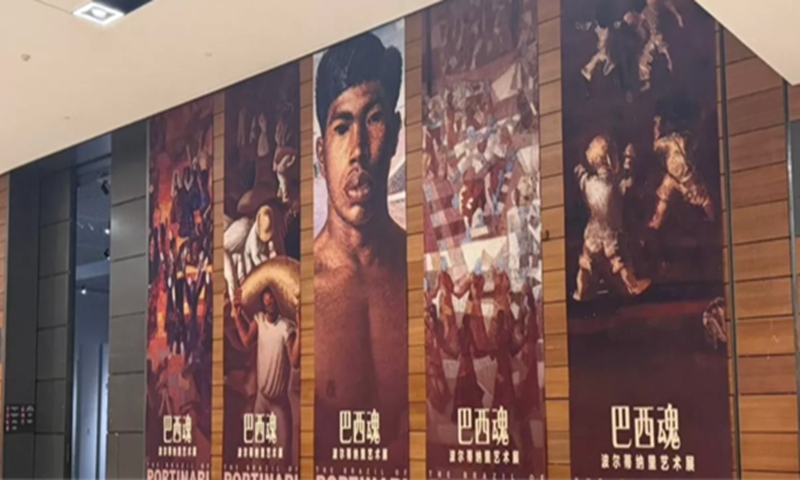
Photo: Brasil 247
By Leonardo Attuch - The opening of the exhibition "O Brasil de Portinari", on June 9, at the National Museum of China in Beijing, transcends the universe of the arts. Integrating the official program of the Brazil-China Cultural Year 2026, the exhibition represents one of the most important cultural diplomacy events ever held between the two countries and projects to millions of Chinese visitors the work of what may be the greatest visual interpreter of the Brazilian soul.With support from Petrobras and organization by the Portinari Project, the exhibition arrives at China's main museum at a moment of deepening bilateral relations between Brasília and Beijing. More than presenting paintings, drawings and studies by Candido Portinari, the initiative establishes a dialogue between two historical experiences marked by the search for development, the appreciation of the people, and the construction of more just societies.
The choice of Portinari to represent Brazil before the Chinese public carries deep symbolism. Few artists have managed to portray with such intensity workers, peasants, migrants and the excluded. In his canvases, the Brazilian people cease to be extras and become the center of the national narrative.
This social vision of art directly dialogues with one of the most striking features of contemporary Chinese experience: the centrality of human development as a national project.
The painter of the people
Born in 1903 in Brodowski, in the countryside of São Paulo, the son of Italian immigrants who worked in coffee plantations, Portinari became familiar early on with the reality of Brazil's working classes.
Throughout his trajectory, he transformed this experience into art. Works such as "Retirantes", "Criança Morta", "Lavrador de Café", "O Café", and dozens of others became historical records of Brazilian inequality. More than denouncing poverty, Portinari sought to give dignity to workers and highlight their importance in the construction of the nation.
His painting was deeply influenced by a humanist and social vision. A member of the Brazilian Communist Party for part of his life, Portinari believed that art should serve the people and contribute to social transformation. In one of his best-known reflections, he stated that he wanted to paint "the Brazilian people with their clothes and their color".
This aesthetic and political choice turned his work into a portrait of Brazil's social formation.
A meeting between two national histories
Portinari's arrival in China takes place in a singular historical context.
Over the past four decades, China has undergone the largest economic and social transformation ever recorded in human history. According to World Bank data and Chinese authorities, around 800 million people have been lifted out of extreme poverty since the beginning of reforms and opening-up policies launched in the late 1970s.
In 2021, Beijing announced the eradication of absolute poverty across the entire national territory.
The meaning of this achievement goes beyond economic indicators. It represents the materialization of a political project that placed development, infrastructure, education, and improvements in living conditions as strategic priorities.
Although Portinari lived in another era and in a completely different context, his work dialogues in a striking way with this experience.
The men, women and children portrayed in his canvases are precisely those who, in different parts of the world, remained for centuries at the margins of development processes.
They are rural workers, migrants, the poor, the forgotten.
By observing the monumental figures in "Lavrador de Café" or the marked faces in "Retirantes", the Chinese public encounters characters that echo the country's own transformation: peasants, workers and families who took part in a vast process of national modernization.
Culture as a bridge between civilizations
The exhibition also reinforces a growing trend in contemporary international relations: the use of culture as an instrument of rapprochement between peoples.
Brazil and China have built one of the most important strategic partnerships of the 21st century. China has been Brazil's main trading partner since 2009 and has become one of the largest investors in infrastructure, energy, technology and logistics in the country.
But lasting relations are not built only through contracts or trade agreements. They also depend on mutual understanding between societies.
In this sense, the Brazil-China Cultural Year seeks to expand reciprocal understanding between two civilizations of major relevance for the construction of a more balanced and multipolar international order.
Portinari offers the Chinese public a visual narrative capable of explaining Brazil far beyond the stereotypes often associated with the country. His works reveal Brazil's social complexity, cultural diversity and historical challenges.
At the same time, they allow Chinese visitors to identify universal human experiences linked to work, family, hope and the search for a better life.
Development and human dignity
There is a particularly relevant aspect in the convergence between Portinari's work and the Chinese experience.
Both place human dignity at the center of reflection. Portinari never painted poverty as spectacle. His characters possess strength, grandeur and humanity. Even in suffering, his figures retain a heroic dimension.
This perspective finds parallels in the Chinese development narrative, which often emphasizes the concrete improvement of people's living conditions as a fundamental measure of economic success.
In different languages — art on one side and public policy on the other — a similar idea emerges: progress only has meaning when it reaches ordinary people.
The workers portrayed by Portinari are not very different from the millions of Chinese citizens who took part in their country's economic transformation in recent decades. In both cases, the people appear as protagonists of history.
A symbol of the new Brazil-China moment
The Beijing exhibition takes place in a period of strengthening BRICS cooperation and growing collaboration among Global South countries.
In this context, Portinari's presence in China acquires a geopolitical dimension that goes beyond culture. It symbolizes the meeting of two nations that advocate greater strategic autonomy, sovereign development and an international order based on dialogue and cooperation.
By bringing the work of Brazil's greatest social painter to the heart of China, Brazil presents to the world not only an extraordinary artist, but also a vision of country built on recognition of its people.
It is precisely this human dimension that makes the exhibition historic.
More than six decades after his death, Candido Portinari continues to speak about the challenges of inequality, social justice and the dignity of labor. And perhaps there is no more appropriate place for this conversation than contemporary China, a nation that has made poverty alleviation and human development central elements of its national project.
In Beijing, Portinari's canvases cease to be only Brazilian works of art. They become a bridge between two national histories and a testimony that development, when it places people at the center, can also be a powerful expression of humanity.
