BRASIL 247 / MORE
Macao gathers Global South leaders to reshape future infrastructure through sustainability and integration
Brazil leads infrastructure ranking among Portuguese-speaking Global South countries, followed by Angola and Mozambique
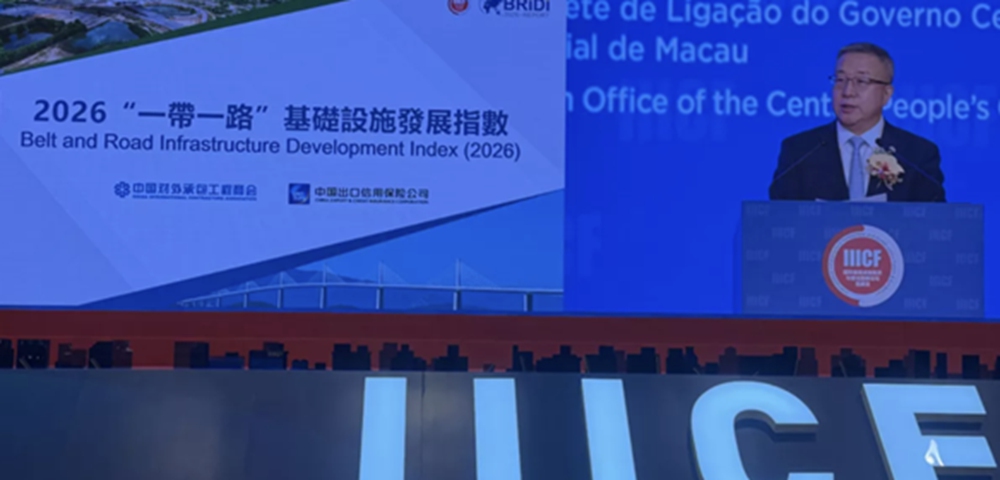
Photo: Brasil 247
Organized by the China International Contractors Association (CHINCA) and the Macao Trade and Investment Promotion Institute (IPIM), the forum has established itself as one of the most important international platforms for infrastructure investment discussions, particularly among Global South countries and participants in the Belt and Road Initiative. The event took place amid the expansion of BRICS cooperation, stronger ties between China, Latin America, Africa and Asia, and increasing demand for modernization of productive and logistics systems.
One of the central moments of the forum was the release of the 2026 Belt and Road Infrastructure Development Index, the 2026 Portuguese-speaking Countries Infrastructure Development Index, the 2026 Belt and Road Infrastructure Development Report and the 2026 Infrastructure Development Report for Portuguese-speaking Countries and Macao's Achievements under the Belt and Road Initiative.
Among the findings highlighted for Brazil, the study showed that the country ranks first among the Portuguese-speaking Global South countries evaluated, followed by Angola and Mozambique. The result reflects the size of Brazil's economy, its infrastructure network and its strategic importance for investments in energy, logistics, transportation and connectivity.
The ranking also highlighted the growing role of Portuguese-speaking African countries. Angola and Mozambique have expanded investments in energy, ports, mining and logistics corridors, strengthening their positions as important partners of China and BRICS countries in development and regional integration projects.
During the presentation of the reports, CHINCA Chairman Fang Qiuchen said that the main challenge is no longer simply building infrastructure, but ensuring that projects are sustainable, resilient, efficient and capable of generating long-term benefits for society. According to him, contemporary discussions must go beyond the existence of infrastructure and evaluate its quality, environmental impact and contribution to long-term development.
Fang stated that infrastructure should strengthen international connectivity, stimulate trade, support stable supply chains and promote ecological transition. He said the future of infrastructure will be defined by sustainability, digitalization and social inclusion.
This perspective was echoed by other participants. Discussions emphasized that twenty-first century infrastructure will increasingly be shaped by environmental sustainability, digitalization, energy efficiency and social inclusion. Economic expansion is now associated not only with roads, ports and power plants, but also with digital networks, intelligent transportation systems, clean energy generation and climate-resilient cities.
The vision was reinforced by Zhou Qiangwu, Managing Director of the New Development Bank (NDB), established by the BRICS countries and currently led by former Brazilian President Dilma Rousseff. Zhou said the bank has approved more than 140 projects since its creation, totaling approximately $43 billion in investments in transportation, renewable energy, environmental protection, social infrastructure and digital connectivity.
According to Zhou, one of the main challenges facing developing countries is building more resilient and sustainable infrastructure systems capable of distributing the benefits of economic growth more broadly. He said the value of infrastructure lies not only in physical construction but also in its capacity to create lasting development opportunities, strengthen energy cooperation and stimulate domestic economic activity.
He also noted that green transition and digitalization are reshaping the very nature of infrastructure. According to Zhou, sustainability requires integrating development criteria throughout the entire life cycle of projects. The NDB has therefore prioritized investments in renewable energy, power grid modernization, water and sanitation systems, low-carbon transportation and public services.
Infrastructure financing was another major topic of discussion. Wang Kang, Vice President of the Export-Import Bank of China, said the institution will continue expanding support for international connectivity projects, economic corridors and integration between land and maritime routes.
According to Wang, the bank plans to increase support for both major infrastructure projects and smaller initiatives directly aimed at improving living conditions. He said physical connectivity remains essential for international trade, stable production chains and stronger economic cooperation.
Wang also emphasized the importance of supporting energy transition and low-carbon development, stating that infrastructure expansion should be aligned with green cooperation and the construction of a more sustainable global economy.
Muhammad Saeed, Chairman of Pakistan's Water and Power Development Authority, highlighted the transformative potential of infrastructure in his country. He noted that Pakistan has more than 250 million inhabitants and one of the world's youngest populations, with approximately 65 percent under the age of 30.
According to Saeed, this demographic profile represents a major competitive advantage. He also highlighted the importance of agriculture to the Pakistani economy, noting that the country is the world's third-largest cotton producer and possesses one of the largest livestock populations globally.
Saeed further pointed to recent discoveries of gold, copper and other strategic minerals, with estimated reserves valued at around $6 trillion. He said infrastructure investment is essential to transform this potential into economic growth. In this context, he highlighted the China-Pakistan Economic Corridor, one of the flagship projects of the Belt and Road Initiative.
South America was also represented at the forum. Suriname's Minister of Public Works and Territorial Planning, Stephen Tsang Kam Wing, presented his country's strategy to convert future offshore oil revenues into sustainable development.
According to the minister, Suriname seeks investments in natural resource management, circular economy projects, green infrastructure and climate adaptation. He said the goal is to use oil revenues to build an environmentally sustainable society while avoiding excessive dependence on natural resources.
The proposal includes investments in coastal protection, water management, renewable energy, sanitation and sustainable urban planning.
Throughout the forum, infrastructure emerged as a central pillar of development strategies across the Global South. Economic growth, energy transition, digitalization and international cooperation were among the main themes discussed. Institutions such as the New Development Bank, the Export-Import Bank of China and Belt and Road financing mechanisms were repeatedly highlighted as major contributors to infrastructure development.
The reports dedicated to the Belt and Road Initiative and Portuguese-speaking countries also reinforced Macao's role as a bridge between China and the Lusophone world. As emerging economies seek greater participation in global investment and trade flows, the Chinese special administrative region continues to strengthen its position as a platform for dialogue among governments, businesses and financial institutions.
(Reported by Brasil 247 on June 11, 2026)
