ARTS / CULTURE & LEISURE
Li Haoyan, 14, becomes first Chinese footballer to join famed La Masia academy
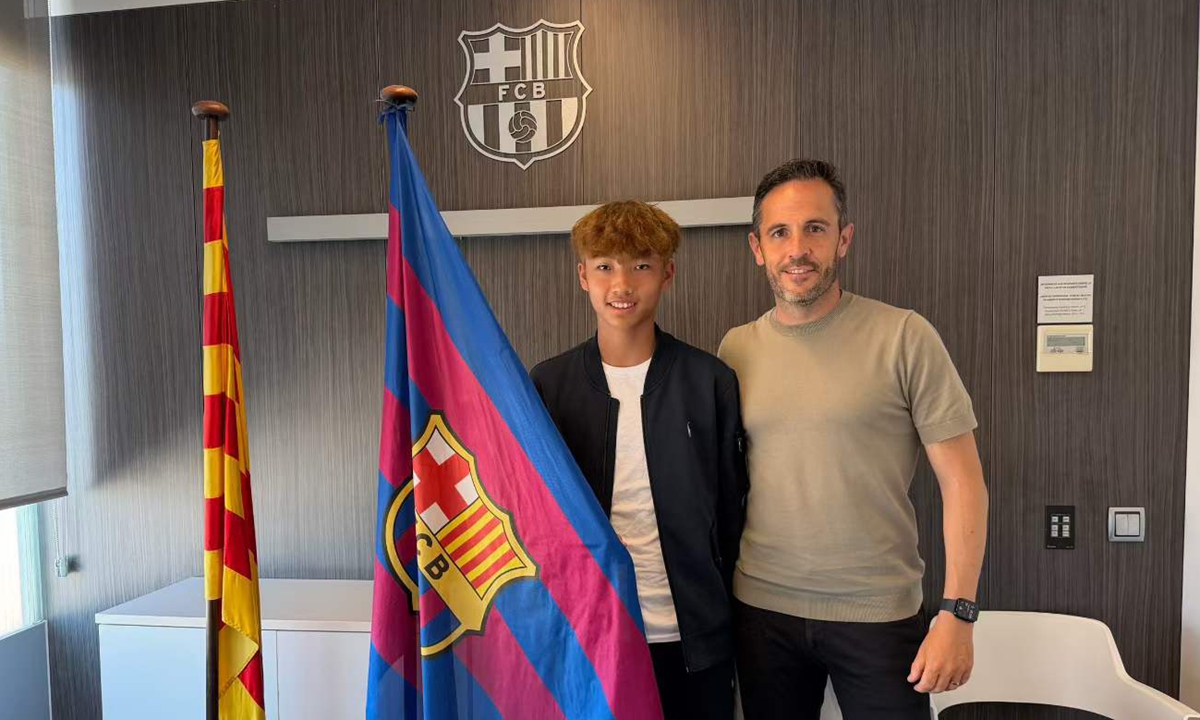
Li Haoyan poses for a photo with FC Barcelona's Youth Football Strategy Director Sergi Milà. Photo: Courtesy of Li Haoyan's father Li Wanwei Photo: Courtesy of Li Haoyan's father Li Wanwei
The Dalian Zhoushuizi International Airport was unusually crowded on Wednesday, as football fans holding banners reading "Welcome Home" had gathered there, while journalists lined the arrival gate of the terminal. The crowd's attention was not focused on a national team star or an established professional, but a 14-year-old boy named Li Haoyan.
Earlier this month, Li became the first Chinese player to sign with FC Barcelona's famed La Masia academy, joining the club's U15 setup. The milestone instantly drew national attention, but for Li himself, the moment felt less like an arrival and more like a beginning. "I didn't expect it," he told the Global Times in an exclusive interview. "My form wasn't particularly good yet."
For many young footballers, signing for La Masia, the academy that produced football stars such as Lionel Messi of Argentina, as well as Xavi Hernandez and Andres Iniesta of Spain, represents the fulfillment of a dream. Li views it differently.
"For me, this is a completely new beginning," Li told the Global Times. "I want to take things step by step, stay there as long as possible, and keep improving."
Soft-spoken and visibly tired after a packed schedule on Friday, he still smiled whenever the conversation turned to football.
Although he said he was overjoyed when he was initially informed of FC Barcelona's decision, he admitted that he had never dared to expect such an opportunity would come.
Growing up with football
Born in Dalian, one of China's traditional football strongholds, Li Haoyan's football journey began at the age of 5 under the influence of his father Li Wanwei, a former football player. Originally, his father had planned to wait until his son was older before introducing more systematic training. However, it quickly became apparent that the young boy possessed unusual talent.
"His talent for football was far beyond that of children his age," his father recalled. "From the beginning, he trained seriously and never tried to cut corners. He was exceptionally quick when he was young."
One of Li's earliest coaches, Li Changjun, still remembers the first time he saw the boy on a local training ground in Dalian. Before reaching school age, Li would accompany his father to training, practicing basic techniques on his own.
Youth football coaches often stress that talent reveals itself through the mastery of simple skills. According to Li Changjun, the most remarkable quality was not merely Li's natural ability, but his willingness to embrace endless repetition.
"There's no shortcut in youth development," Li Changjun told the Global Times. "Basic technical training can be monotonous, but every player has to go through it."
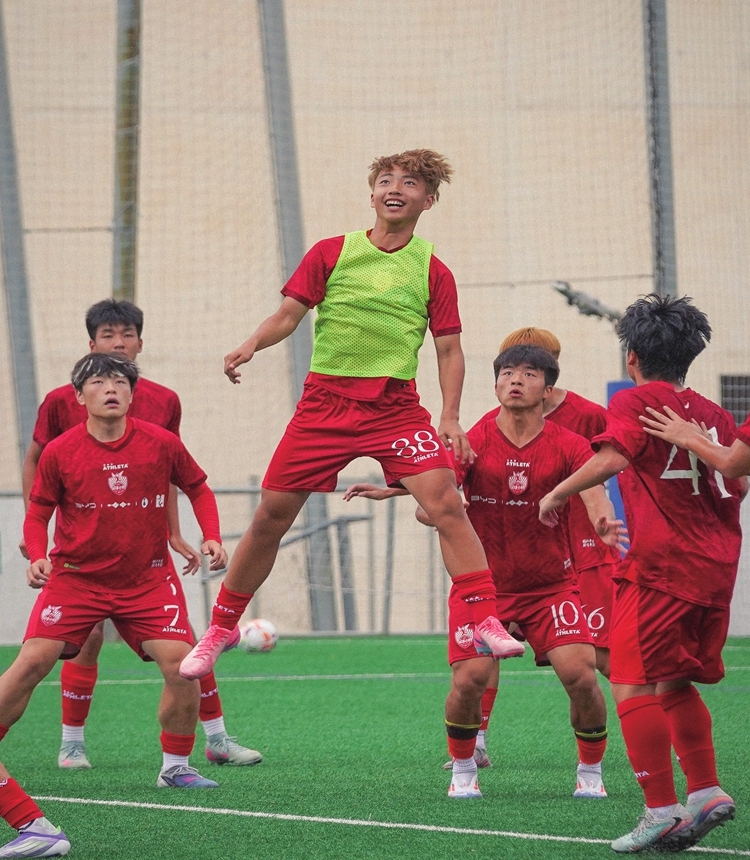
Li Haoyan (center in green) jumps in a practice session with Chinese Football Boys teammates. Photo: Courtesy of Li Haoyan's father Li Wanwei
Heading overseasAs Li grew older, several professional youth academies in China expressed an interest in him. His father, however, made a bold decision: He would have Li pursue opportunities abroad, instead of remaining in the domestic system.
Through the "Chinese Football Boy" project, Li eventually moved to Spain, where he joined Barcelona-based CF Damm, one of the country's respected youth development clubs.
There, the left-footed winger's pace and excellent dribbling attracted increasing attention. Reports in Spain described him as a winger with explosive speed, while his father revealed that several other La Liga clubs had expressed their interest in Li before Barcelona secured his signature.
For many young players, moving overseas is as much a cultural challenge as a sporting one. Li quickly discovered that football in Spain operated at a different tempo.
"The pace is much faster," he said. "You have much less time to control the ball and make passes."
The adjustment was difficult at first. However, the intensity of competition also pushed him to improve rapidly. One particularly demanding match helped restore his confidence and convinced him that he could compete at that level.
His father noted that the challenges ahead still remain substantial.
The first challenge is physical development. Competing against European and African players, many of whom mature earlier physically, will require continued work on strength and athleticism.
Another challenge is language.
"If you can't communicate, you can't truly integrate into the team," Li's father said. "You won't fully understand tactical instructions, and that can affect your opportunities."
To address that obstacle, Li studies Spanish for one to two hours every day. Even while back in China, Li continues attending online classes according to Spanish time, his father explained.
The excitement surrounding Li's signing has inevitably generated high expectations.
Li's father remains cautious, saying he has frequently reminded his son to ignore outside noise and focus on training.
"The immediate objective is earning a place within the club's U15 squad when he returns to Spain in August," Li's father said.
Alternative pathway
Li's breakthrough comes amid broader discussion about the future of Chinese youth development in football.
Only days before his signing was announced, the "Chinese Football Boy" U12 team won the Sigismondi International Youth Cup in Italy, drawing renewed attention to emerging paths for talent. The success of both stories prompted debate over how Chinese football can better nurture elite prospects.
For coaches such as Li Changjun, the lesson is straightforward: the fundamentals remain indispensable. The countless hours Li Haoyan spent refining basic techniques as a child continue to underpin everything he does today.
At the same time, Li Haoyan's journey reflects an increasingly global model of development. Rather than viewing domestic training and overseas opportunities as separate tracks, his progression combines both. Early technical training for essential skills in China's school football system was followed by immersion in Spain's highly competitive football environment.
For now, Li Haoyan remains focused on the next training session rather than the distant future. "Joining La Masia is only the first step," he said. "I've prepared myself for difficulties. When problems come, I'll identify what's causing them and then work on improving myself."
RELATED ARTICLES