BRASIL 247 / MORE
Brazil and China converge on strategic agenda for energy storage and hydrogen
Debate in Macao highlights shared efforts to strengthen energy security and accelerate renewable energy integration
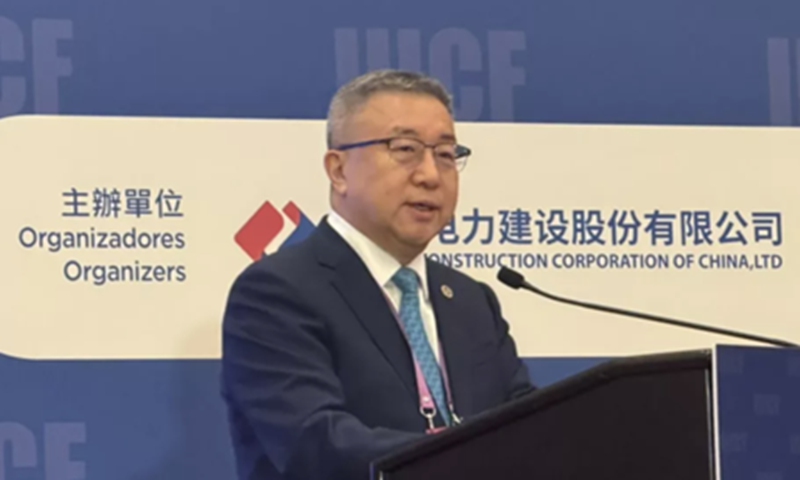
Photo: Brasil 247
By Brasil 247 - Energy storage and hydrogen are emerging as two of the main pillars of the global energy transition. The topic dominated discussions at the panel "Strengthening Renewable Energy with Hydrogen and Energy Storage in a New Era," held on Friday during the 17th International Infrastructure Investment and Construction Forum & Exhibition in Macao. According to Brasil 247, the event brought together industry leaders, companies and experts to discuss the challenges of expanding renewable energy and the strategic role of storage and hydrogen in future energy systems.
Organized by PowerChina and moderated by Li Sisheng, the company's executive vice president, the panel gathered representatives from enterprises, industry associations and institutions from different countries. Participants examined how energy storage and hydrogen can support the large-scale deployment of renewable energy while improving the reliability and flexibility of power systems.
The discussion comes at a significant moment for Brazil. Recently, Minister of Mines and Energy Alexandre Silveira announced the country's first national auction for battery energy storage systems, scheduled for December 2026. The initiative is expected to attract more than R$10 billion in investments and aims to strengthen Brazil's energy security while facilitating the integration of renewable sources into the National Interconnected System.
Opening the debate, Fang Qiuchen, president of the China International Contractors Association (CHINCA), said the transformation of the global energy system has entered a new phase, driven by changes in the energy mix, technological innovation and the rapid expansion of renewable energy sources.
According to Fang, the traditional energy system is evolving toward a model that is more efficient, cleaner, safer and smarter. In this process, hydrogen and energy storage are becoming increasingly important for balancing supply and demand, improving grid regulation capabilities and addressing the challenges associated with renewable energy integration.
Fang noted that solar and wind power continue to expand rapidly worldwide but still face limitations related to intermittency and generation variability. He said energy storage has become an essential tool for ensuring the efficient use of these resources and enabling their large-scale deployment.
He Yanfeng, executive vice president of the Power Construction Corporation of China, said the world is undergoing a profound energy transformation shaped by the need to balance economic growth, environmental sustainability and energy security.
According to He, energy storage now plays a structural role in the energy transition by allowing electricity generated from renewable sources to be used more efficiently and predictably. He stated that the integration of solar power, hydrogen, energy storage and smart grids represents one of the key technological pathways for building future energy systems.
The executive also presented examples of projects developed by the company around the world. Among them, he highlighted a major energy storage project linked to solar generation in Saudi Arabia, which he described as one of the largest grid-connected storage systems currently in operation. He also referred to projects in Central Asia focused on the industrial use of renewable energy.
For He, energy storage gives renewable energy "time value," allowing electricity generated during periods of abundance to be stored and used later in a stable and secure manner.
The international perspective was reinforced by Adel Alsaeedi, senior vice president of the Emirates Water and Electricity Company (EWEC) of the United Arab Emirates.
Alsaeedi said growing global electricity demand, driven by population growth, industrialization and the expansion of new technologies, requires solutions capable of delivering clean and reliable energy at scale.
According to him, although renewable energy sources are central to the energy transition, they are not sufficient on their own to meet the needs of modern electricity systems.
"Renewable energy alone is not enough to ensure the clean energy future we are seeking," he said.
Alsaeedi stressed that technologies such as green hydrogen and energy storage systems are essential for ensuring operational flexibility, grid stability and system resilience.
He said green hydrogen will play a decisive role in decarbonizing sectors that are difficult to electrify, including aviation, maritime transport and heavy industry. Energy storage, he added, will enable a greater share of renewable energy while reducing instability risks and improving supply security.
In one of the panel's key statements, Alsaeedi summarized the view shared by participants:
"Renewable energy, hydrogen and storage are not separate technologies. Together, they form the foundation of the energy system of the future."
The discussions in Macao demonstrated that energy storage is no longer viewed as a complementary technology but has become a strategic component of renewable energy expansion worldwide.
This assessment aligns with ongoing initiatives in Brazil. The national battery auction announced by the Ministry of Mines and Energy aims to expand the storage capacity of the electricity system, increase operational flexibility and reinforce energy security as solar and wind generation continue to grow.
In this context, the discussions promoted by PowerChina highlighted a growing convergence between the strategies adopted by China and Brazil. Both countries are advancing the development of cleaner, more resilient energy systems capable of integrating increasing volumes of renewable energy, with energy storage and hydrogen positioned at the center of this transformation.
(Reported by Brasil 247 on June 11, 2026)
